

Designing a kids’ room that balances sleep, play, and study in a small apartment is all about smart layout planning. Without clear zones, the room can quickly feel messy and overwhelming, making it harder for kids to relax, focus, or enjoy their space.
A well-planned layout doesn’t just save space—it creates structure, improves daily routines, and makes the room feel bigger and more functional. By combining thoughtful zoning with compact furniture, you can design a room that works for every part of a child’s day.
This guide focuses on clever layout ideas that help you divide the room efficiently while keeping it cozy, practical, and visually clean.
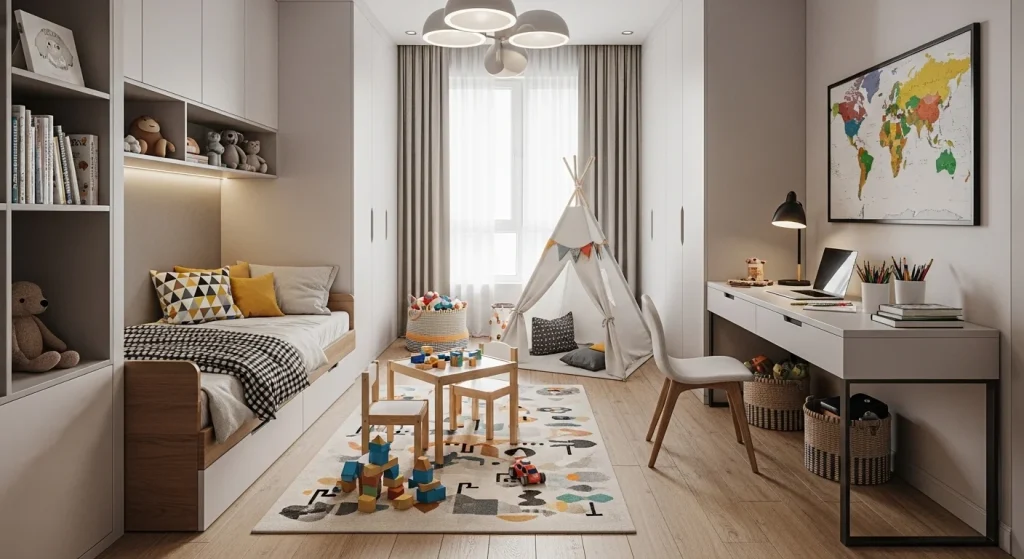
1. The Three-Zone Linear Layout Design
Arranging sleep, play, and study areas in a straight line creates a clear and structured layout. One side can be dedicated to the bed, the center for play, and the opposite end for study. This arrangement keeps movement smooth and prevents overlap between activities. The room feels organized because each function has a defined place. It also makes cleaning and maintaining the space easier. A simple but highly effective layout for small rooms.
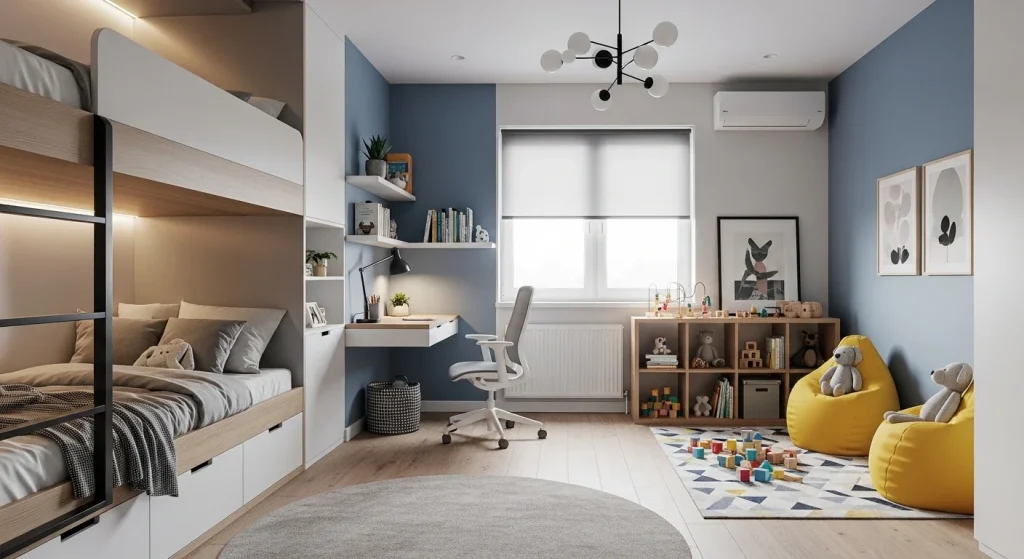
2. The Corner-Based Zoning Layout
Using different corners for each function helps divide the room without needing walls. One corner can be for sleep, another for study, and the third for play. This layout makes the room feel balanced and evenly distributed. It also keeps the center open, which makes the space look bigger. Each zone feels independent yet connected. A great way to use every inch wisely.
3. The Bed Anchor Layout Strategy
Using the bed as the anchor point helps organize the rest of the layout around it. The study desk can be placed beside or near the bed, while the play area stays opposite. This creates a natural flow without cluttering the room. The layout feels intentional and easy to navigate. It also helps define zones without extra furniture. A practical and balanced setup.

4. The Split Wall Functional Layout
Dividing the room by walls instead of the center helps maximize space. One wall can hold the bed, while another is used for study and storage. The remaining open area becomes the play zone. This layout keeps everything organized along edges. It creates a clean and uncluttered look. A smart approach for narrow rooms.

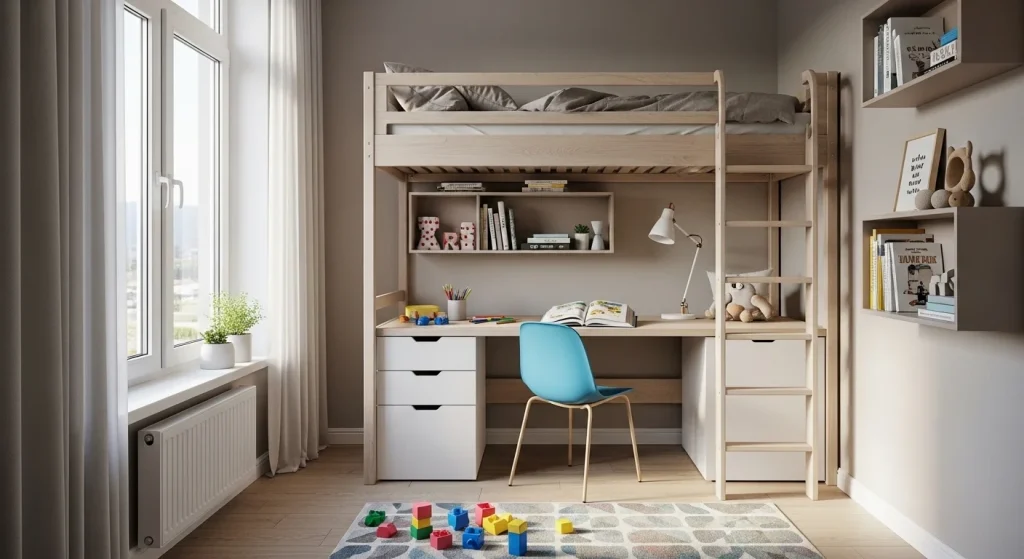
5. The Elevated Sleep + Ground Activity Layout
Placing the bed higher (loft or raised) allows the lower area to be used for study or play. This creates two functional levels within the same room. The layout feels spacious and efficient. It clearly separates rest from active zones. The design maximizes vertical space effectively. A high-impact small room solution.
6. The Open Center + Perimeter Layout
Keeping the center open while placing all furniture along the walls creates a spacious feel. The bed, desk, and storage stay around the perimeter. The middle becomes a flexible play area. This layout improves movement and visibility. It makes the room feel less crowded. A very effective space-enhancing strategy.

7. The Study-Focused Side Layout
Placing the study zone on one dedicated side helps create a distraction-free area. The bed and play space are positioned separately. This layout improves focus and routine. It also helps kids mentally separate study time from play. The room feels more functional and structured. A great option for school-age kids.
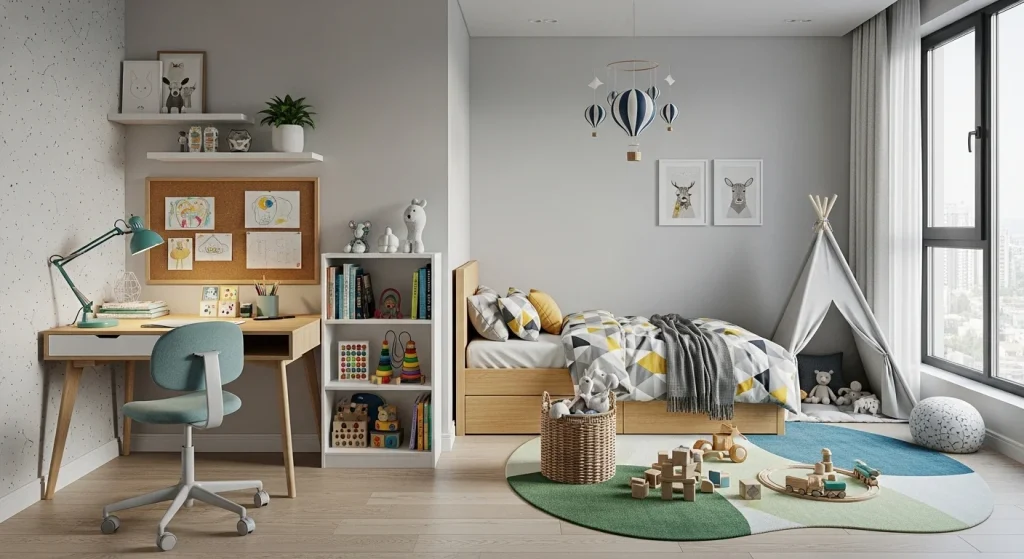
8. The Flexible Multi-Zone Layout
Designing zones that can shift function throughout the day adds flexibility. A study desk can double as a craft table, and the play area can adapt easily. The layout feels dynamic and efficient. It reduces the need for extra furniture. The room stays uncluttered and practical. A modern approach to small-space living.
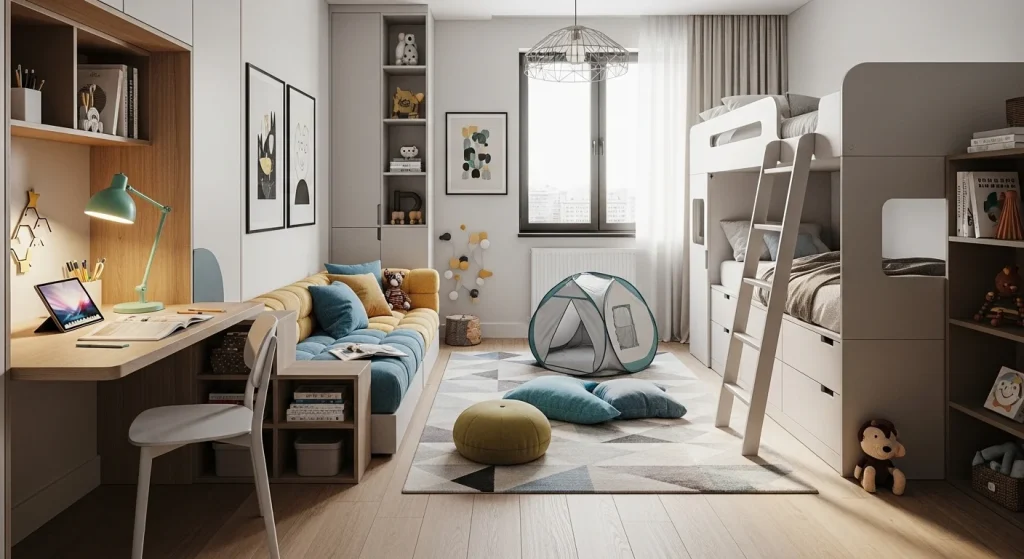
9. The Parallel Wall Zoning Layout
Placing sleep and study areas along two parallel walls creates a clean and structured flow. The bed sits on one side while the desk and storage run along the opposite wall. The center remains open for play and movement. This layout avoids crowding any single area. It makes the room feel wider and more balanced. A highly effective layout for rectangular rooms.\
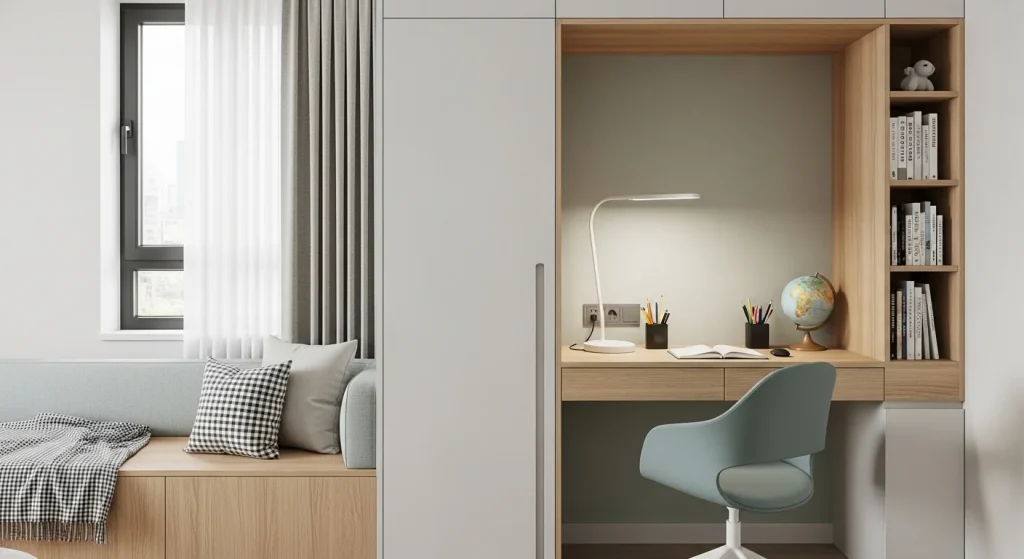
10. The Study-Under-Window Focus Layout
Positioning the study desk under a window maximizes natural light for focus and comfort. The bed is placed away from the window to maintain a calm sleep zone. The play area fills the remaining open space. This layout naturally separates active and quiet areas. It also enhances mood and productivity. A simple but very intentional design choice.
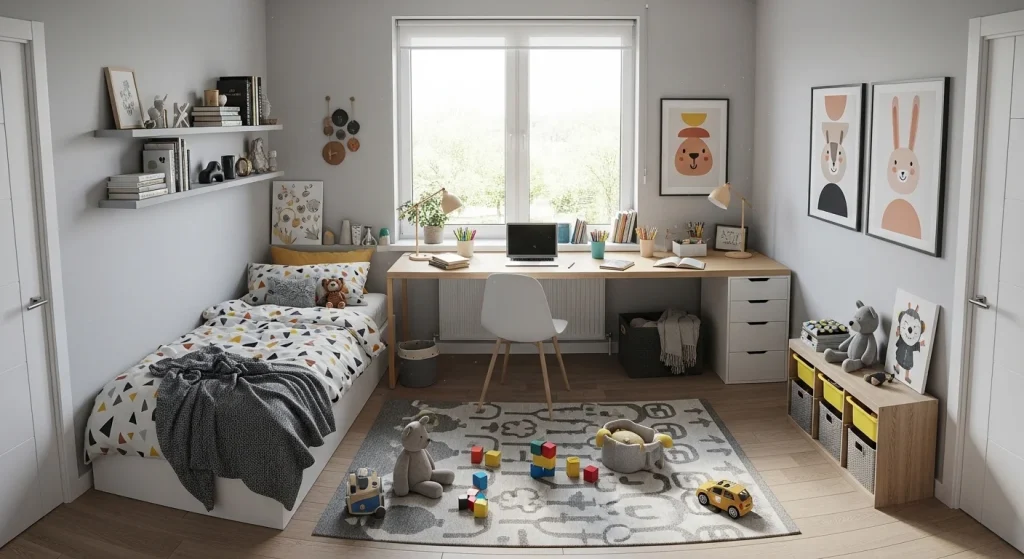
11. The Half-Room Zoning Layout
Dividing the room into two main halves creates a clear and simple structure. One half is dedicated to sleep, while the other combines study and play. This reduces over-complication in small spaces. The layout feels open yet organized. It helps maintain daily routines easily. A minimal but effective zoning approach.
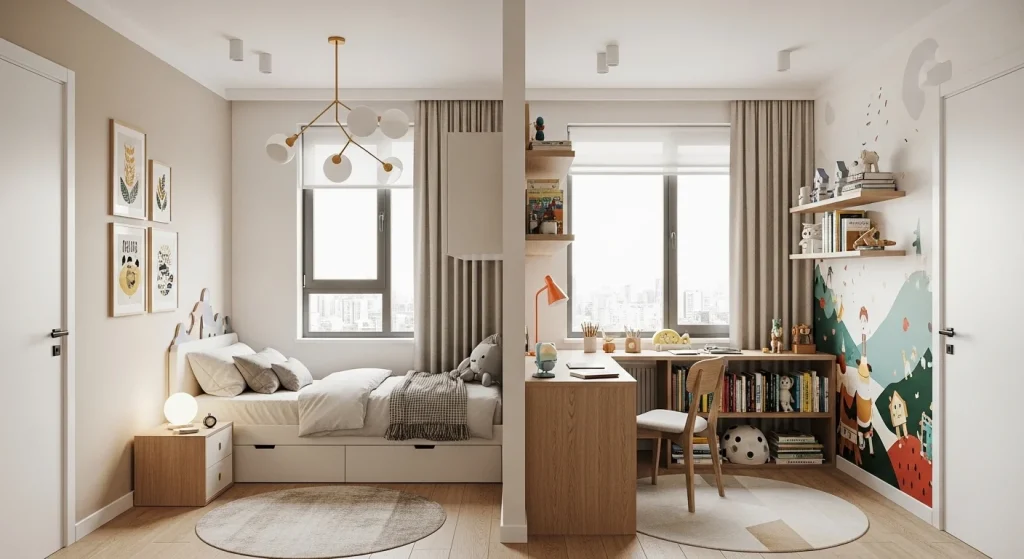
12. The Diagonal Layout Flow Design
Placing furniture diagonally creates a more dynamic and less boxy feel. The bed, desk, and play area are arranged at slight angles. This improves movement flow within the room. It breaks the rigid layout of small spaces. The room feels more open and interesting. A creative and less common layout idea.

13. The Compact Cluster Layout
Grouping the bed and study area closely together creates a compact functional zone. This leaves more open space for play. The layout feels efficient and uncluttered. It reduces the spread of furniture across the room. The design improves accessibility. A smart choice for very small rooms.
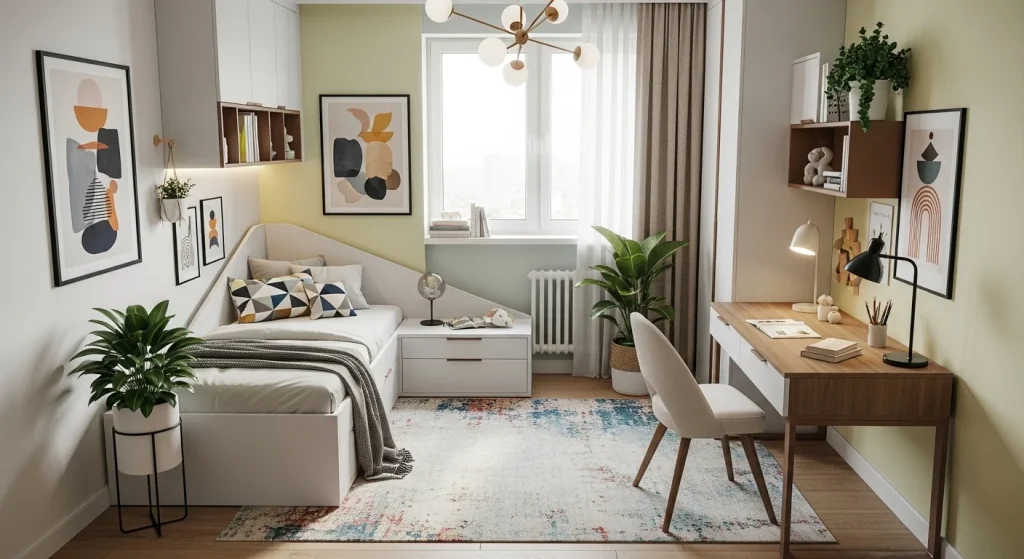
14. The Storage-Backed Zoning Layout
Using storage units as subtle dividers helps define each area without blocking light. A shelf or cabinet can separate study and play zones. This adds function while organizing space. The layout feels structured and practical. It avoids the need for walls or partitions. A clever dual-purpose design.
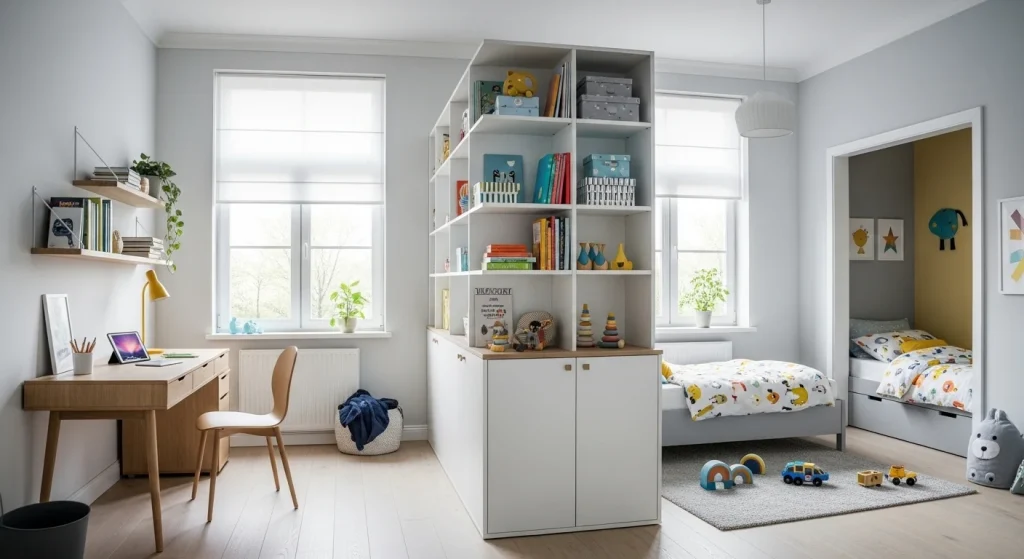
15. The Bedside Study Integration Layout
Placing a small desk right next to the bed creates a compact and efficient setup. It keeps study essentials within easy reach. The play area remains separate and open. This layout works well in tight spaces. It keeps everything functional without overcrowding. A simple and space-saving design.
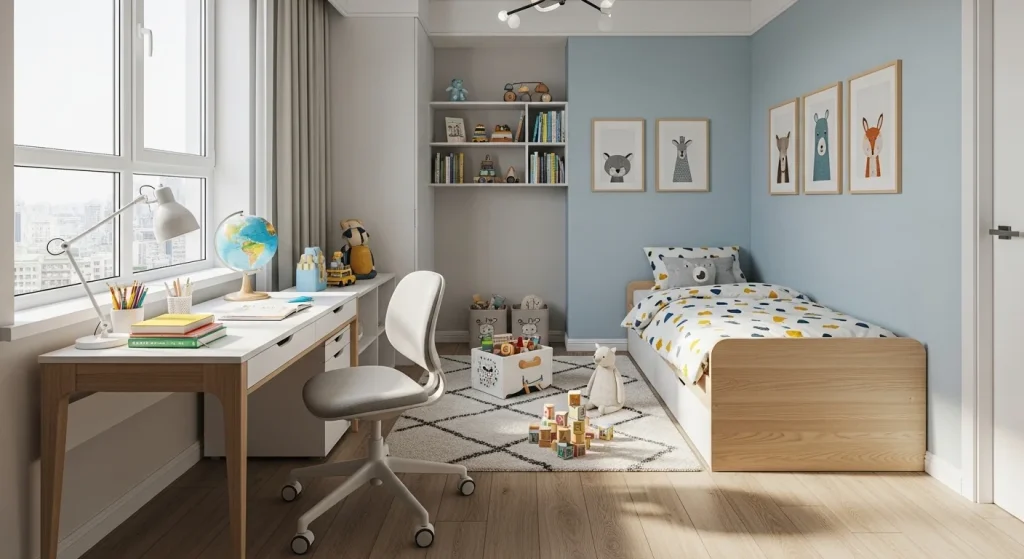
16. The Floating Zones Open Layout
Keeping zones visually separated but physically open creates a modern layout. The bed, study, and play areas are defined by placement, not barriers. This makes the room feel larger and more breathable. Movement remains smooth and unrestricted. The design feels light and flexible. A clean and contemporary approach.

FAQs
1. What is the best layout for combining sleep, play, and study in a small room?
A layout that clearly separates zones using furniture placement or visual cues while keeping the center open works best.
2. How do I make a kids room layout feel bigger?
Keep the center open, use vertical space, and avoid overcrowding with too much furniture.
3. Should study and play areas be separate?
Yes, separating them helps improve focus and creates better daily structure for kids.
4. What is the easiest way to divide zones without walls?
Use rugs, furniture placement, or storage units to create visual separation without closing the space.