
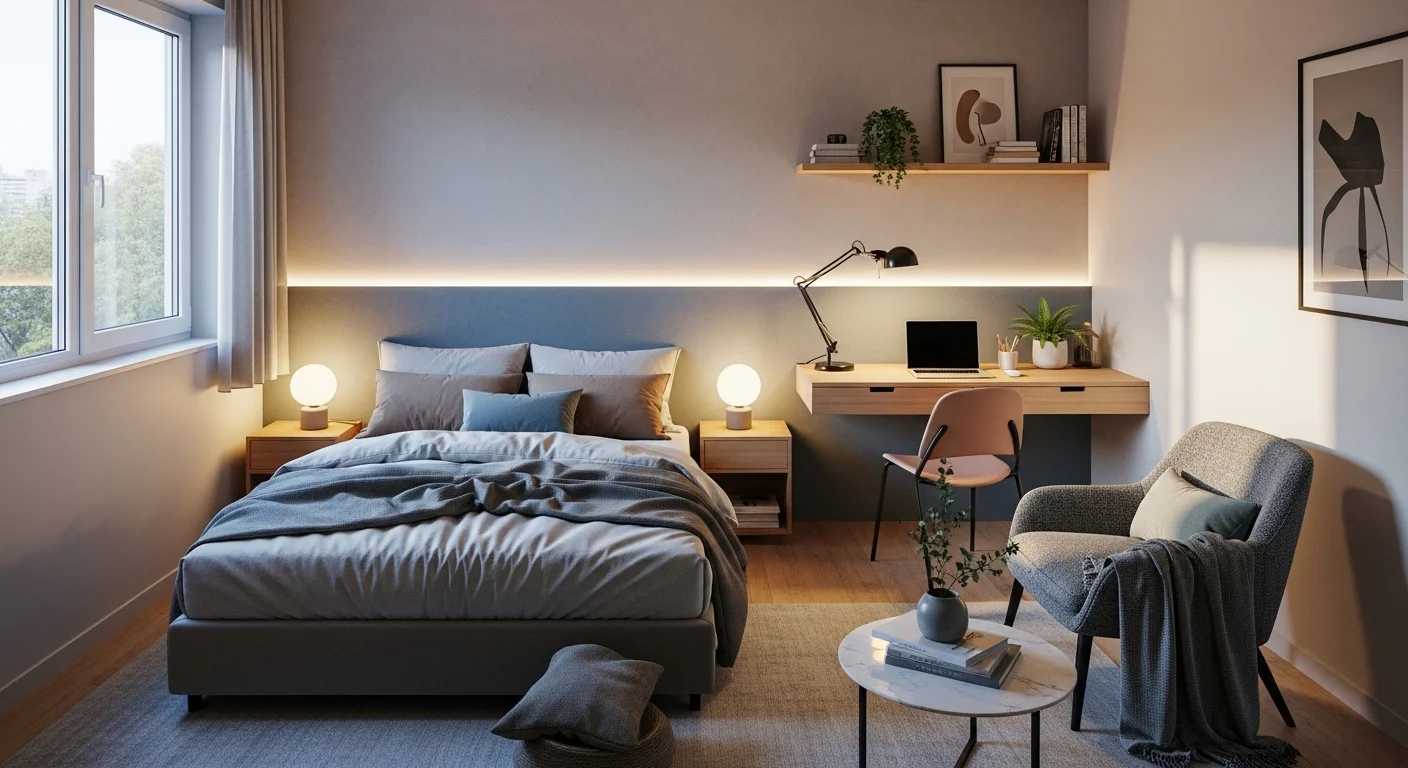
In a small apartment, your bedroom often needs to serve more than one purpose. It’s not just a place to sleep—it can also be a workspace, a relaxation zone, or even a mini dressing area. Without proper zoning, everything can feel mixed and cluttered.
With the right small apartment bedroom zoning ideas, you can create clear, functional spaces within the same room while still keeping the design cohesive and cozy. The key is using smart layout techniques and subtle visual separation.
This guide shares practical ways to divide your bedroom into defined zones without making the space feel smaller.
1. The Rug-Based Zoning Technique
Using different rugs helps visually separate areas within the bedroom. One rug can define the sleeping zone, while another marks a workspace or seating area. This creates clear boundaries without adding physical barriers. The room feels organized and intentional. It also adds texture and warmth. A simple and highly effective zoning method.

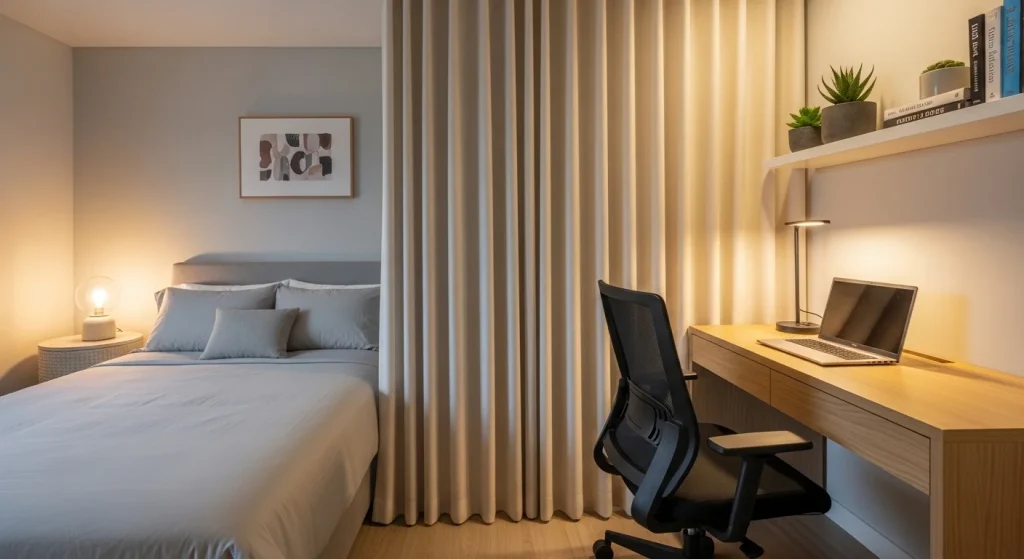
2. The Curtain Divider Soft Separation
Light curtains can gently divide different zones in the bedroom. They provide privacy without blocking light completely. The setup feels soft and flexible. Curtains can be opened or closed as needed. The room remains airy and spacious. A cozy and adaptable zoning idea.
3. The Bed-as-Divider Layout
Placing the bed strategically can act as a natural divider between zones. One side can be used for sleeping, while the other becomes a workspace or lounge area. This avoids the need for extra furniture. The layout feels clean and efficient. It maximizes available space. A smart layout solution.
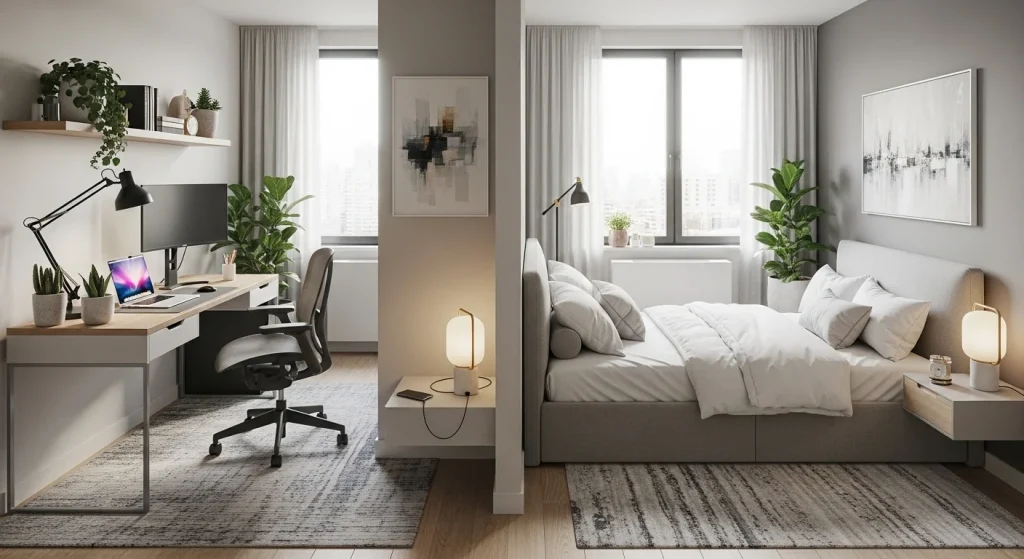
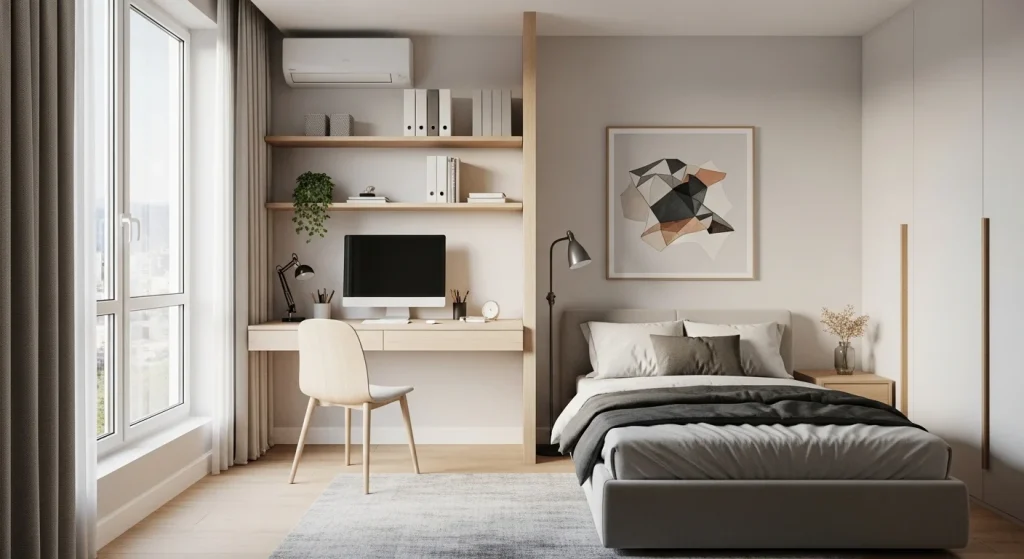
4. The Open Shelf Partition Setup
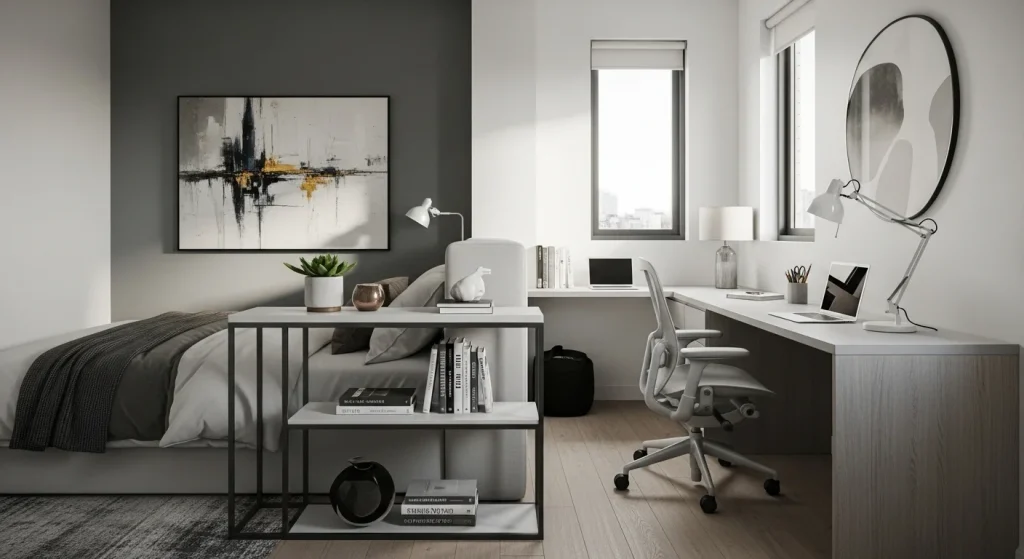
An open shelving unit creates separation while still allowing light to pass through. It doubles as storage and a visual divider. The room feels organized and layered. Items remain accessible from both sides. The layout looks modern and practical. A dual-purpose zoning idea.
5. The Wall Color Zoning Strategy
Using different paint tones or wall finishes can define separate areas visually. The sleeping zone can have softer tones, while the workspace uses slightly darker shades. This creates a clear distinction without physical barriers. The room feels cohesive yet divided. It enhances design depth. A subtle zoning technique.

6. The Corner-Based Functional Zones
Assigning different corners for specific functions helps organize the space. One corner can be for sleeping, another for work or reading. This keeps each activity contained. The layout feels balanced and structured. The center remains open. A simple and efficient approach.

7. The Raised Platform Zone Separation
A slightly raised platform for the bed creates a distinct sleeping zone. It separates rest from other activities visually. Storage can be integrated underneath. The room feels layered and modern. It enhances functionality. A stylish zoning solution.
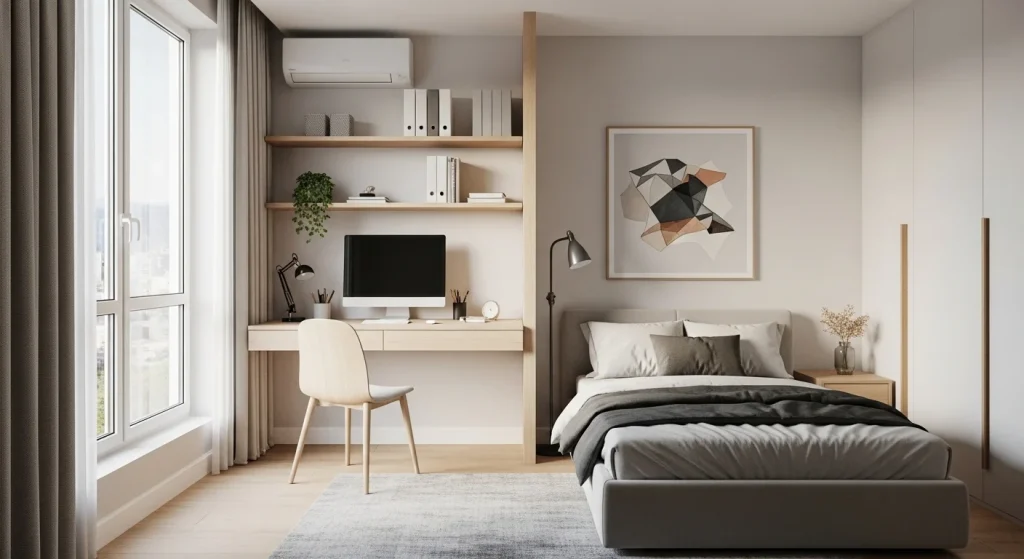
8. The Lighting-Based Zoning Setup
Using different lighting styles helps define zones effectively. Soft warm lighting can highlight the bed area, while brighter light works for study or work. This creates mood-based separation. The room feels more functional. It enhances comfort. A subtle but powerful idea.

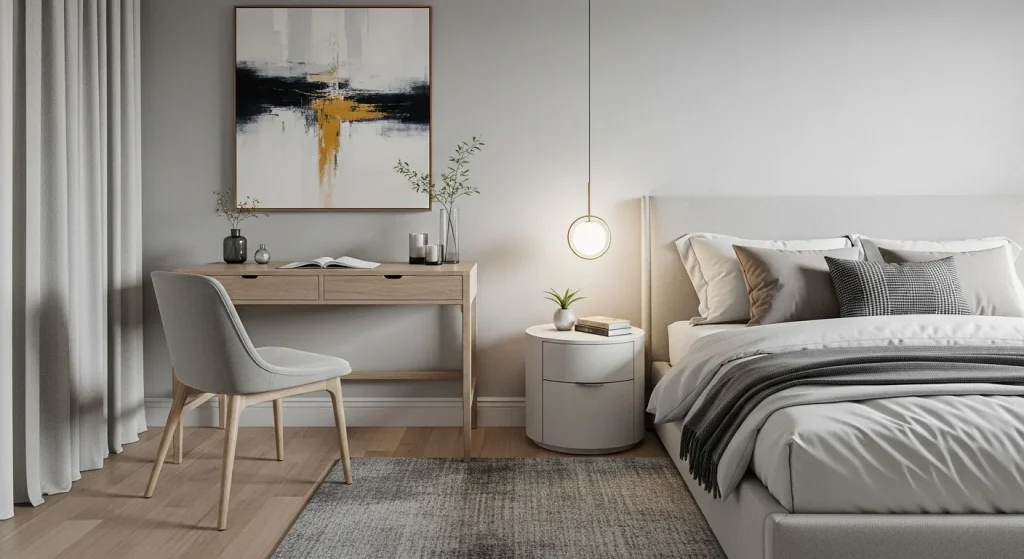
9. The Floating Desk Zone Separation
A floating desk creates a dedicated work area without taking up floor space. It visually separates the study zone from the sleeping area. The setup keeps the room open and uncluttered. It allows better movement across the space. The layout feels modern and efficient. A clean and minimal zoning approach.
10. The Wardrobe Divider Layout
Positioning a wardrobe between zones helps create a clear physical separation. It divides sleeping and dressing or work areas effectively. The layout feels structured and practical. It also adds functional storage. The room looks organized and balanced. A smart dual-purpose divider.
11. The Sliding Panel Flexible Zones
Sliding panels allow you to open or close off different areas as needed. They provide privacy without permanent walls. The layout feels adaptable and modern. The room can transform easily. It maintains a clean look. A flexible zoning solution.

12. The Vertical Divider Slat Design
Using vertical wooden slats creates a stylish semi-open divider. It separates zones while allowing light to flow through. The design adds texture and depth. The room feels modern and airy. It avoids heaviness. A visually appealing zoning method.

13. The Bed Niche Defined Zone
Placing the bed in a recessed or niche area creates a natural sleeping zone. It visually separates it from the rest of the room. The layout feels cozy and intentional. It enhances comfort and privacy. The space looks well-designed. A subtle zoning technique.

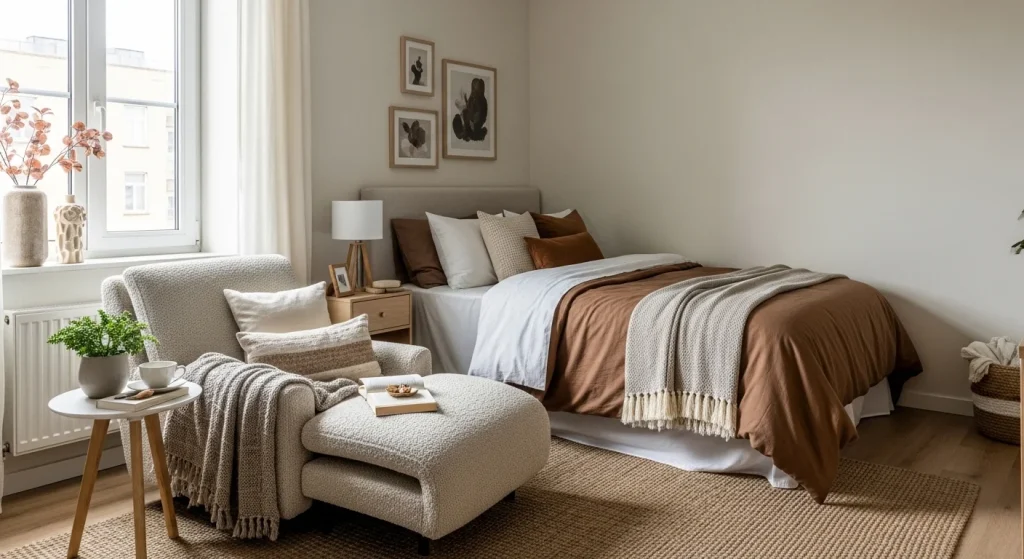
14. The Compact Lounge Corner Zone
Adding a small chair or bench creates a separate relaxation zone. It distinguishes lounging from sleeping. The layout feels more functional and layered. It enhances comfort in the room. The space looks inviting. A simple but effective zoning idea.
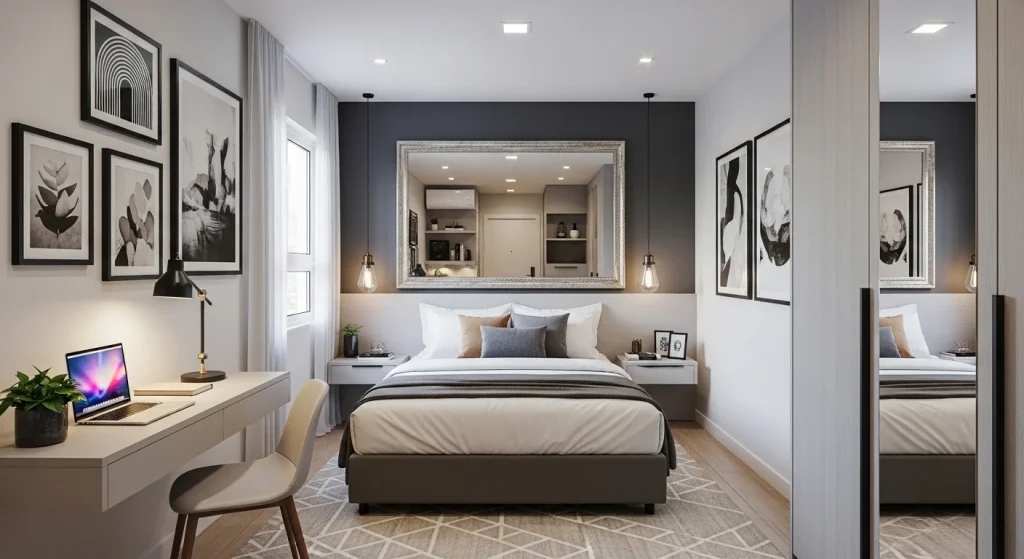
15. The Mirror Reflection Zoning Trick
Using a large mirror can visually expand and define zones. It reflects light and creates the illusion of separate areas. The room feels bigger and brighter. It enhances spatial perception. The layout appears more structured. A clever visual trick.
16. The Minimal Divider Furniture Layout
Using a small console or narrow table as a divider subtly separates spaces. It avoids blocking the room while still defining zones. The layout feels light and functional. It adds utility without clutter. The room remains open. A minimal zoning solution.
FAQs
1. How do I divide a small bedroom into zones?
Use rugs, furniture placement, or light dividers to create separate areas without making the space feel cramped.
2. What is the best way to separate a bed from a workspace?
Use shelves, curtains, or lighting differences to visually separate the two zones effectively.
3. Can I create zones without using dividers?
Yes, visual elements like color, lighting, and layout can define zones without physical barriers.
4. How do I keep a zoned bedroom from feeling cluttered?
Keep furniture minimal, use multi-functional pieces, and maintain open pathways for a clean look.