

Designing a kids’ room in a small apartment requires smart planning to make the most of limited space. Without the right layout, the room can quickly feel crowded and difficult to use.
With the right small apartment kids room space saving ideas, you can create a setup that feels open, organized, and comfortable for both play and rest. The key is using furniture and layouts that serve multiple purposes while keeping the room visually light.
This guide focuses on practical ways to maximize space without sacrificing comfort or style.
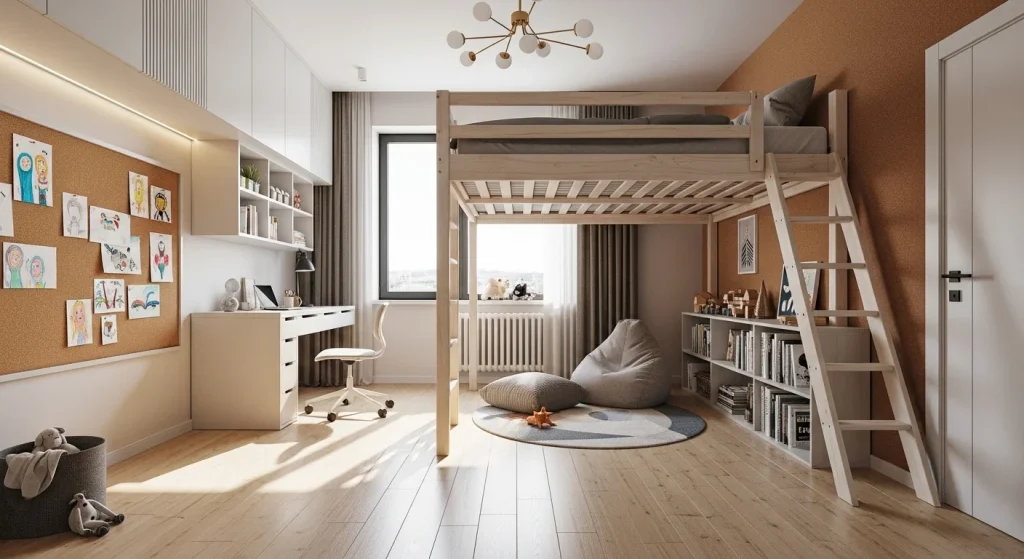
1. The Loft Bed Open Floor Setup
A loft bed frees up valuable floor space underneath for play or storage. It creates a multi-functional layout in one area. The room feels more open and organized. The setup separates sleep and activity zones. It maximizes vertical space. A powerful space-saving solution.
2. The Wall-Mounted Foldable Desk
A foldable desk can be closed when not in use, saving space instantly. It keeps the room flexible and uncluttered. The setup works well for study time. The wall remains clean when folded. It enhances functionality. A smart compact design.

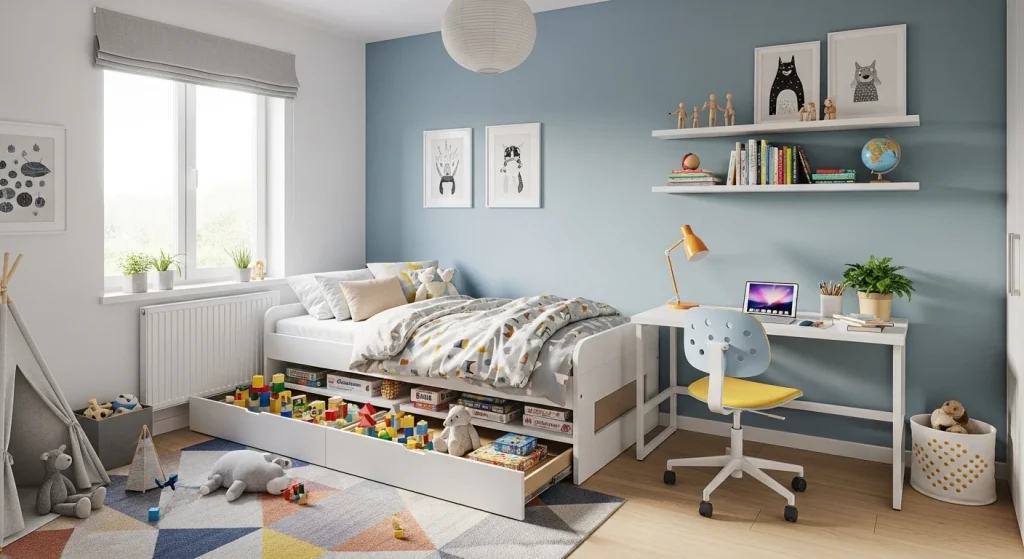
3. The Under-Bed Play Storage Zone
Using under-bed space for storage keeps toys out of sight. It frees up floor space for movement. The room feels cleaner and more open. Items stay organized and accessible. It maximizes hidden areas. A practical everyday solution.
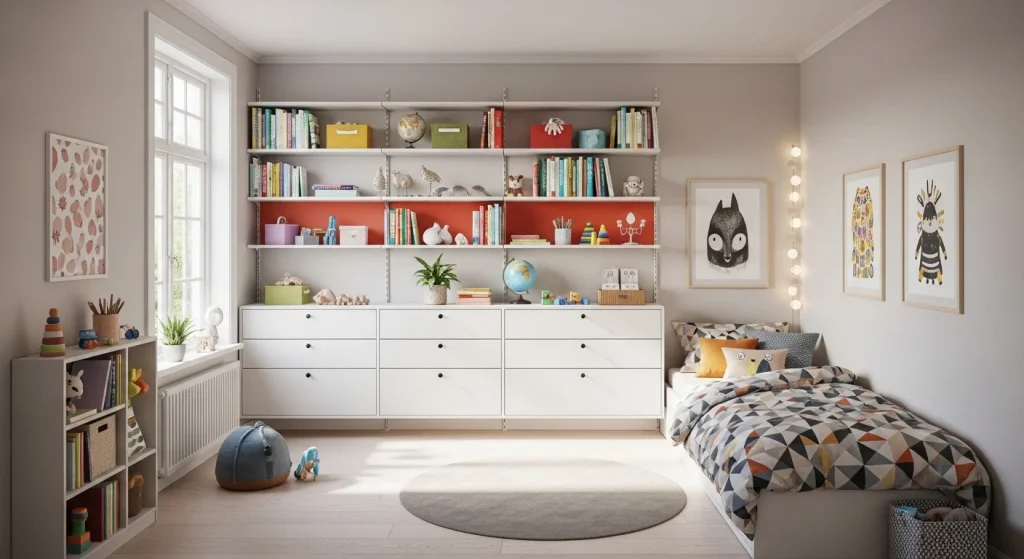
4. The Vertical Wall Storage Expansion
Using vertical wall space helps store items without crowding the floor. It keeps the room organized and open. The setup adds functionality. Everything stays within reach. The design feels efficient. A key space-saving strategy.
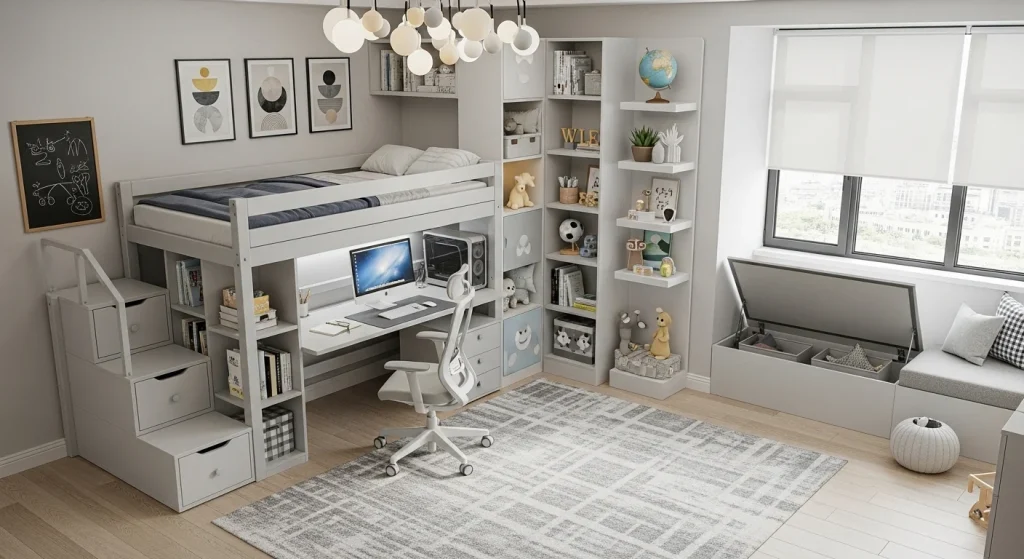
5. The Multi-Functional Bed Setup
A bed with built-in storage or workspace saves significant space. It combines multiple uses in one piece. The room feels less crowded. The setup improves organization. It enhances efficiency. A must-have for small rooms.
6. The Compact Corner Layout Design
Placing furniture in corners opens up central space. It improves movement and flow. The room feels larger and less crowded. The setup looks organized and intentional. It maximizes layout efficiency. A simple but effective approach.
7. The Sliding Door Closet Setup
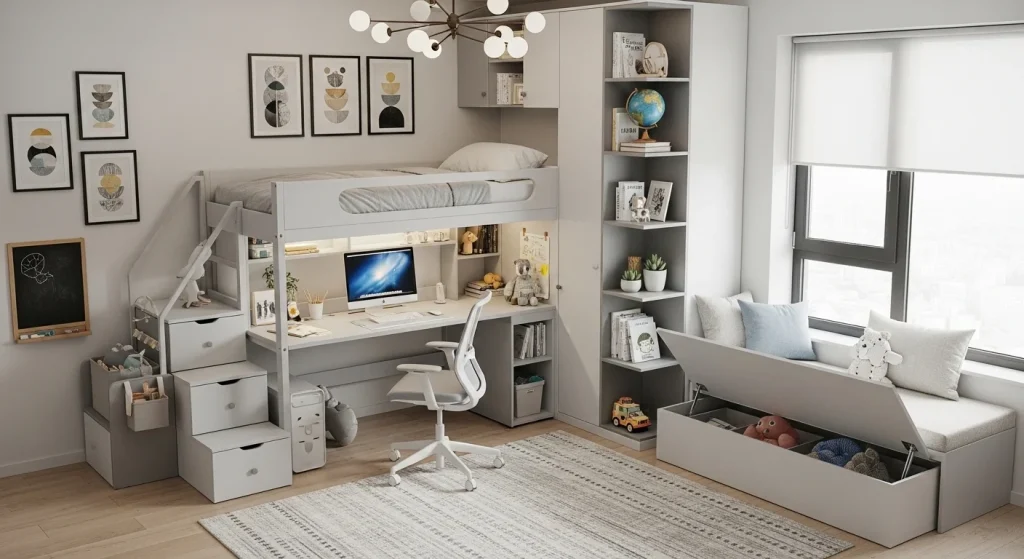
Sliding doors save space compared to traditional doors. They improve accessibility in tight areas. The room layout becomes smoother. It reduces obstruction. The setup feels modern and clean. A functional upgrade.
8. The Stackable Storage Layout
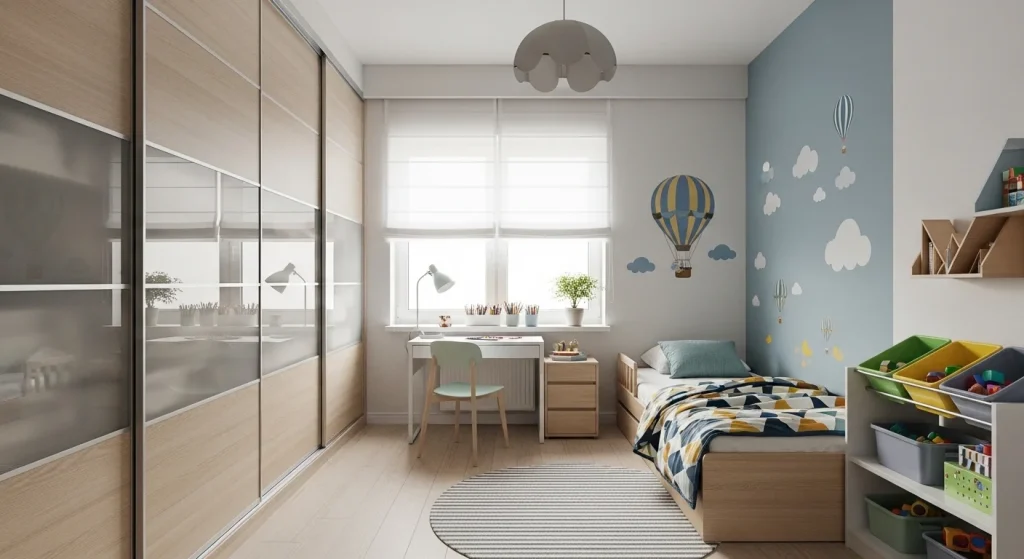
Stackable storage units help organize items vertically. They reduce floor clutter significantly. The room feels more structured. The setup is flexible and expandable. It keeps items accessible. A smart organizing method.
9. The Minimal Furniture Space Strategy
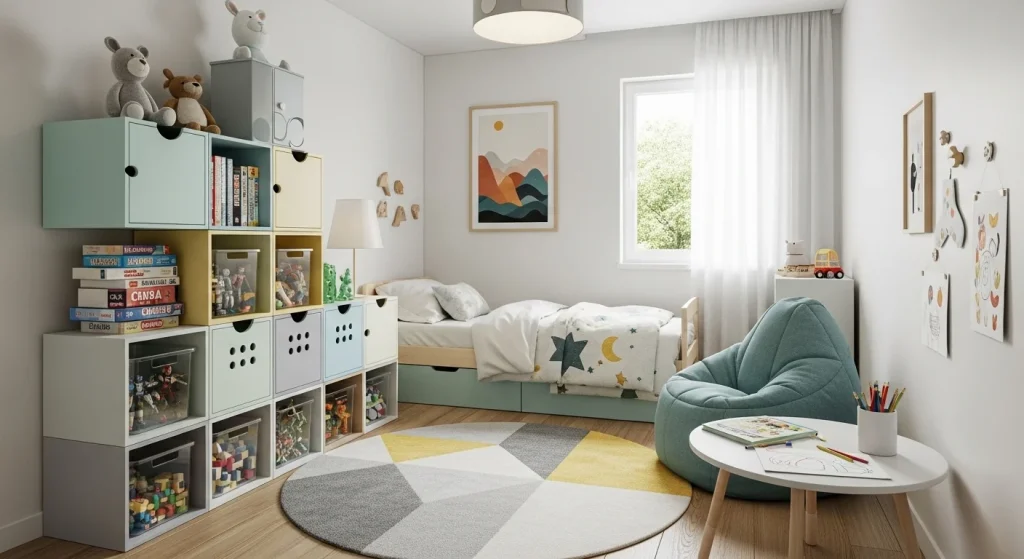
Using only essential furniture creates more open space. It reduces visual clutter. The room feels lighter and bigger. The setup improves movement. It enhances comfort. A clean and effective approach.

10. The Foldable Bed Daytime Space Setup
A foldable bed allows you to free up floor space during the day. It transforms the room into a play or activity area. The setup feels flexible and efficient. The room looks more open and uncluttered. It supports multi-use living. A smart compact solution.
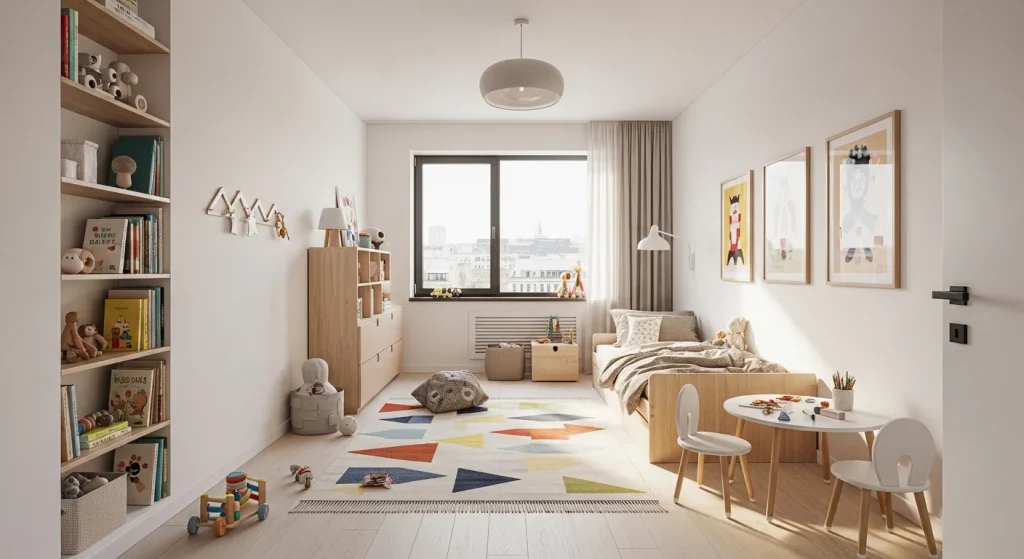
11. The Narrow Storage Strip Design
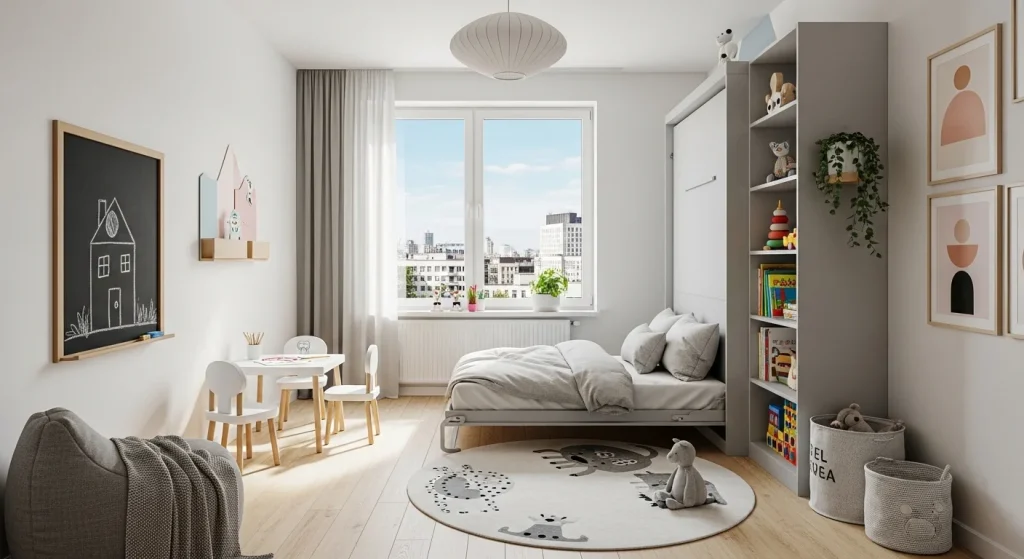
Using narrow storage units along walls or tight gaps maximizes unused space. It keeps items organized without crowding the room. The setup feels sleek and efficient. It improves overall layout. Everything stays accessible. A smart small-space trick.
12. The Hanging Ceiling Storage Idea
Using overhead hanging storage creates extra space without using the floor. It’s perfect for lightweight items or decor. The setup keeps the room organized. It adds vertical functionality. The space feels less crowded. A creative solution.

13. The Slide-In Desk Under Bed Setup
A desk that slides under the bed saves significant space. It can be pulled out when needed. The setup keeps the room flexible. It reduces clutter. The layout feels modern and efficient. A compact design idea.
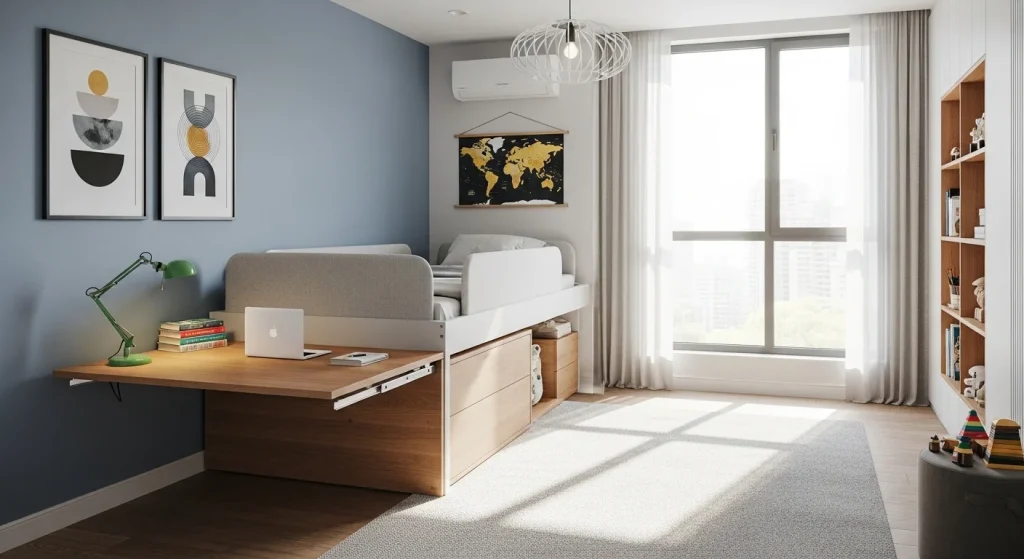
14. The Wall Fold Storage Panels
Foldable wall panels can hide storage compartments behind them. They keep items out of sight when closed. The room looks clean and minimal. The setup adds hidden functionality. It maximizes vertical space. A sleek modern solution.
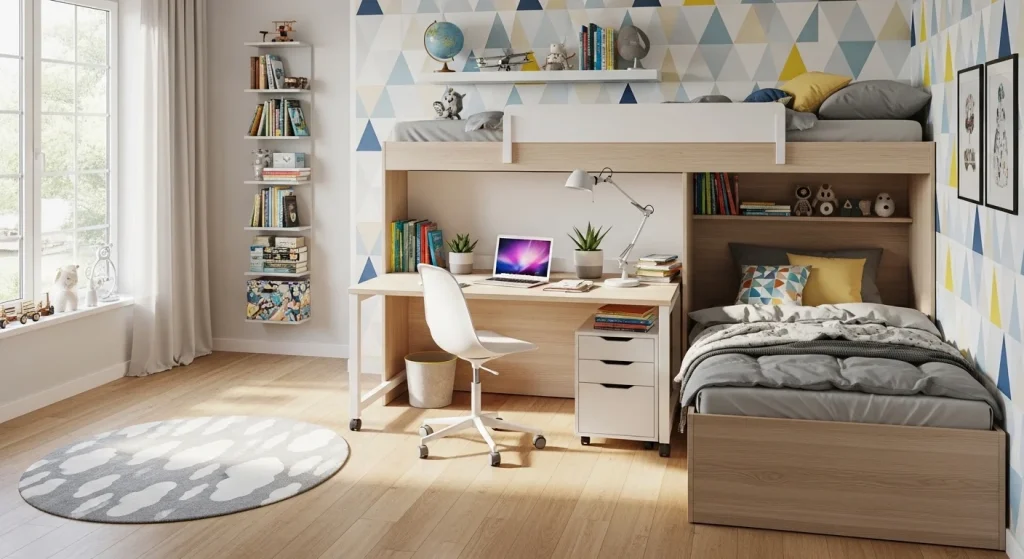
15. The Shared Storage Zone Layout
Creating one central storage area keeps the rest of the room open. It reduces scattered clutter. The setup feels organized and structured. It improves accessibility. The room becomes easier to maintain. A practical layout idea.
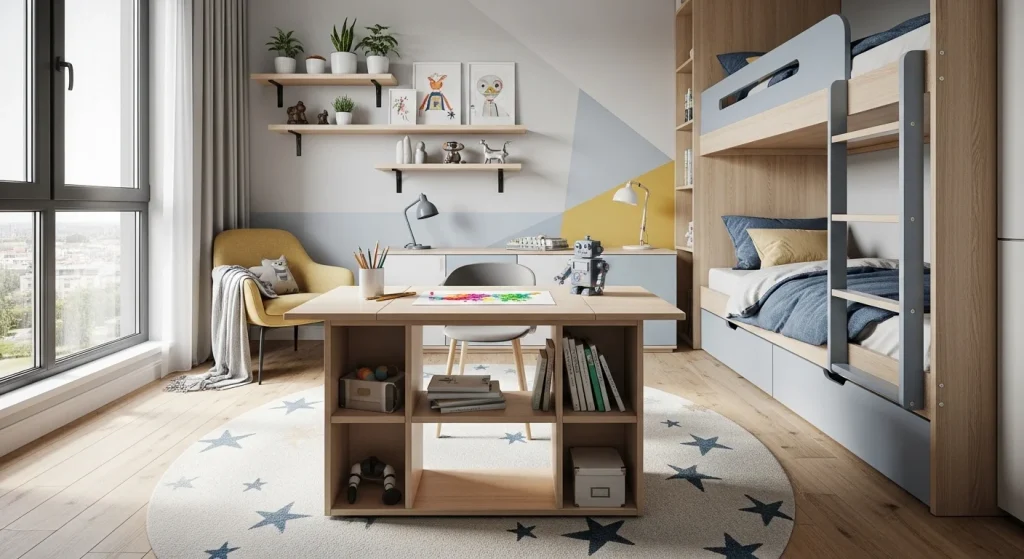
16. The Compact Multi-Use Activity Table
A small table that serves for study, play, and crafts saves space. It reduces the need for multiple furniture pieces. The setup feels efficient and versatile. The room remains uncluttered. It supports daily activities. A smart multifunction idea.

17. The Built-In Wall Bed Storage Combo
A wall bed with integrated storage combines sleeping and organization. It keeps everything in one place. The setup maximizes limited space. The room feels open when the bed is folded. It improves functionality. A high-impact solution.

FAQs
1. How do you save space in a small kids room?
Use vertical storage, multi-functional furniture, and compact layouts to maximize every inch efficiently.
2. What furniture is best for small kids rooms?
Loft beds, foldable desks, storage beds, and multi-use furniture work best in limited spaces.
3. How can I make a kids room feel bigger?
Keep the layout minimal, use light colors, and maximize open floor space for a spacious feel.
4. Is multi-functional furniture worth it for kids rooms?
Yes, it helps combine storage, play, and sleep areas, making small rooms more efficient and organized.