
A workspace in a small apartment shouldn’t feel forced or uncomfortable—it should be something you actually enjoy using every day. The problem with most setups is that they look good but don’t support real productivity or comfort.
The key is creating a workspace that fits naturally into your routine while staying visually calm and functional. Small changes in layout, lighting, and organization can make a huge difference in how often you actually use the space.
These small apartment workspace ideas focus on setups that feel practical, comfortable, and genuinely worth using daily.
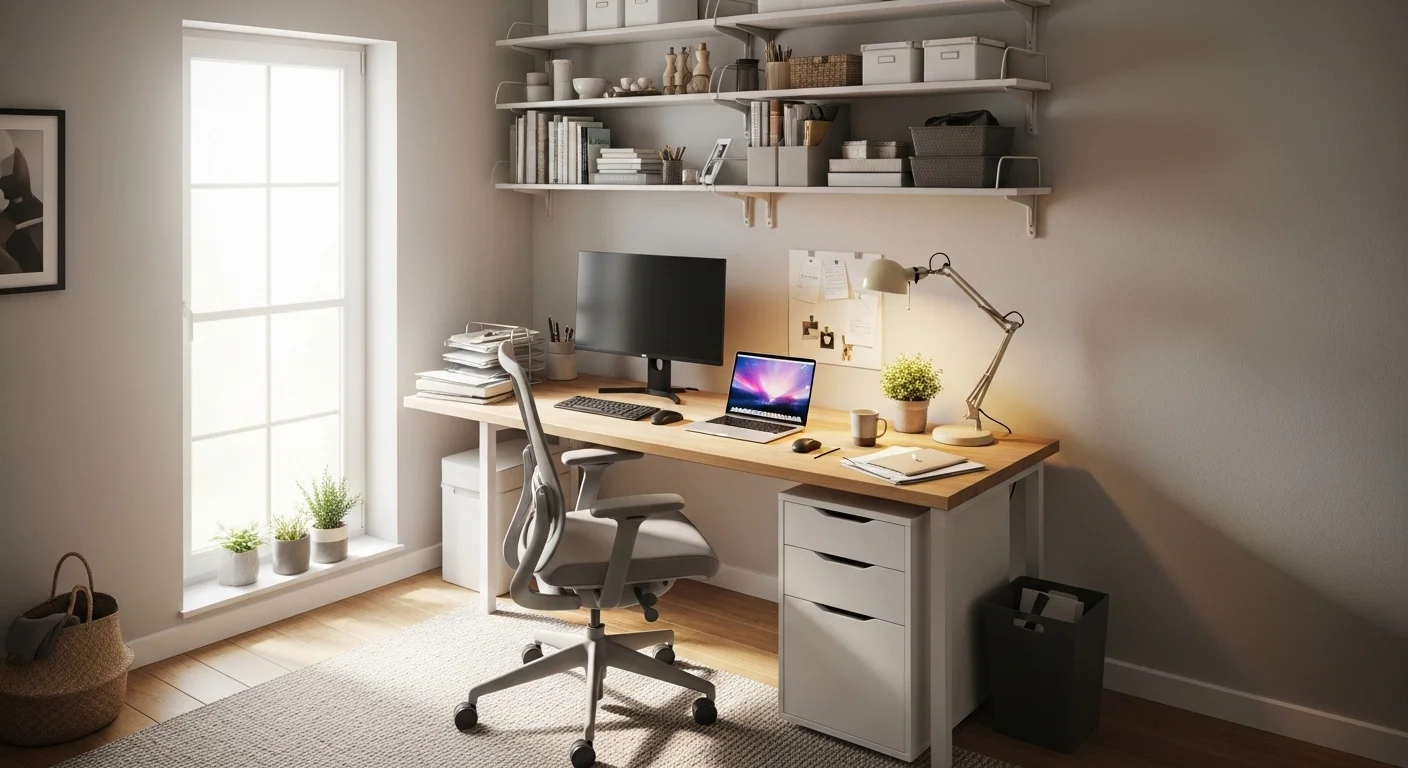
1. The Everyday Easy-Access Desk Setup
Keeping your most-used items within arm’s reach makes your workspace feel effortless to use. It removes the need to constantly get up or search for tools. The setup feels intuitive and smooth. It supports quick workflow without interruptions. The space becomes more efficient naturally. A simple but highly practical idea.
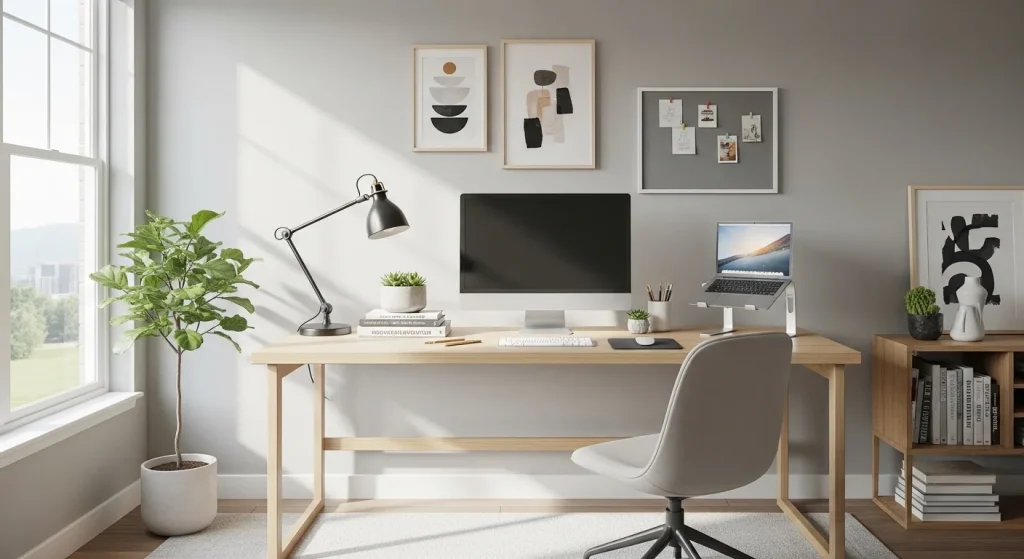
2. The Comfortable Long-Hours Seating Setup
A workspace you actually use needs to be comfortable for extended periods. A supportive chair and proper desk height reduce strain and fatigue. The setup feels more inviting and usable. It encourages longer focus sessions. Comfort directly improves productivity. A must-have foundation for daily work.
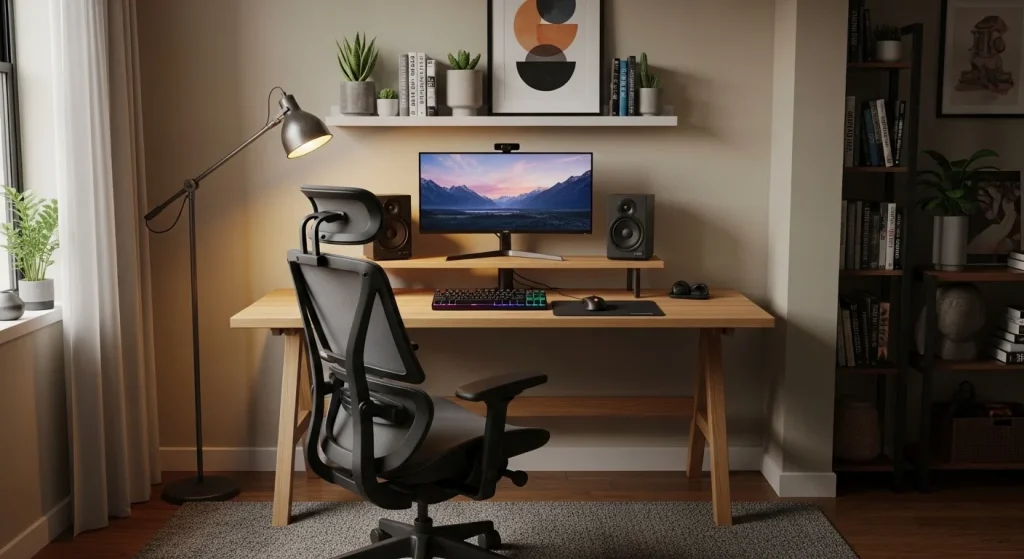
3. The Window-Facing Motivation Setup
Placing your desk near a window creates a more enjoyable and energizing work environment. Natural light boosts mood and focus. The view adds a sense of openness. The setup feels less confined. It makes working more pleasant. A highly motivating layout choice.
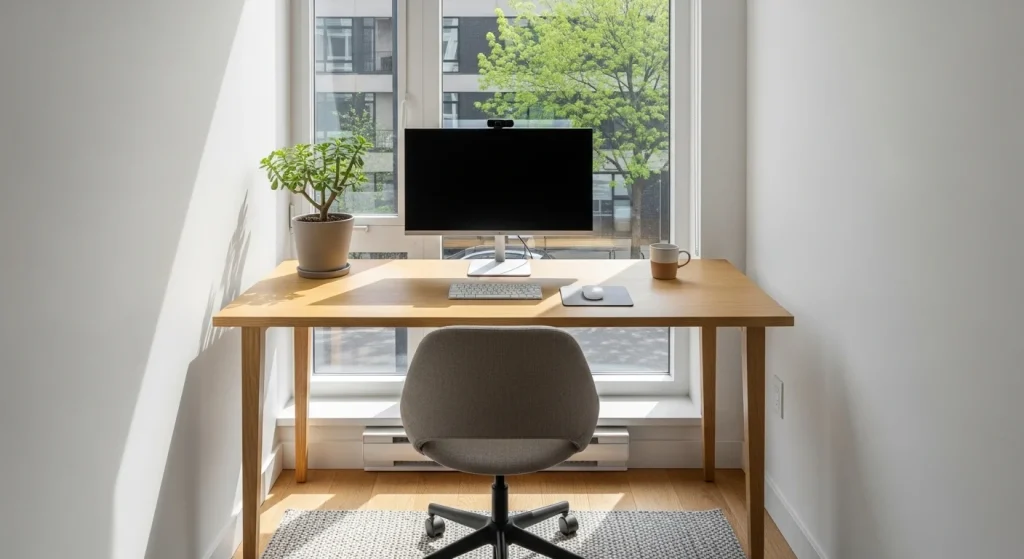
4. The Small Corner Productivity Setup
Using a corner for your workspace keeps it defined without taking over the room. It creates a clear work zone. The setup feels structured and organized. It helps separate work from relaxation areas. The space remains balanced. A smart solution for small apartments.
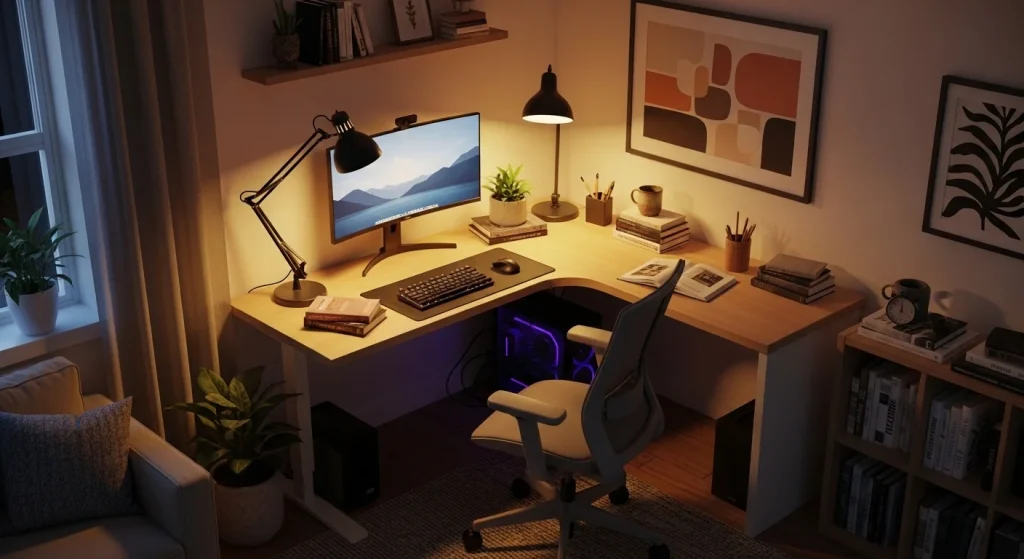
5. The Clutter-Free Clean Desk Habit
A clean desk makes it easier to focus and stay productive. Removing unnecessary items reduces distractions. The setup feels calm and controlled. It improves mental clarity. The workspace becomes more efficient. A daily habit that makes a big difference.
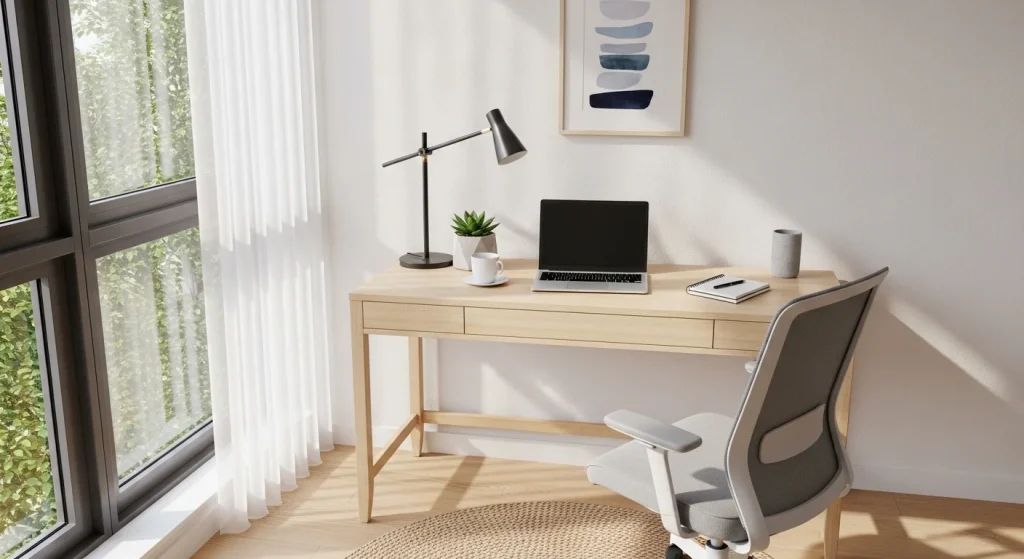
6. The Flexible Multi-Use Workspace Setup
In a small apartment, your workspace often needs to serve multiple purposes. A flexible setup allows you to switch between tasks easily. The space feels more practical and adaptable. It fits into your daily routine naturally. It avoids feeling restrictive. A realistic approach to small living.
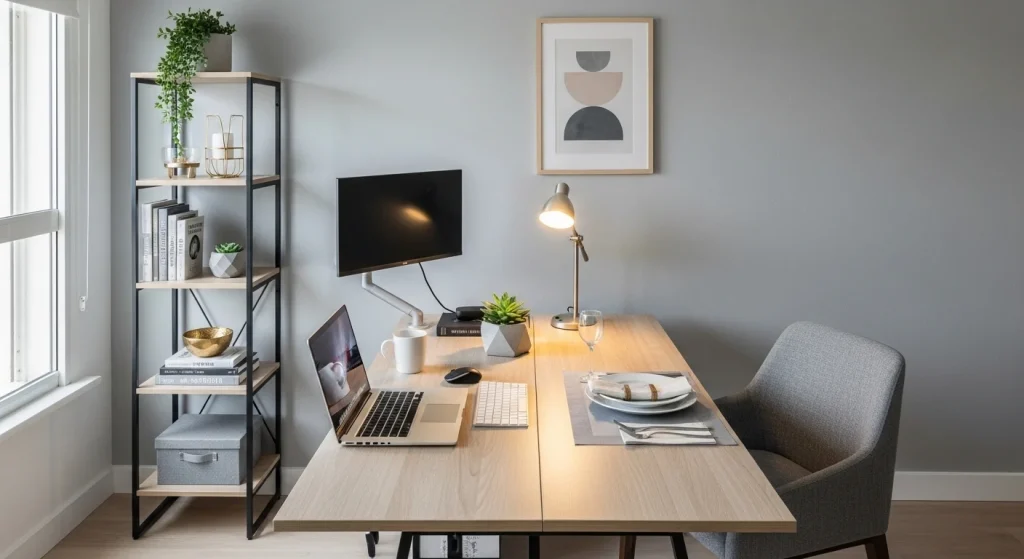
7. The Soft Lighting Comfort Setup
Harsh lighting can make you avoid using your workspace. Soft, warm lighting creates a more comfortable environment. The setup feels inviting and relaxed. It reduces eye strain. It makes working more enjoyable. A simple but effective improvement.
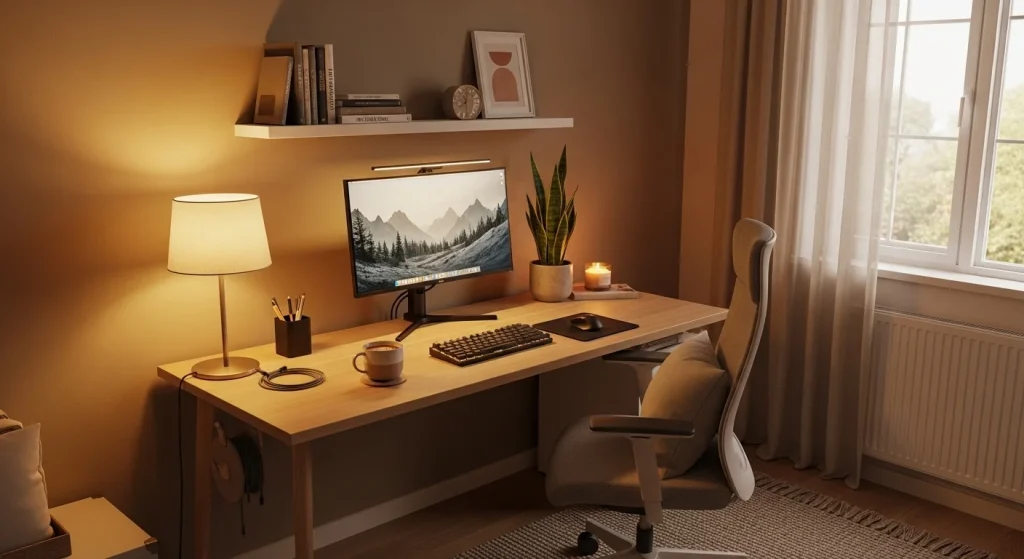
8. The Quick Setup and Reset Workspace
A workspace that’s easy to set up and reset encourages daily use. Keeping it simple reduces resistance to starting work. The setup feels manageable and stress-free. It supports consistent productivity. It avoids clutter buildup. A practical everyday solution.
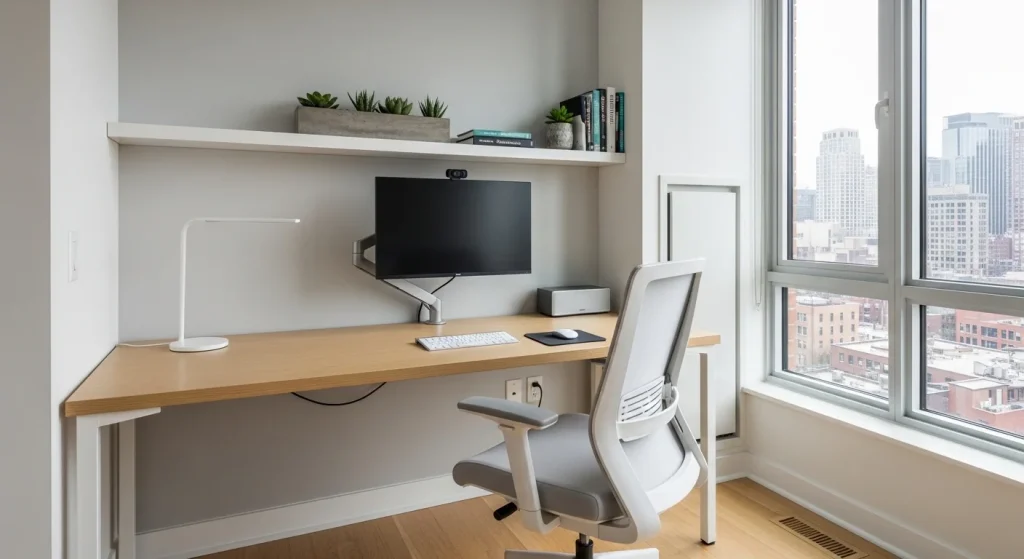
9. The Minimal Distraction Focus Setup
Designing your workspace with minimal visual distractions helps you stay focused for longer periods without feeling overwhelmed. Keeping only essential items on the desk reduces mental clutter and improves clarity. The setup feels calm and intentional rather than busy or chaotic. It allows your attention to stay on the task in front of you. This approach is especially useful in small apartments where distractions are harder to avoid. A focused environment leads to more consistent productivity.
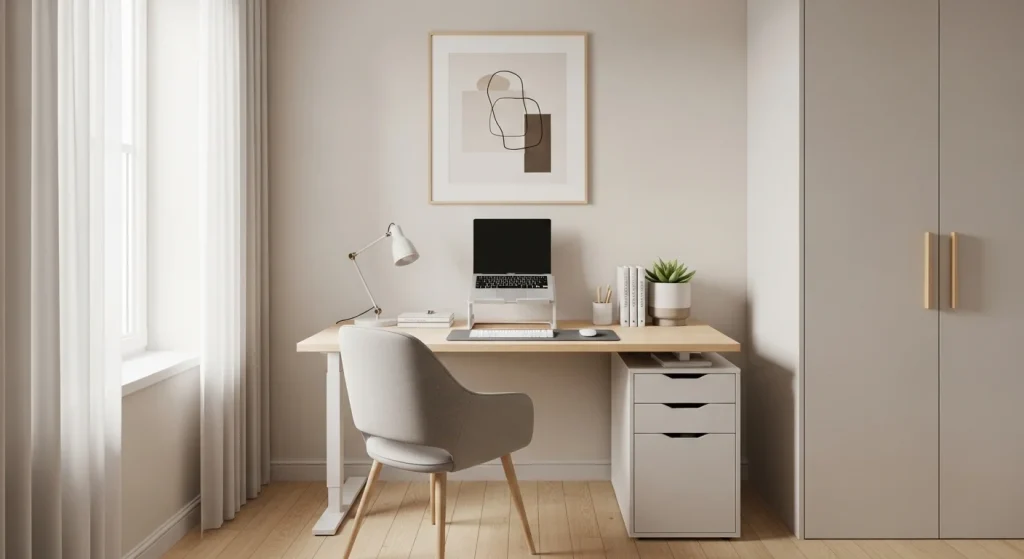
10. The Hidden Storage Workspace Setup
Incorporating hidden storage into your workspace keeps necessary items out of sight while still easily accessible when needed. This helps maintain a clean and organized surface without sacrificing functionality. The setup feels more polished and less cluttered throughout the day. It also reduces the time spent organizing repeatedly. A tidy environment makes it easier to concentrate and stay productive. This is a practical solution for everyday use.
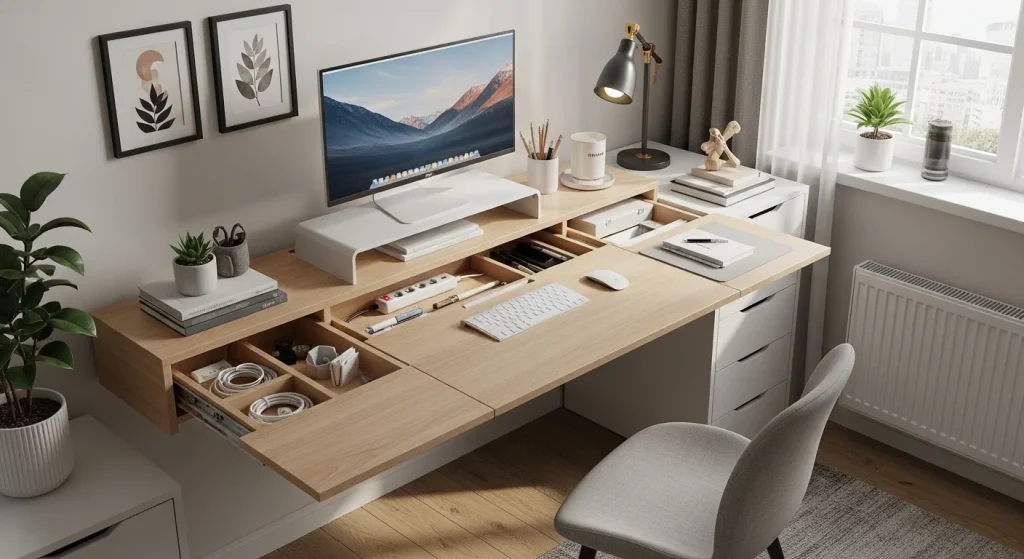
11. The Dual-Zone Work and Planning Setup
Dividing your desk into two small zones—one for active work and one for planning or notes—creates a more structured workflow. It prevents tasks from overlapping visually and mentally. The setup feels more organized and efficient. You always know where each activity belongs. This separation improves clarity and reduces stress. A simple layout that enhances productivity.
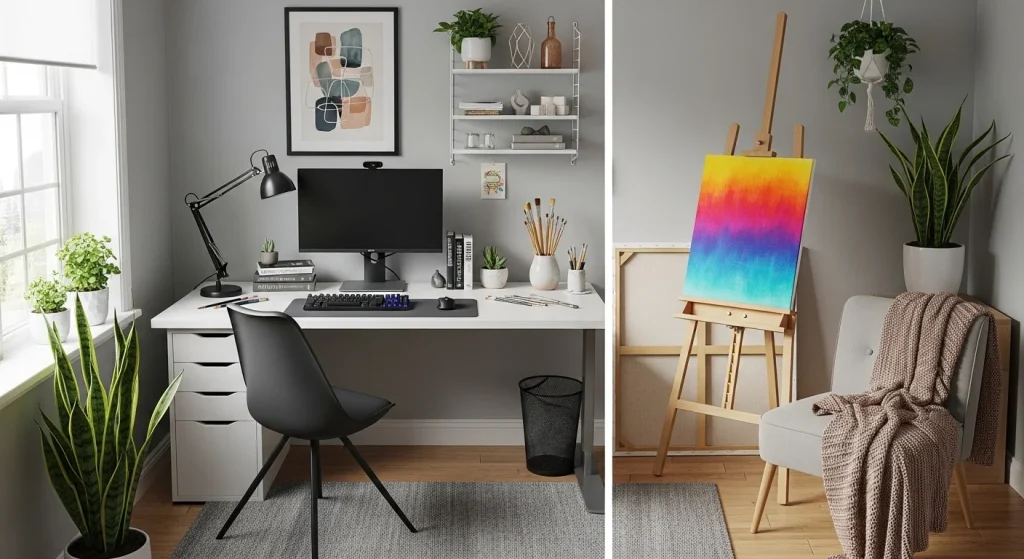
12. The Wall-Facing Deep Focus Setup
Positioning your desk to face a simple, uncluttered wall can significantly improve concentration by removing unnecessary visual distractions. This setup creates a controlled environment where your attention stays on your work. It reduces the urge to look around or get distracted easily. The workspace feels more focused and intentional. It’s especially effective for deep work sessions. A minimal but powerful productivity adjustment.
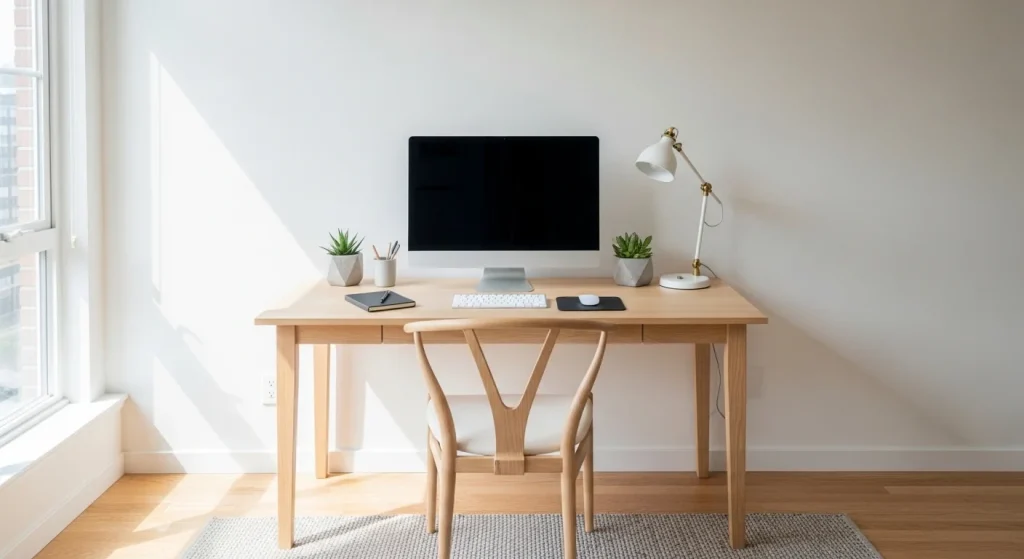
13. The Soft Personal Comfort Setup
Adding small personal touches like a cushion, soft textile, or subtle decor makes your workspace feel more comfortable without becoming distracting. These elements create a sense of familiarity and ease. The setup feels more inviting, which encourages regular use. It balances productivity with comfort. The space becomes somewhere you actually enjoy spending time. A human-centered workspace approach.
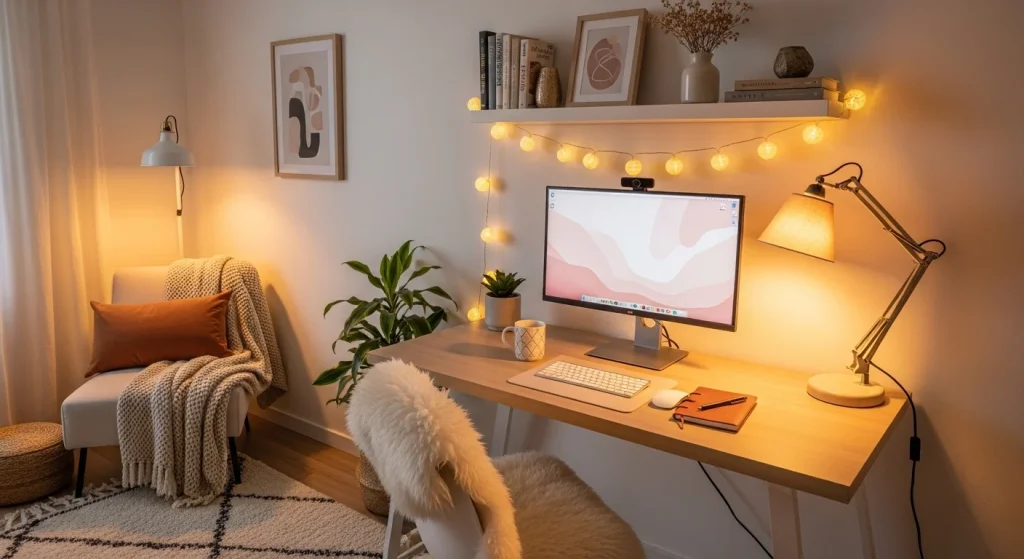
14. The Compact Vertical Storage Setup
Using vertical storage like shelves or wall organizers helps free up desk space while keeping everything within reach. This makes the workspace feel more open and less crowded. The setup becomes more efficient without expanding physically. It also improves organization over time. Everything has a clear place. A smart solution for small apartment work areas.
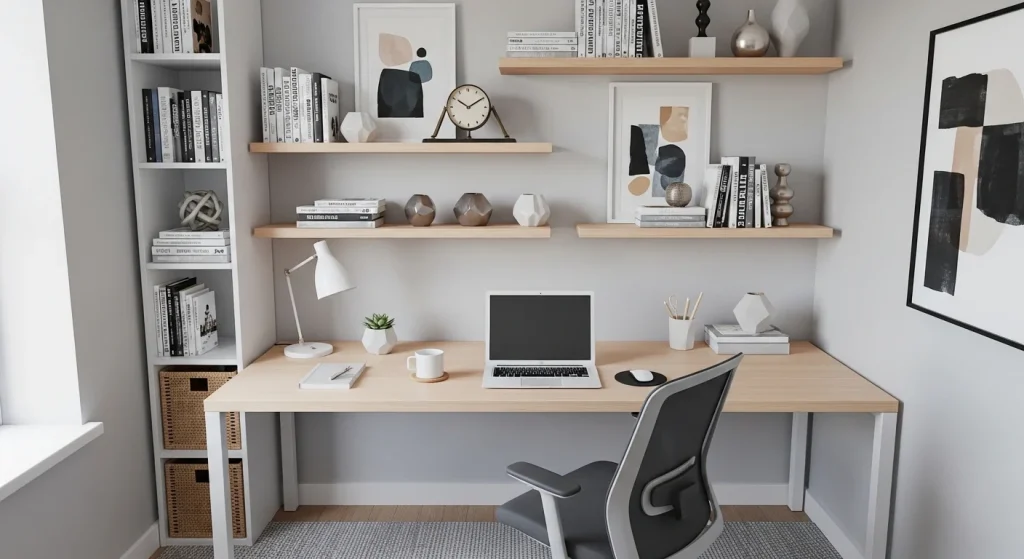
15. The End-of-Day Reset Routine Setup
Creating a simple routine to reset your workspace at the end of the day helps maintain long-term organization and usability. Clearing the desk prepares you for a fresh start the next day. The setup always feels clean and ready. It reduces stress before beginning work again. This habit supports consistency and productivity. A small routine with lasting impact.
FAQs
1. How do I create a workspace I’ll actually use?
Focus on comfort, simplicity, and keeping essential items easily accessible to support your daily routine.
2. What is the best workspace setup for small apartments?
A compact, clutter-free setup with good lighting and smart storage works best.
3. How can I stay productive while working from home?
Maintain a clean workspace, reduce distractions, and create a consistent work routine.
4. Do I need a dedicated room for a workspace?
No, even a small corner or desk area can be effective with the right setup.