

Making a small apartment feel bigger is not about removing everything, but about using space more intelligently. The way furniture is arranged, how storage is hidden, and how light moves through the room all affect how spacious it feels. Even compact homes can look open and airy when designed with intention. The key is combining functionality with visual simplicity so nothing feels heavy or crowded. Small changes can create a strong illusion of space without requiring renovation. These ideas will help you maximize every corner while making your apartment feel larger, brighter, and more open.
1. The Multi-Functional Furniture Setup
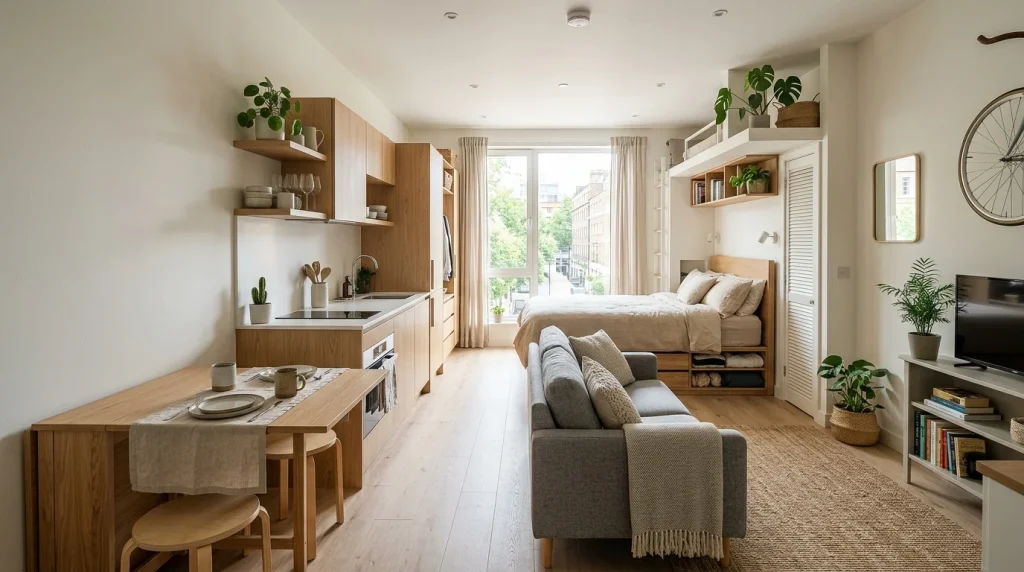
Using furniture that serves more than one purpose instantly saves space and reduces clutter. A bed with storage, a sofa bed, or a table with hidden compartments keeps your apartment efficient. This removes the need for extra furniture pieces. The room feels lighter and more organized. Every item has a clear purpose. Smart furniture creates a more open environment.
2. The Vertical Storage Strategy
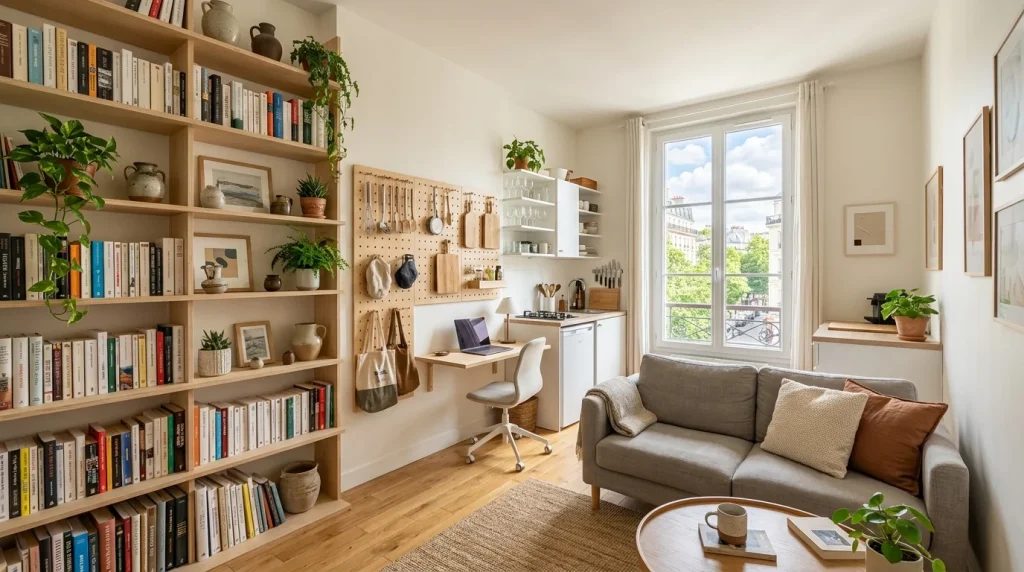
Using vertical wall space keeps the floor clear and makes the room feel taller. Tall shelves and wall-mounted units draw the eye upward. This creates the illusion of higher ceilings. It also adds storage without crowding the layout. Organized vertical storage keeps everything tidy. Height adds visual spaciousness.
3. The Open Floor Layout Concept
Keeping the floor as open as possible makes the apartment feel significantly larger. Avoid placing too many items directly on the ground. Floating furniture or wall-mounted pieces help achieve this. The eye moves freely across the space. This creates a sense of openness. Less floor clutter equals more visual space.

4. The Mirror Expansion Effect
Large mirrors reflect light and visually double the size of a room. They create depth and make walls feel less solid. Placing them across windows enhances natural light. This makes the apartment feel brighter and bigger. Mirrors are both decorative and functional. A powerful illusion tool.
5. The Light Color Palette Choice
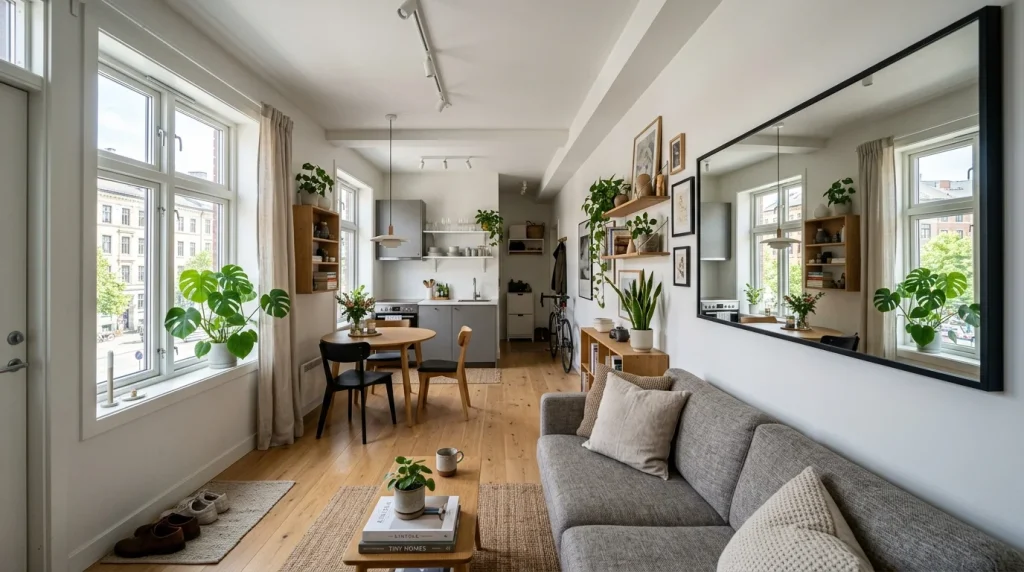
Light colors reflect more light and make rooms feel open and airy. Whites, creams, and soft neutrals expand visual space. Dark colors can feel heavier in small rooms. A consistent light palette creates flow between areas. The apartment feels unified and larger. Color choice impacts perception strongly.

6. The Hidden Storage Integration
Hidden storage keeps clutter out of sight, making the space feel clean and spacious. Built-in drawers, under-bed storage, and concealed cabinets are ideal. This reduces visual noise. The room looks more organized instantly. Clean spaces feel bigger. Storage should disappear into design.

7. The Proper Furniture Scale Rule
Choosing furniture that fits the room size prevents overcrowding. Oversized pieces can make a small apartment feel cramped. Scaled furniture allows better movement and spacing. The layout feels balanced and comfortable. Each piece has breathing space. Proportion is key to spacious design.
8. The Floating Furniture Trick
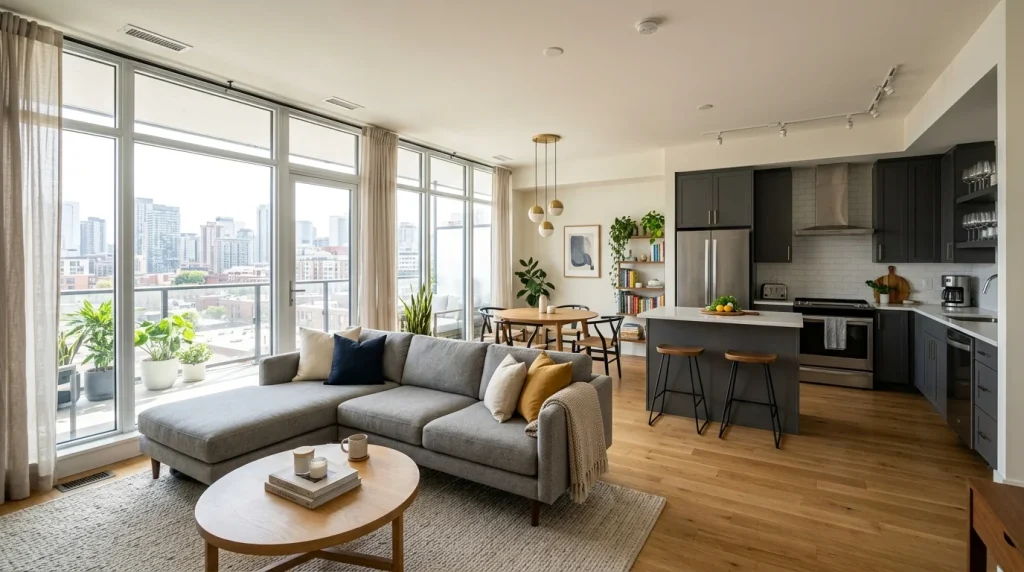
Wall-mounted desks, shelves, and cabinets keep the floor visible and open. This creates a lighter visual effect. The space feels less crowded. Floating elements also look modern and clean. They maximize functionality without heaviness. A smart small-space solution.

9. The Minimal Decor Approach
Using fewer decor items prevents visual clutter and makes the room feel bigger. Each piece stands out more clearly. The space feels calm and organized. Too many small items can overwhelm the eye. Minimal styling creates clarity. Less truly feels more spacious.
10. The Glass and Transparent Furniture
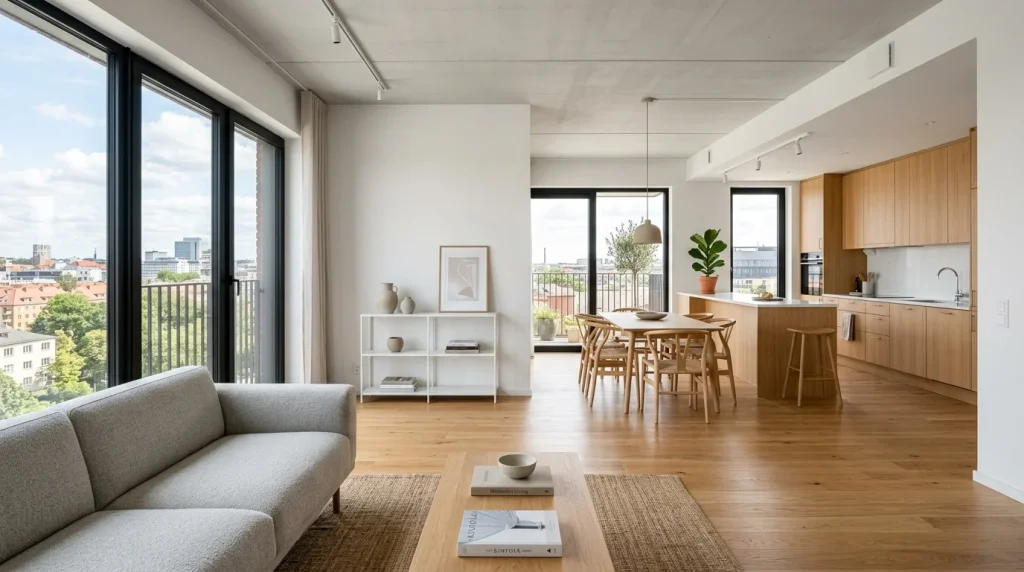
Glass tables or acrylic furniture reduce visual weight in a room. They allow light to pass through and keep the space open. This makes furniture feel almost invisible. The room appears less crowded. Transparency enhances spaciousness. A subtle but effective trick.
11. The Defined Zones Without Walls
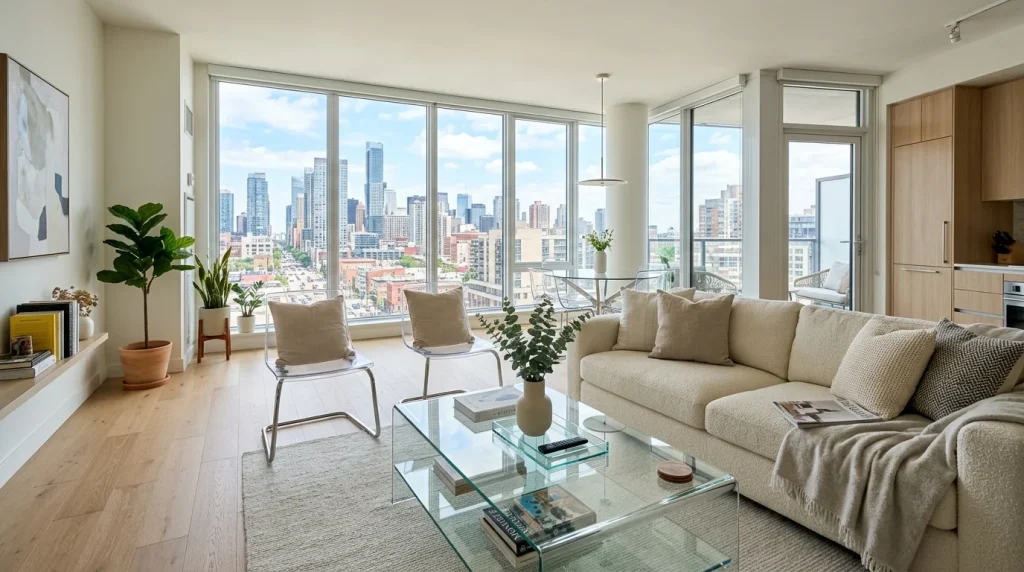
Using rugs, lighting, or furniture placement to define areas avoids the need for walls. Open zoning keeps the apartment flowing. This makes the space feel larger. Each area still has purpose without separation. Visual continuity is maintained. A smart layout strategy.
12. The Large Window Emphasis
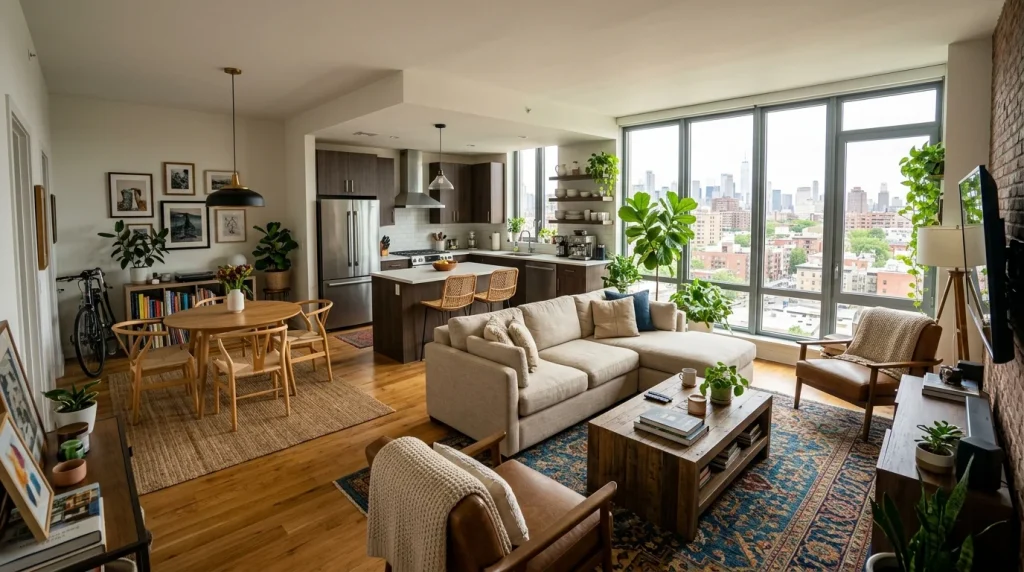
Keeping windows clear and uncovered allows maximum natural light. Light expands space visually. Avoid heavy curtains that block brightness. The room feels more open and fresh. Sunlight enhances every design element. Bright spaces always feel bigger.

13. The Decluttered Surface Rule
Keeping countertops and tables clear reduces visual chaos. Clean surfaces create a sense of order. This makes the room feel more spacious. Clutter can shrink a space visually. Organized surfaces improve flow. Simplicity enhances openness.
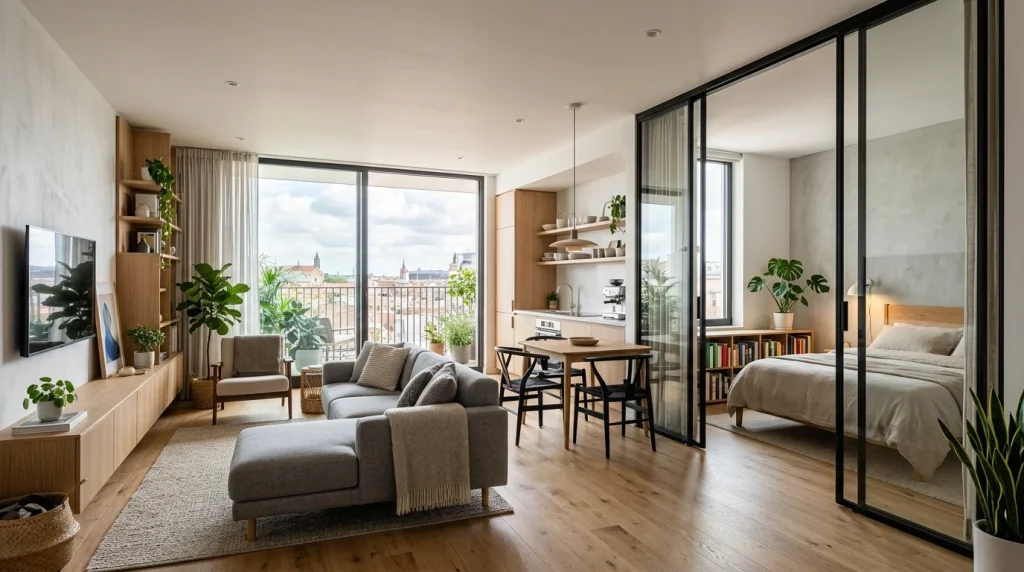
14. The Sliding Door Solution
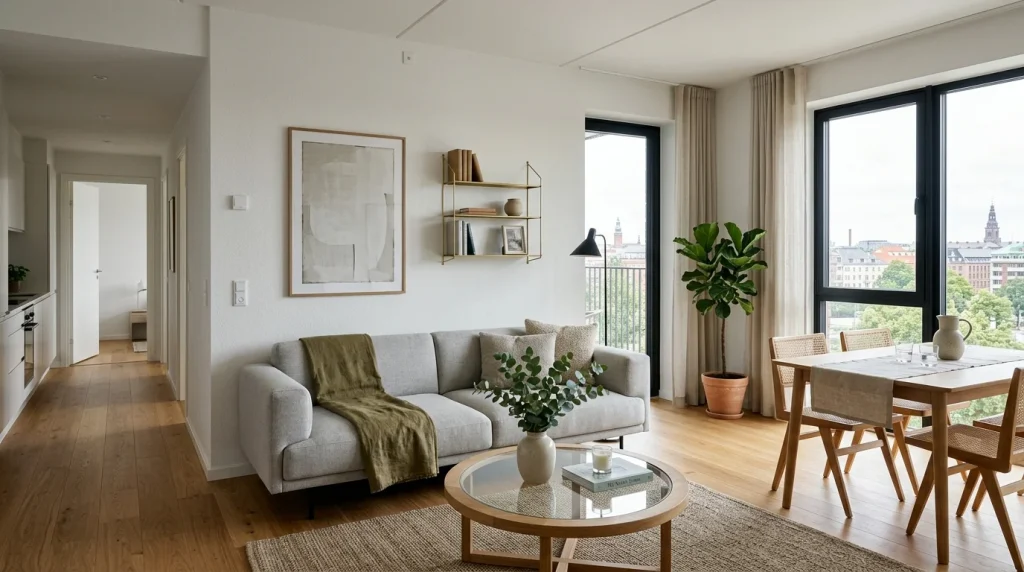
Sliding doors save space compared to traditional swing doors. They allow better use of walls and corners. This improves movement in tight areas. The layout feels more efficient. Modern sliding designs also look stylish. Function meets design perfectly.
15. The Elevated Furniture Legs
Furniture with visible legs creates a sense of openness underneath. This allows light and space to flow visually. The room feels less heavy. Raised furniture looks lighter and more modern. It also makes cleaning easier. Small detail, big impact.

16. The Consistent Flooring Flow
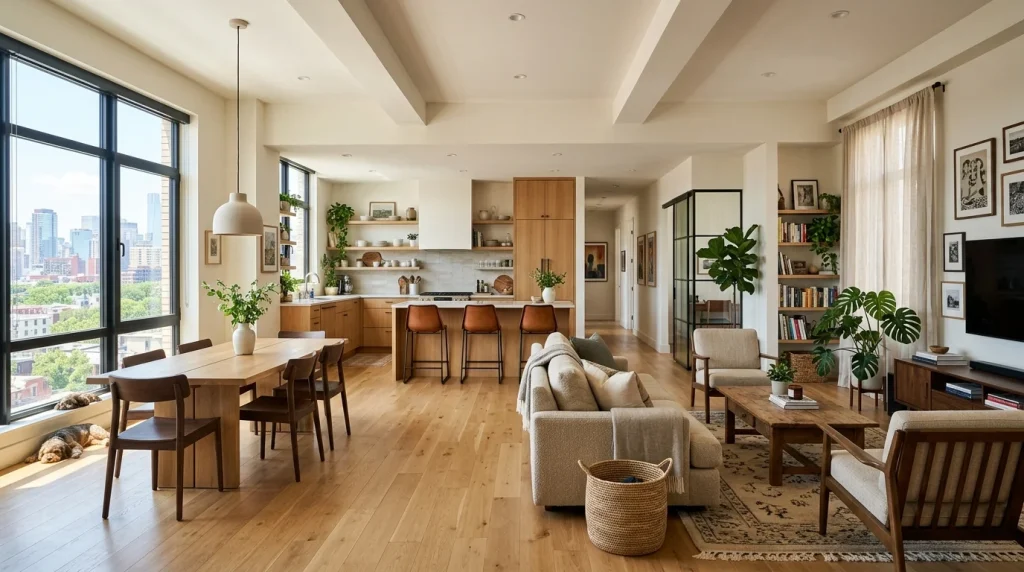
Using the same flooring throughout the apartment creates visual continuity. This avoids breaking the space into smaller sections. The home feels larger and more connected. Seamless flooring enhances flow. It also looks more modern. Continuity expands perception.
17. The Open Pathway Layout
Keeping clear walking paths improves both function and visual space. Blocked pathways make rooms feel tight and crowded. Open movement areas create flow. The apartment feels easier to navigate. This improves comfort and usability. Space should feel effortless.
FAQs
1. How can I make my small apartment look bigger instantly?
Use mirrors, light colors, declutter surfaces, and improve lighting. These changes quickly expand visual space. Keep layouts open and avoid heavy furniture. Even small adjustments can create a big difference. Focus on simplicity and flow. Perception matters more than size.
2. What furniture is best for small apartments?
Multi-functional, lightweight, and properly scaled furniture works best. Look for pieces with storage or dual use. Avoid bulky designs. Choose items that maintain openness. Smart furniture saves both space and effort.
3. Do colors really affect space perception?
Yes, light colors reflect more light and make rooms feel larger. Dark tones can make spaces feel smaller. Consistent palettes improve flow. Color choice is one of the easiest upgrades. It strongly impacts visual size.
4. How do I avoid clutter in a small apartment?
Use hidden storage, limit decor items, and keep surfaces clean. Organize daily essentials properly. Avoid collecting unnecessary items. Focus on intentional design. Clutter reduces both space and comfort.