
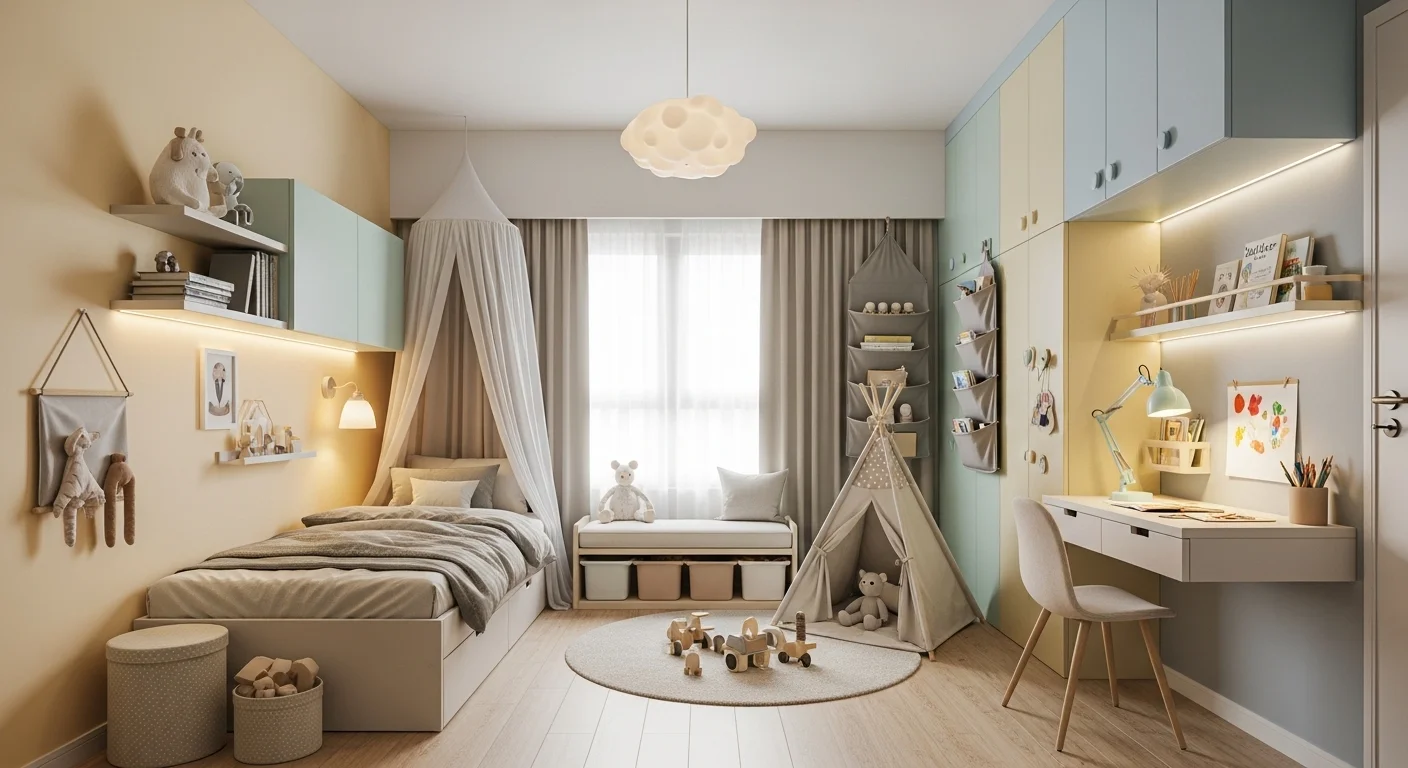
Designing a kids room in a small apartment is all about balance—creating a space that feels fun, functional, and comfortable without overcrowding the room. It needs to support sleep, play, and learning all in one compact area.
The challenge is making the space feel open while still including everything a child needs for daily life. Smart layouts, soft colors, and clever storage play a huge role in making the room work efficiently.
These small apartment kids room ideas are designed to be practical, cozy, and easy to copy in real homes.
1. The Zoned Mini Room Layout
Dividing a small kids room into clear zones for sleep, play, and study creates structure without needing extra space. Each area has a defined purpose, making the room easier to use. The setup reduces clutter and confusion. It helps kids understand where everything belongs. The room feels more organized and balanced. A simple but highly effective layout strategy.
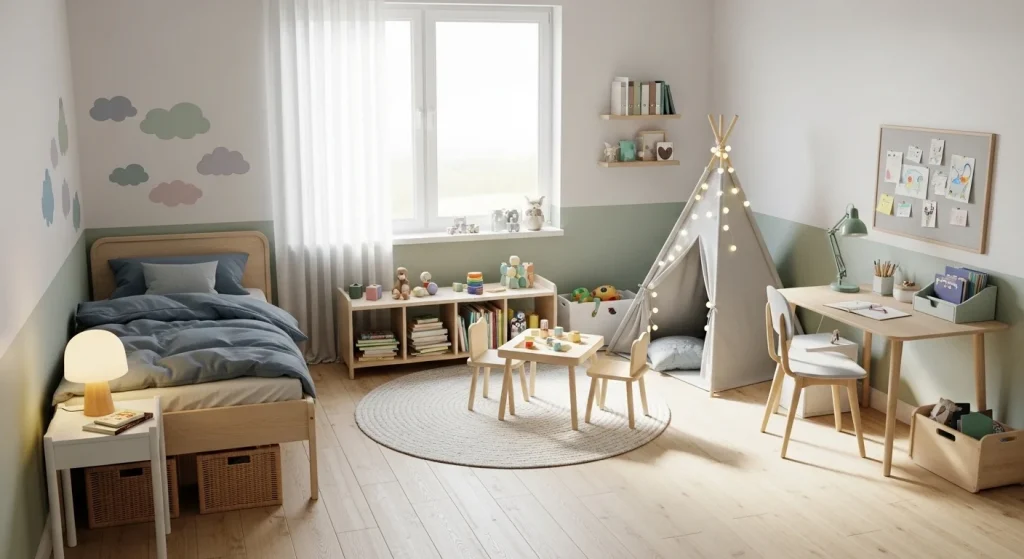
2. The Low Bed Floor Safety Setup
Using a low bed or floor bed creates a safe and open environment for kids in small apartments. It makes the room feel larger and less crowded. The setup is easy for kids to access independently. It also reduces visual bulk in the space. The room feels more breathable and calm. A practical and child-friendly choice.
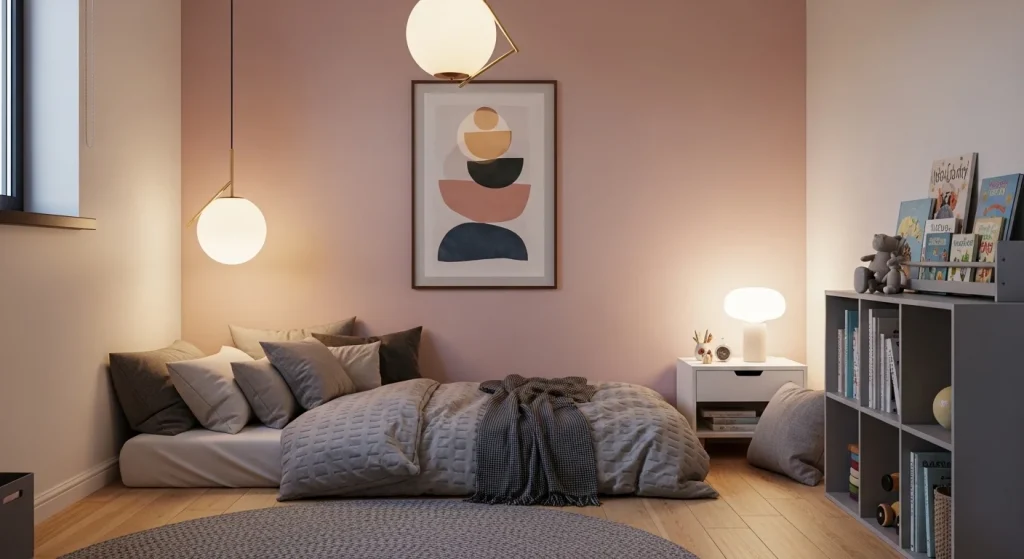
3. The Multi-Use Furniture Hack
Choosing furniture that serves multiple purposes saves a lot of space in small kids rooms. Beds with storage or desks with shelving improve functionality. The setup feels efficient and organized. It reduces the need for extra furniture. The room stays open and uncluttered. A smart space-saving solution.
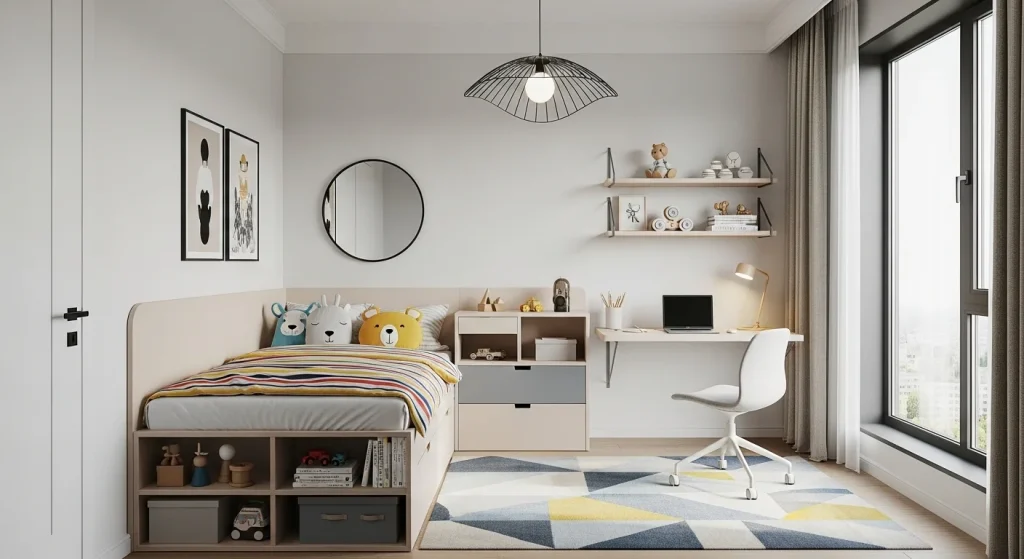
4. The Soft Color Calm Theme
Using soft, muted colors creates a calm and soothing environment for kids. It prevents the room from feeling visually overwhelming. The space feels brighter and more peaceful. These tones also make the room feel larger. The design remains timeless and flexible. A gentle aesthetic foundation.
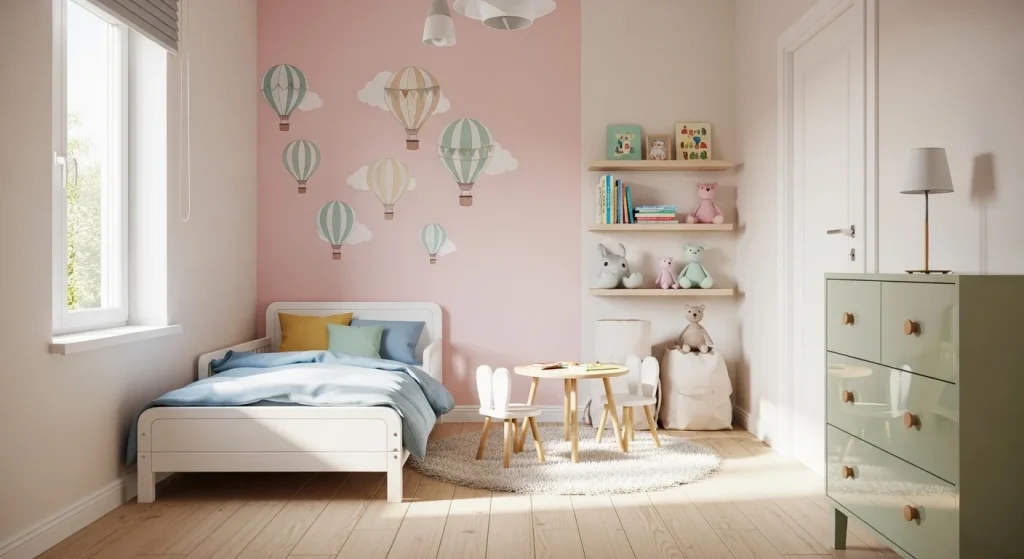
5. The Vertical Storage Wall System
Using vertical space for storage helps keep the floor clear and usable. Wall shelves and hanging organizers maximize functionality. The room feels more open and less cluttered. It also teaches organization habits. Everything has a visible place. A smart small-space solution.
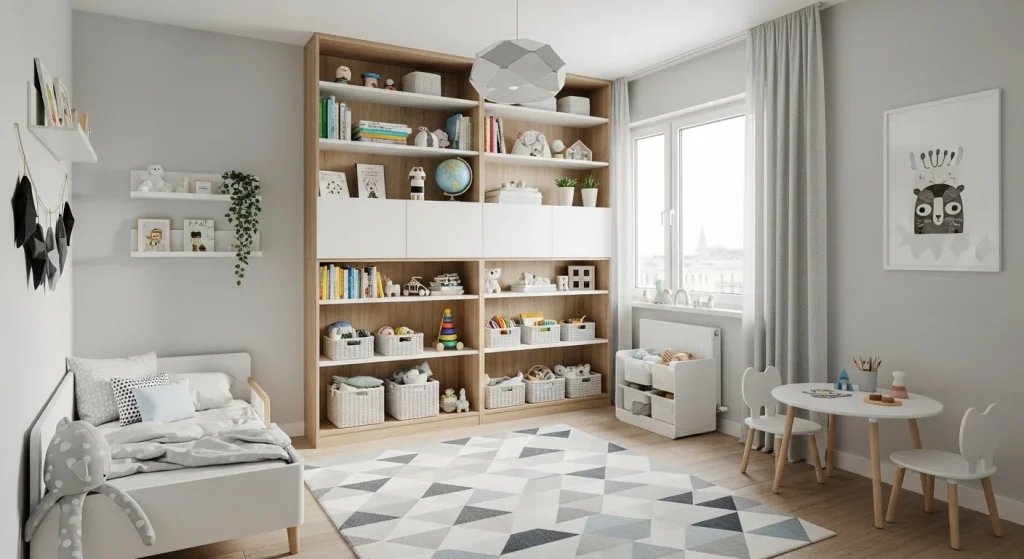
6. The Play Corner Soft Zone
Creating a soft play corner with rugs and cushions gives kids a dedicated fun area. It keeps toys contained in one space. The rest of the room stays cleaner. The setup feels cozy and safe. It encourages focused play. A simple and effective zoning idea.
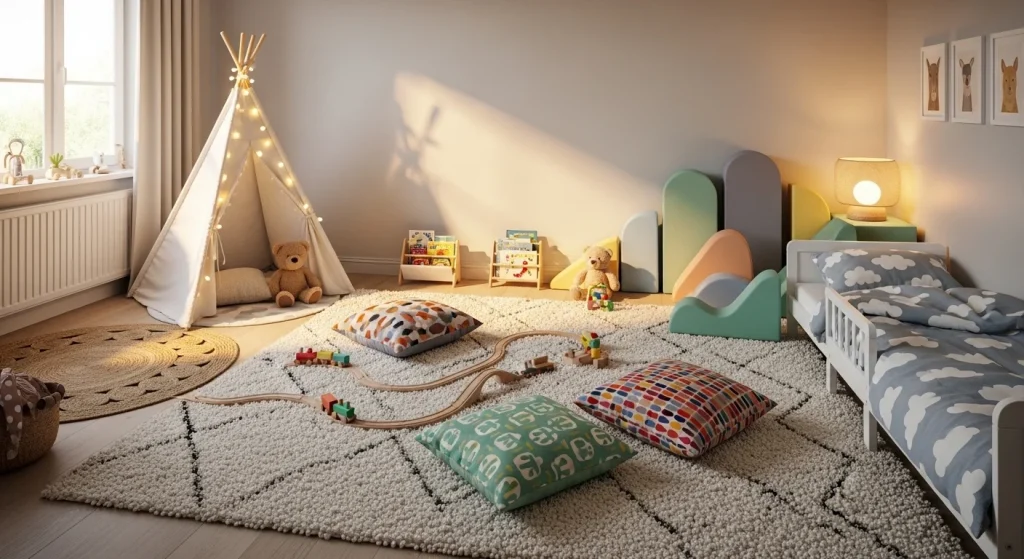
7. The Under-Bed Storage Trick
Using under-bed storage helps hide toys, clothes, and essentials without taking up extra space. It keeps the room visually clean. The storage remains easily accessible. It reduces clutter on visible surfaces. The room feels more organized instantly. A must-use small room strategy.
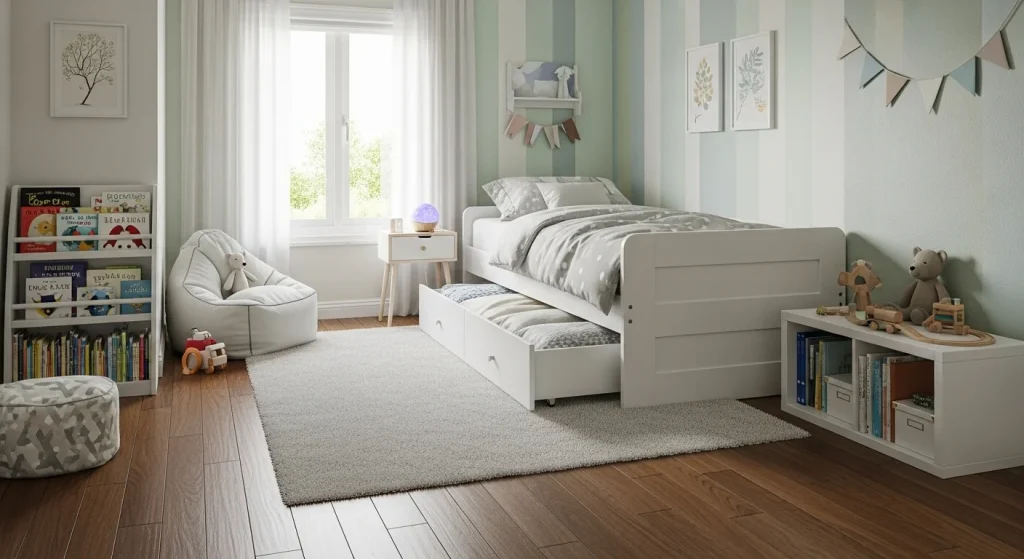
8. The Wall Art Personality Corner
Adding playful wall art brings personality without taking floor space. It makes the room feel fun and engaging. The decor stays light and non-intrusive. It helps define the child’s personality. The walls become part of the design. A creative visual upgrade.
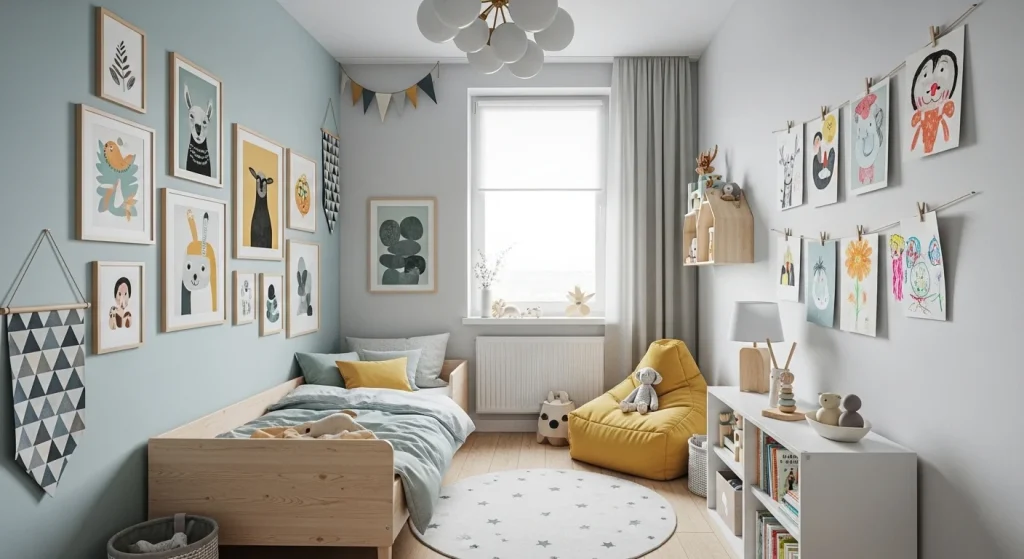
9. The Shared Sleep + Study Wall Layout
Placing the bed and study desk along the same wall helps maximize floor space in small kids rooms. This layout keeps the center of the room open for movement and play. It creates a clean visual flow from one function to another. The setup feels structured and easy to maintain. It also reduces unnecessary clutter in the middle area. A smart compact living solution.
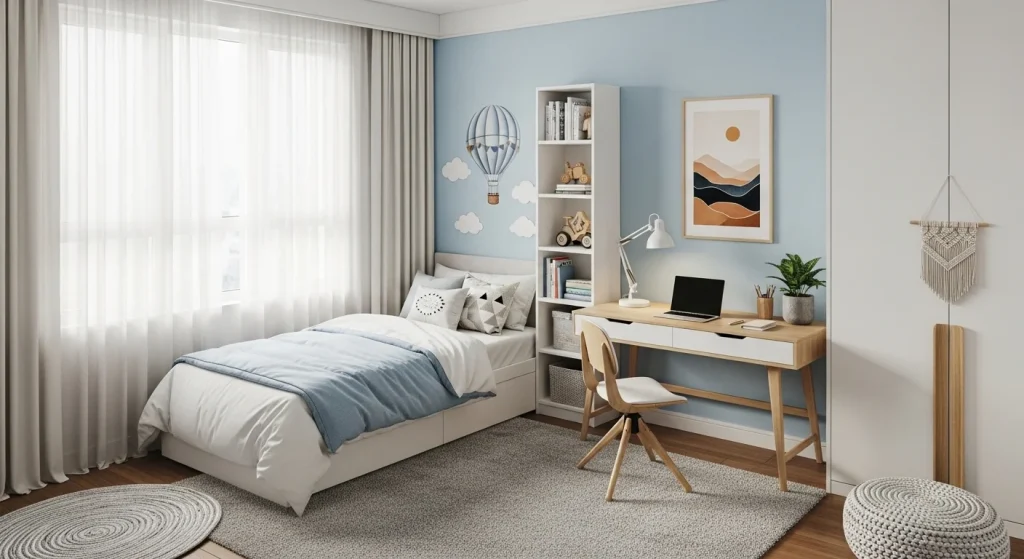
10. The Foldable Activity Table Setup
A foldable table allows kids to use the space when needed and free it when not in use. This keeps the room flexible and adaptable. It prevents permanent clutter from building up. The setup supports drawing, studying, or crafts. It disappears easily when not needed. A highly practical small-space tool.
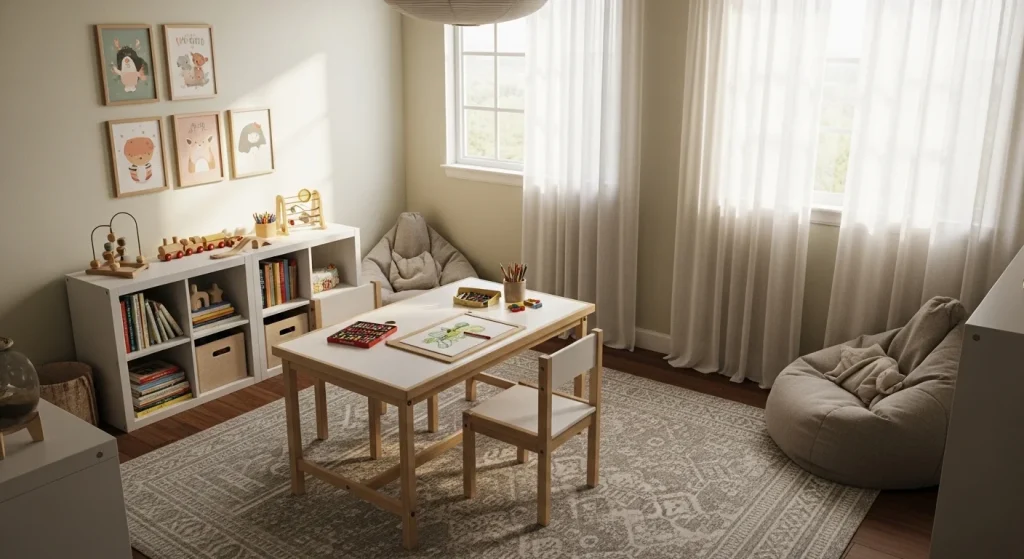
11. The Cozy Reading Tent Corner
A small indoor tent or canopy creates a magical reading or relaxation corner for kids. It gives them a private, cozy space inside the room. The setup feels fun and comforting. It also helps define a quiet zone. The corner becomes a favorite spot. A playful yet functional idea.
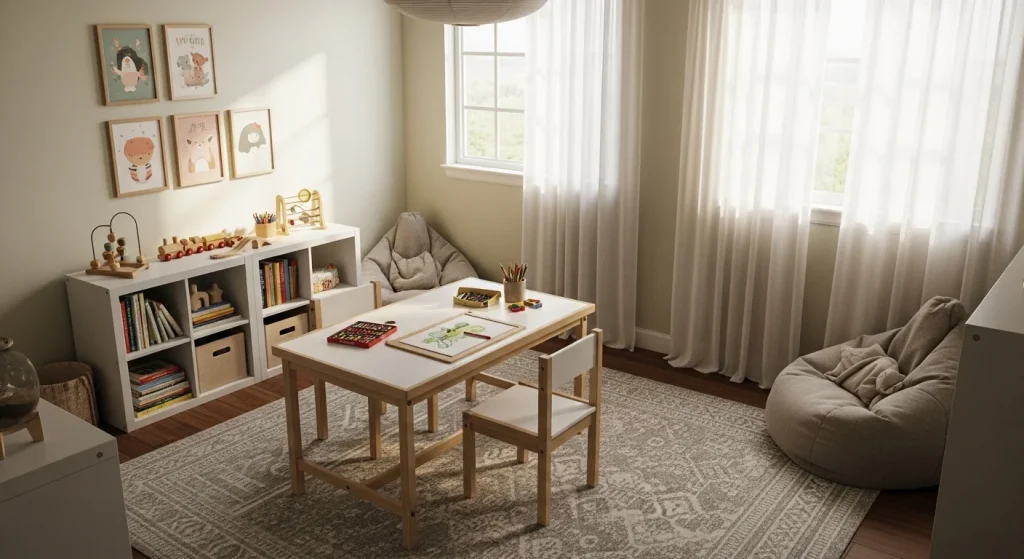
12. The Toy Rotation Storage System
Instead of keeping all toys out at once, rotating them keeps the room fresh and less cluttered. It reduces visual overload. The space feels more organized and calm. Kids stay more engaged with fewer items. It also makes cleanup easier. A simple behavioral design trick.
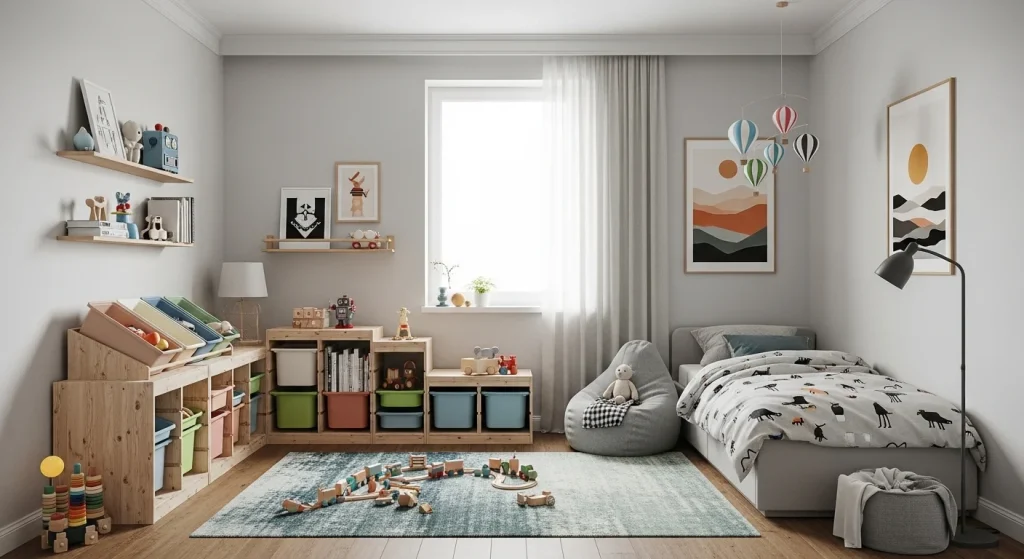
13. The Built-In Wall Desk Nook
A small built-in desk nook saves space while providing a dedicated study area. It blends into the wall design seamlessly. The setup feels intentional and compact. It keeps learning materials organized. The room remains uncluttered. A smart architectural-style solution.
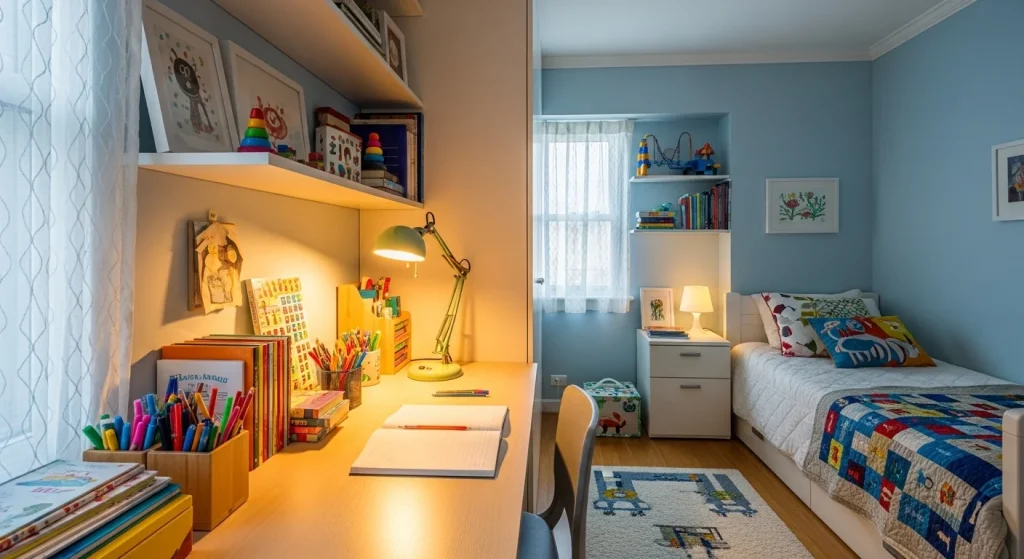
14. The Soft Lighting Night Comfort Setup
Using warm, soft lighting helps create a calming environment for bedtime. It reduces harsh brightness and supports relaxation. The room feels safer and more peaceful. It improves sleep comfort for kids. Lighting becomes part of the design. A gentle emotional upgrade.
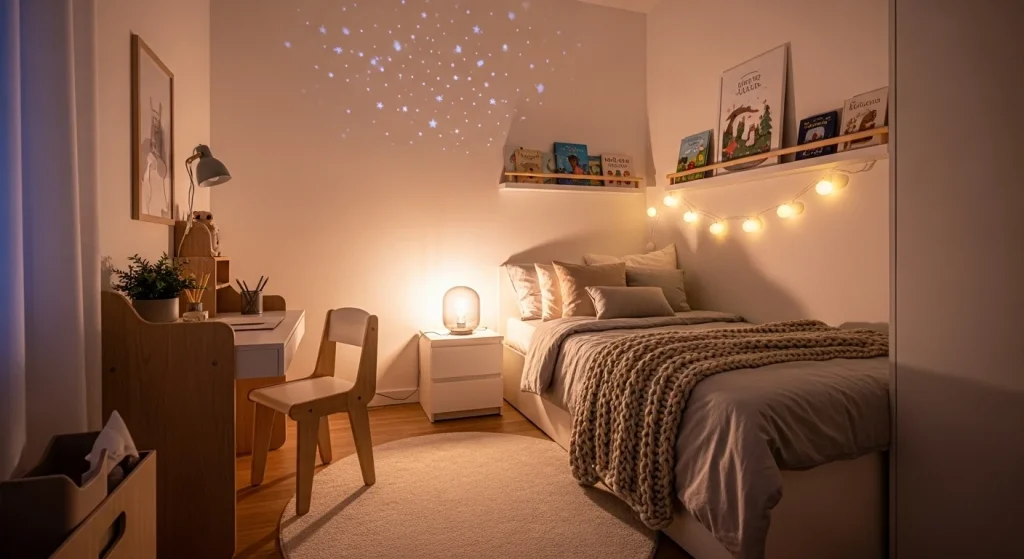
15. The Low Wall Storage Baskets
Placing baskets at kid height encourages independence and easy cleanup. It keeps toys organized but accessible. The room feels tidy without effort. It reduces floor clutter. Kids can manage their own space better. A practical organization habit.
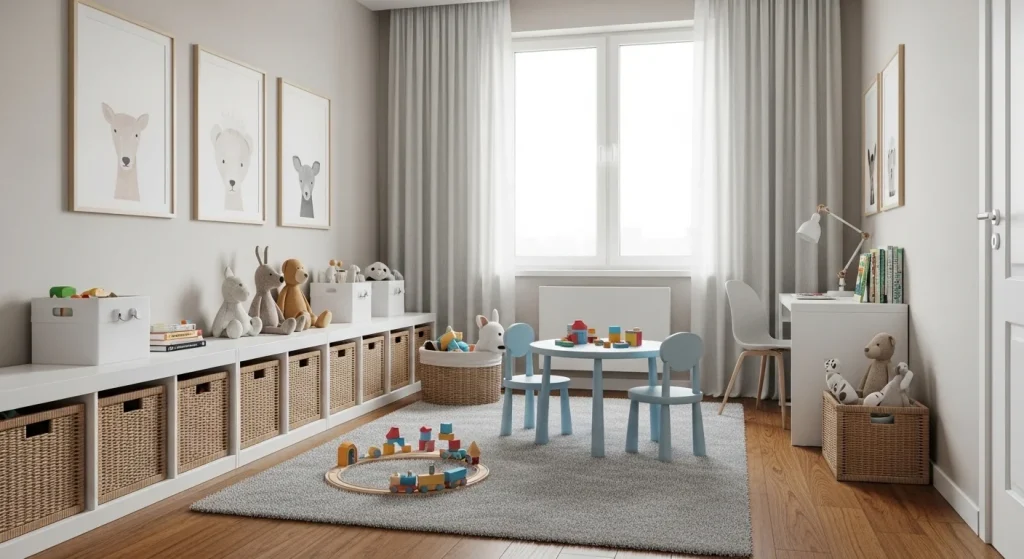
16. The Neutral Base with Color Accents
Starting with a neutral room base and adding small color accents keeps the space balanced and flexible. It avoids visual chaos while still feeling playful. The room grows with the child easily. It stays modern and timeless. Accents can be changed anytime. A long-term design strategy.
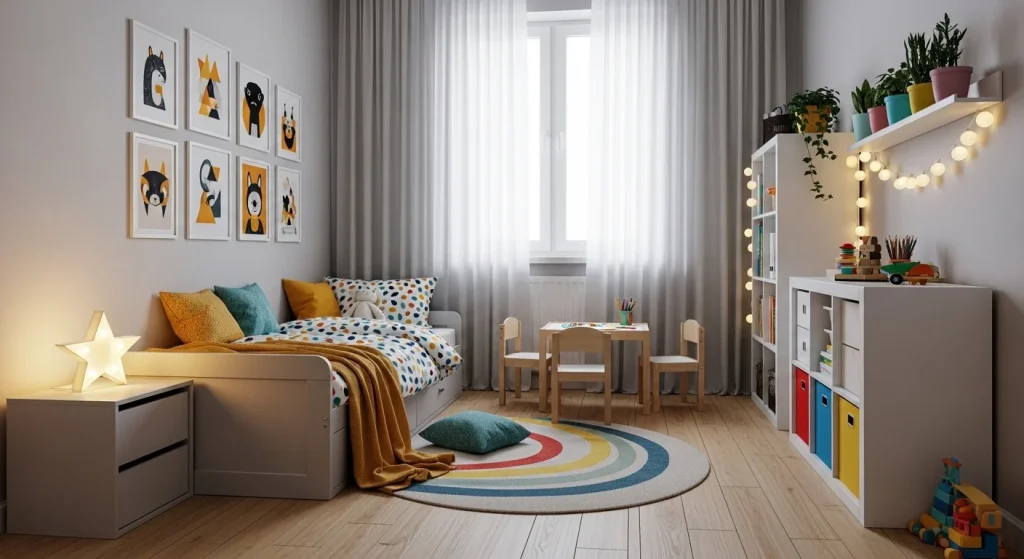
17. The Minimal Floor Clarity Design
Keeping the floor as clear as possible makes a small kids room feel much larger. It improves movement and usability. Storage is moved vertically or hidden. The room feels breathable and open. It reduces overwhelm visually. A key small-space principle.
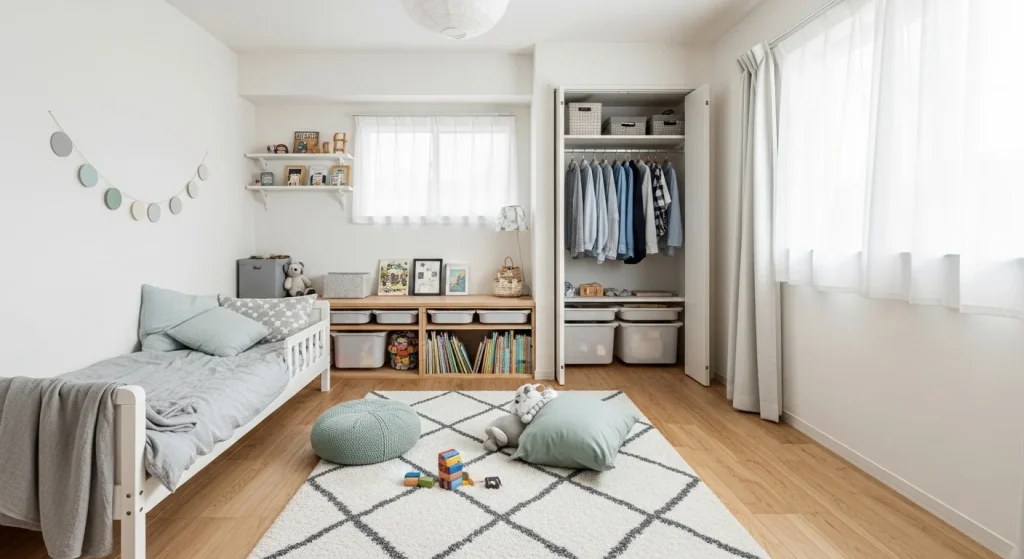
FAQs
1. How do I design a kids room in a small apartment?
Focus on zoning sleep, play, and study areas while keeping storage vertical and compact.
2. What colors work best for small kids rooms?
Soft neutrals with light pastel accents create a calm and flexible environment.
3. How do I keep a kids room from looking messy?
Use smart storage, toy rotation, and clear floor space to reduce clutter.
4. What furniture is best for small kids rooms?
Multi-functional furniture like storage beds and foldable tables works best.