
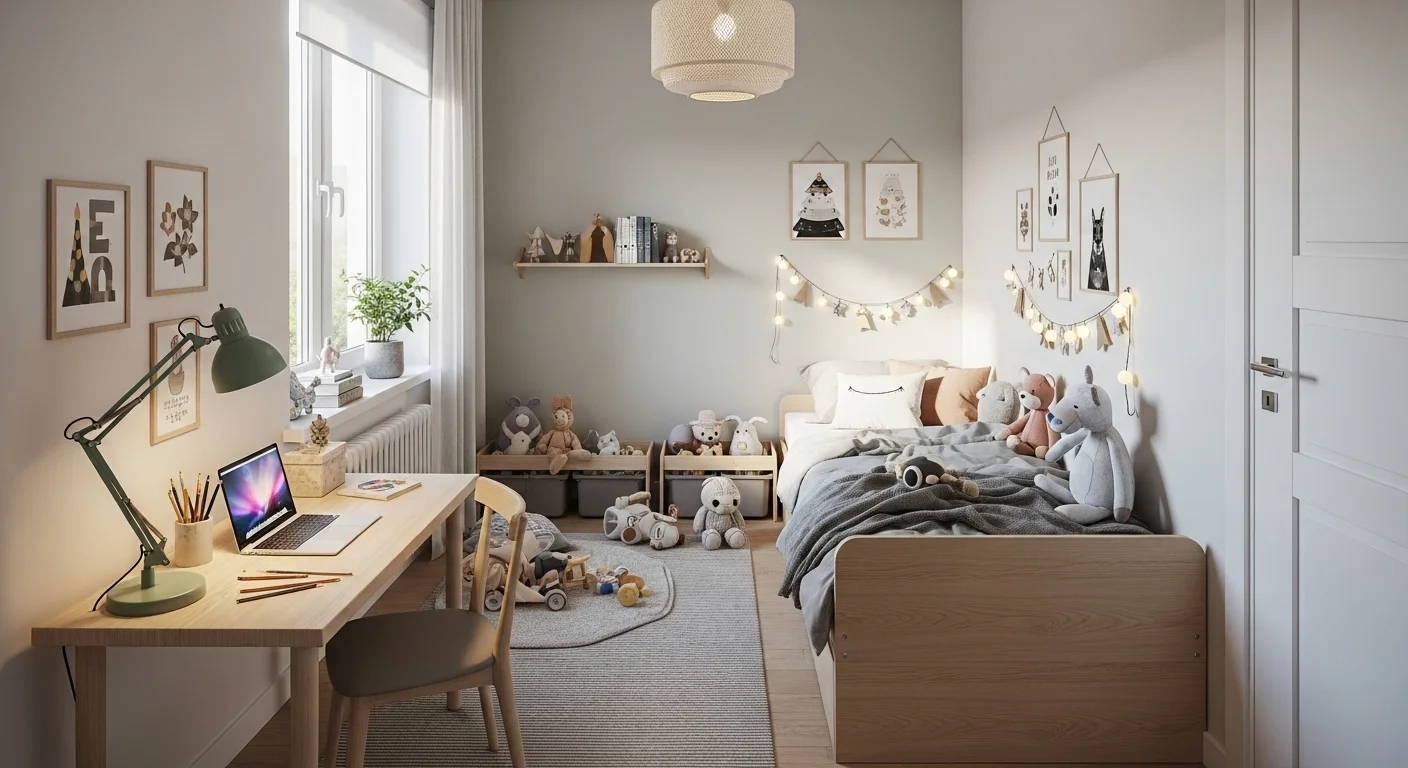
Designing a kids’ room in a small apartment means every inch has to work harder. The space needs to support sleep, play, and study—without feeling crowded or chaotic.
With the right small apartment kids room ideas, you can create clearly defined zones that keep the room functional while still feeling cozy and fun. The key is smart layouts and multi-purpose elements that make transitions between activities seamless.
This guide shares creative ideas to help you design a balanced kids’ room that works for everyday life.
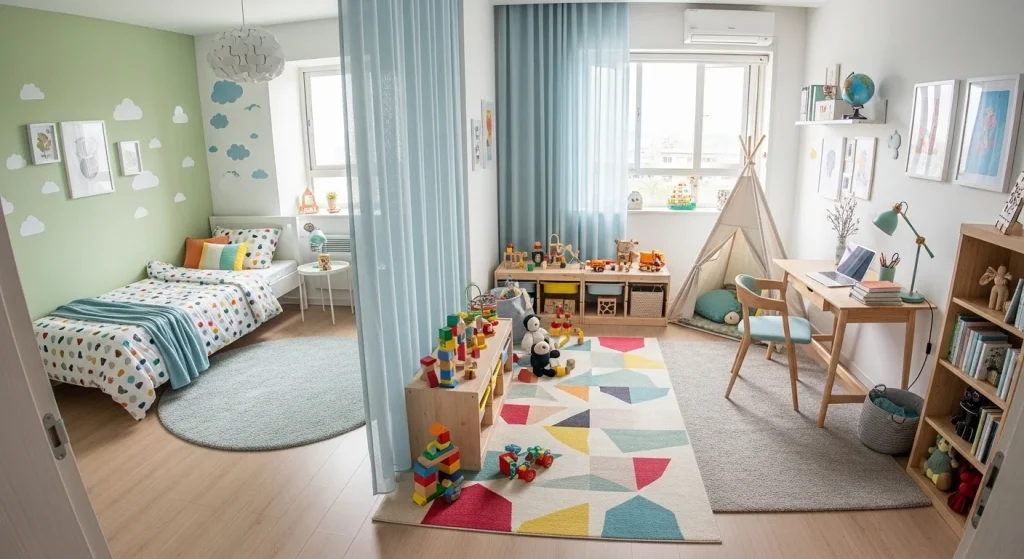
1. The Zoned Layout with Soft Dividers
Using soft dividers like rugs or curtains helps separate sleep, play, and study areas. It creates structure without closing off the room. The layout feels organized and intentional. Each zone has its purpose. The space remains open. A simple zoning strategy.
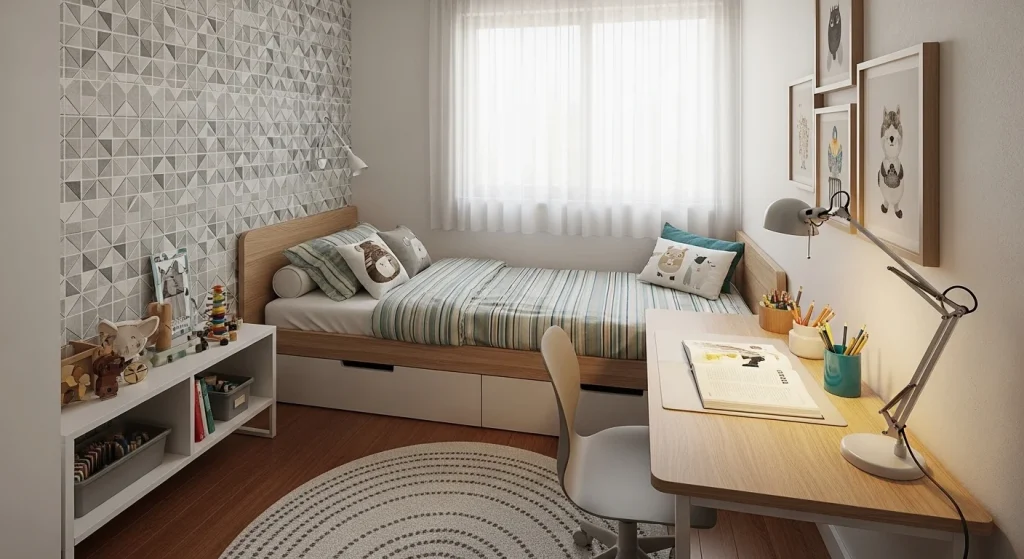
2. The Bed + Study Combo Wall Setup
Placing the bed and study desk along one wall saves space and keeps the layout clean. It creates a functional zone without clutter. The room feels organized and balanced. The play area stays open. The design looks modern. A smart layout choice.
3. The Central Play Space Open Layout
Keeping the center of the room open creates a dedicated play zone. It improves movement and flexibility. The space feels bigger and more breathable. Sleep and study areas stay around the edges. The layout feels balanced. A kid-friendly design.
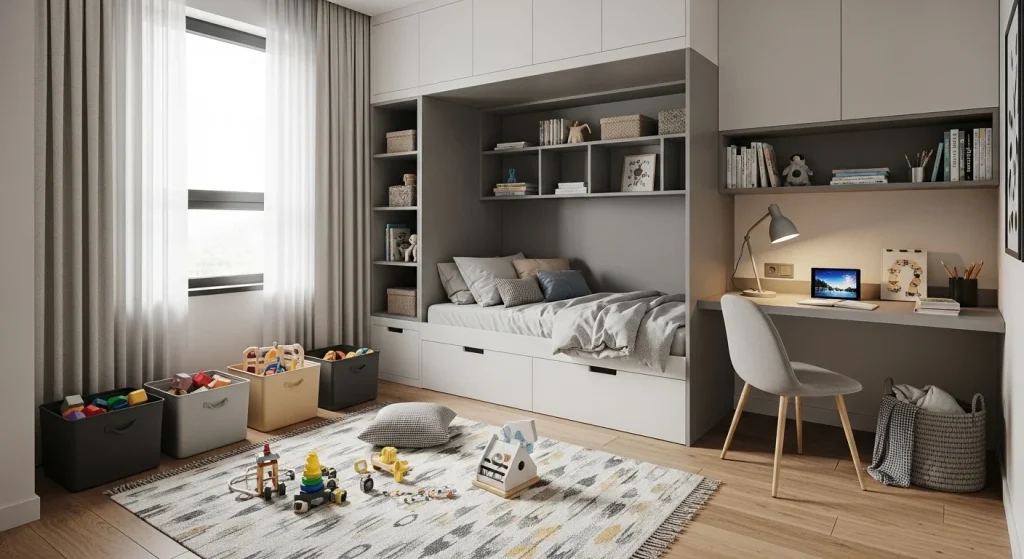
4. The Elevated Bed with Study Underneath
An elevated bed frees space below for a study area. It combines two functions in one footprint. The room feels more spacious. The layout becomes efficient. The zones are clearly defined. A high-impact solution.
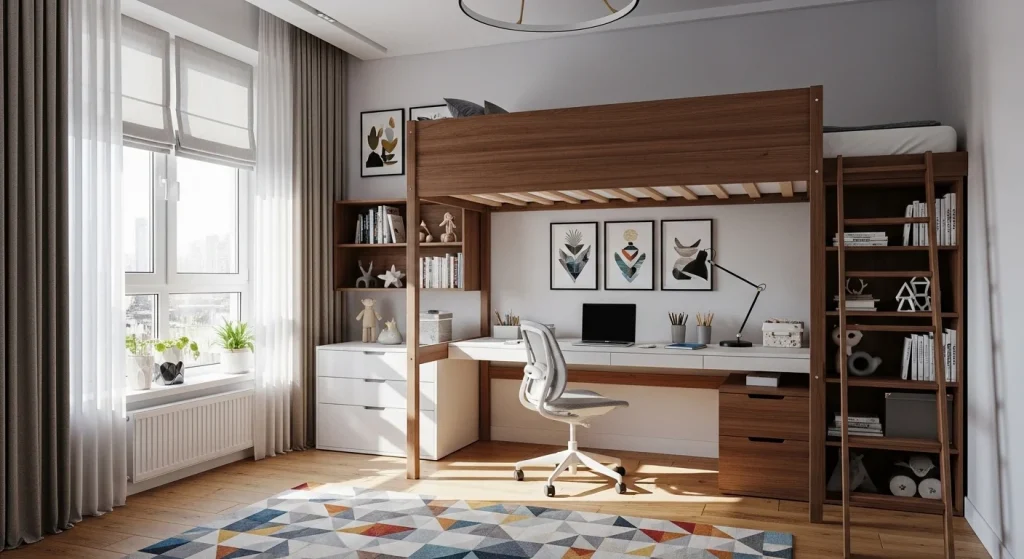
5. The Compact L-Shaped Layout Design
Using an L-shaped layout helps define separate zones naturally. Each corner serves a purpose. The space feels structured and organized. It maximizes available room. The layout improves flow. A practical zoning idea.
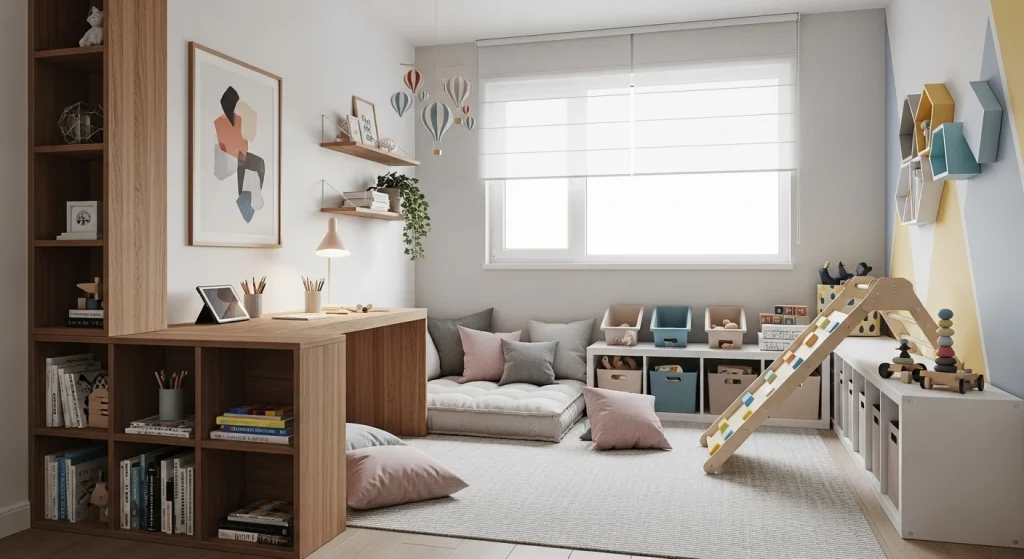
6. The Multi-Use Activity Zone Setup
Creating one flexible zone for study and play saves space. It reduces the need for separate areas. The setup feels efficient and practical. The room stays uncluttered. It supports multiple activities. A smart multifunction approach.
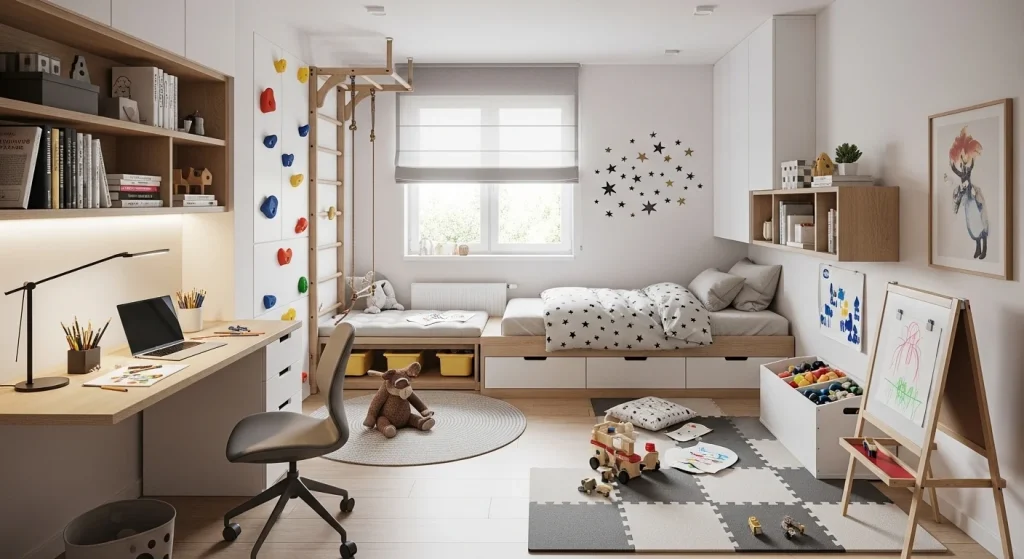
7. The Wall-to-Wall Functional Layout
Using one wall for storage, study, and decor keeps the rest of the room open. It creates a clean and efficient design. The layout feels organized. The play area becomes more spacious. The room looks balanced. A space-saving strategy.
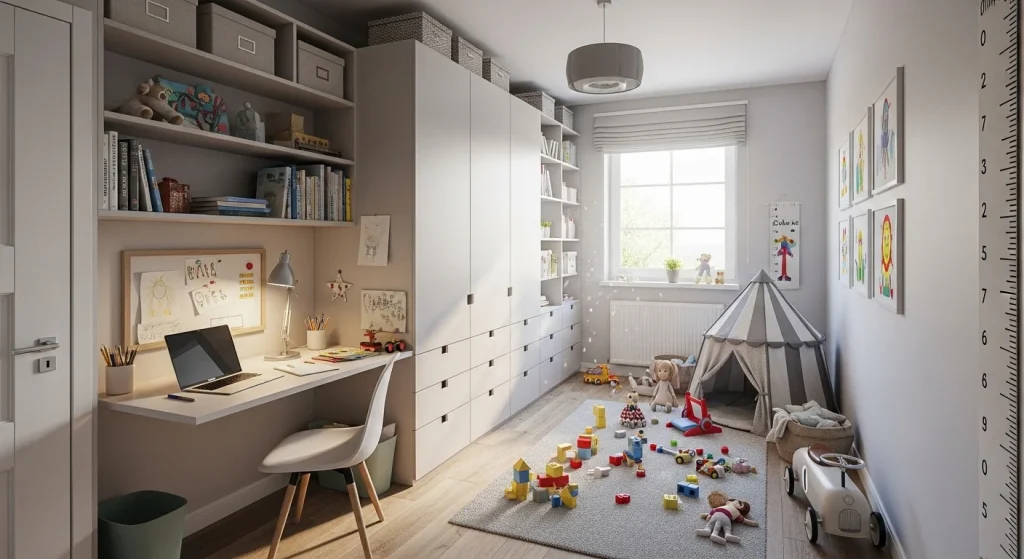
8. The Cozy Sleep Corner Separation
Placing the bed in a defined corner creates a cozy sleep zone. It separates rest from activity areas. The setup feels calm and comfortable. The room becomes more structured. It enhances relaxation. A simple zoning idea.
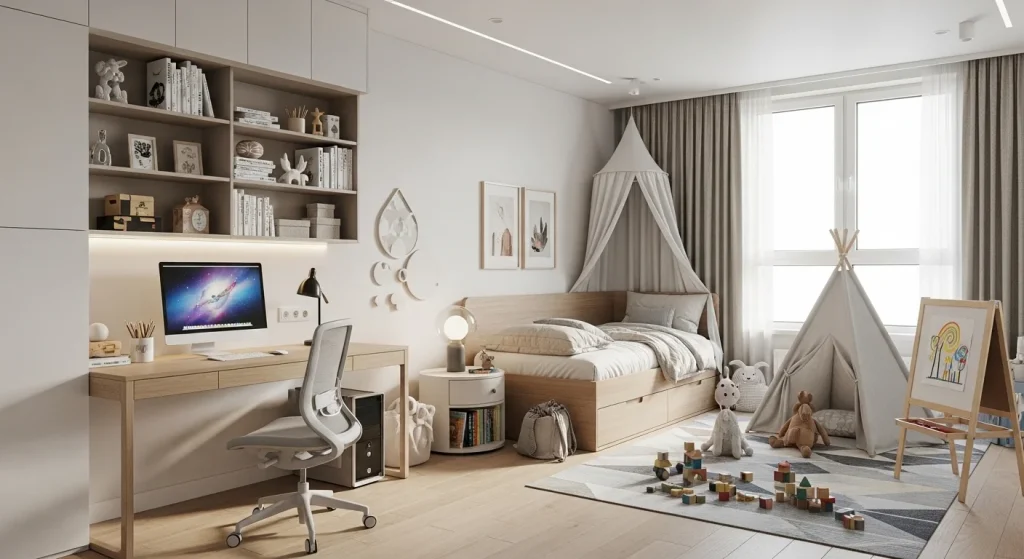
9. The Foldable Study + Play Setup
A foldable desk allows the study area to transform into a play space. It adds flexibility to the layout. The room feels dynamic and open. The setup reduces clutter. It supports multiple uses. A smart adaptable design.
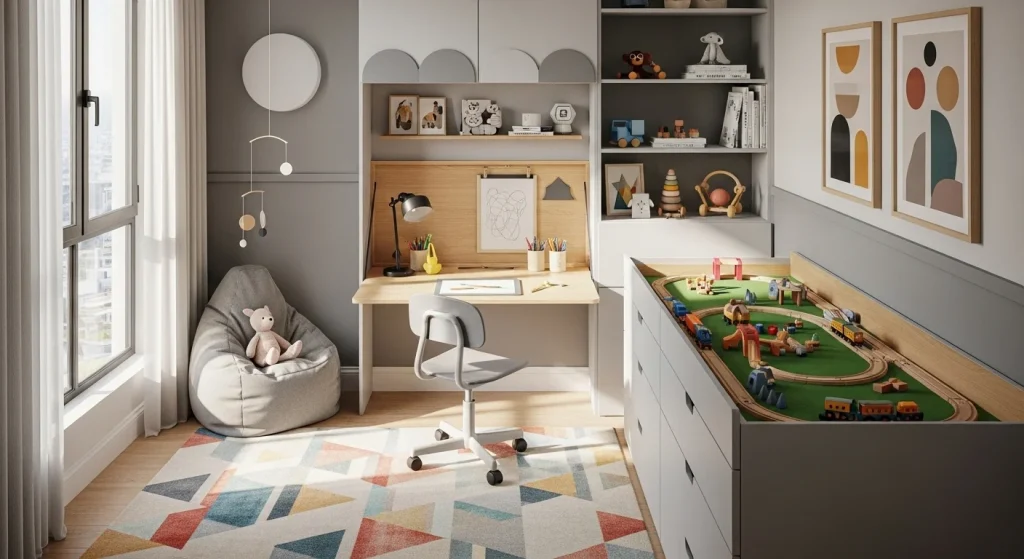
10. The Parallel Zones Layout Design
Arranging sleep, play, and study zones side by side creates a clear layout. Each area is easy to identify. The room feels structured and functional. The design remains open. Movement is smooth. A clean layout approach.
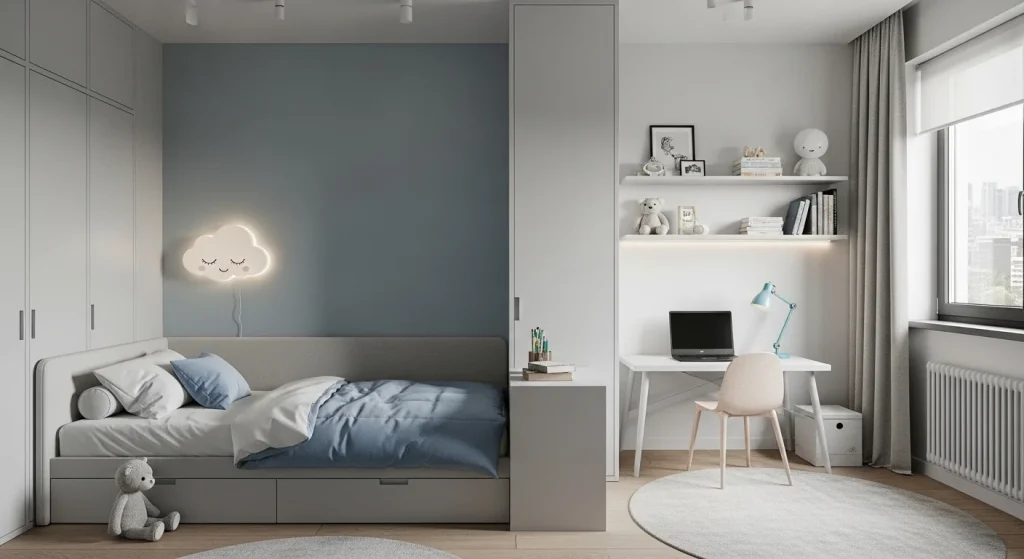
11. The Soft Partition Shelf Divider
Using an open shelf as a divider separates zones while providing storage. It keeps the room airy and functional. The layout feels organized. Items stay accessible. The design adds depth. A practical and stylish solution.
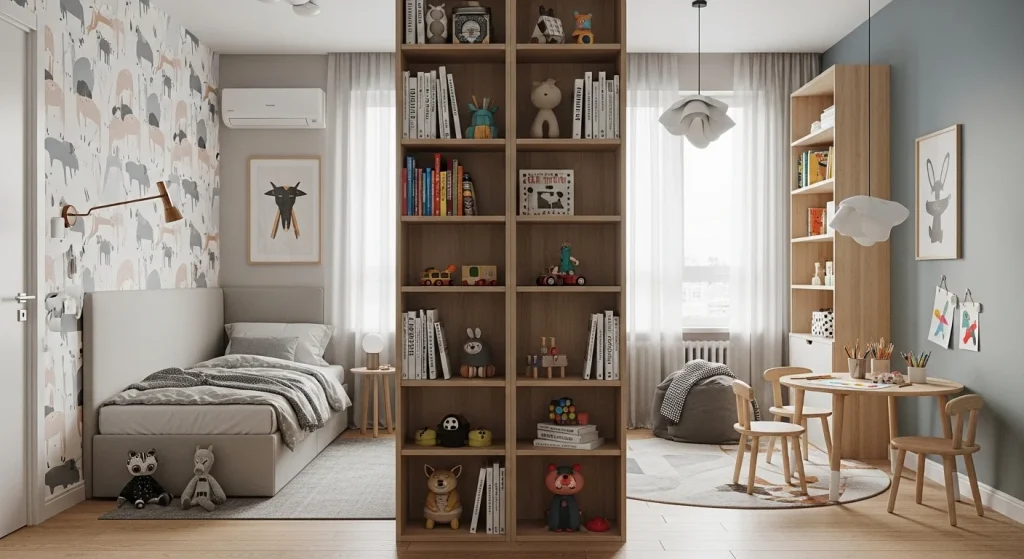
12. The Study Nook Beside Bed Setup
Placing a small study nook next to the bed creates a compact layout. It keeps everything within reach. The setup feels efficient. The room remains uncluttered. It supports daily routines. A simple space-saving idea.
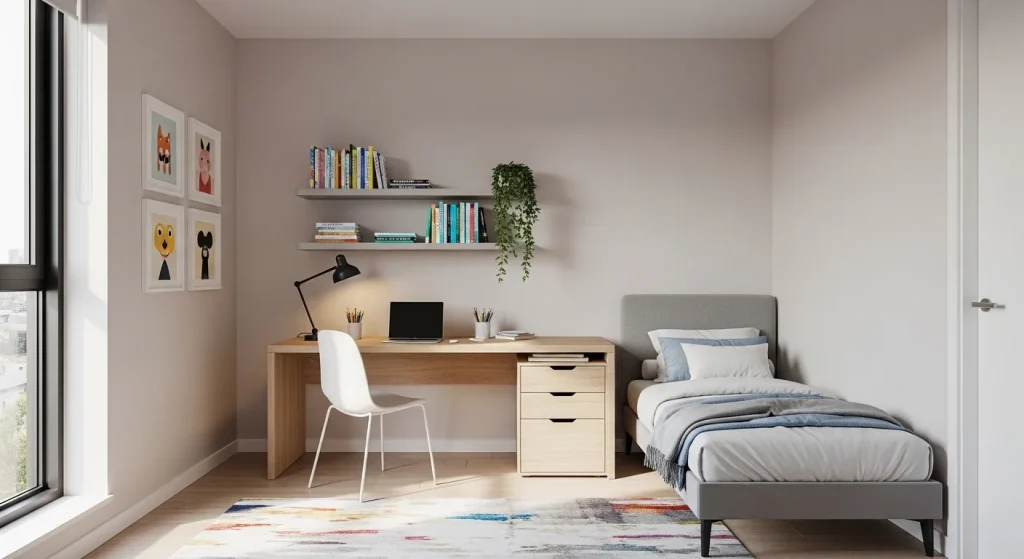
13. The Defined Rug Zoning Technique
Using different rugs for each zone helps visually separate spaces. It creates clear boundaries without walls. The room feels organized and styled. Each area stands out. The layout remains open. A simple visual trick.
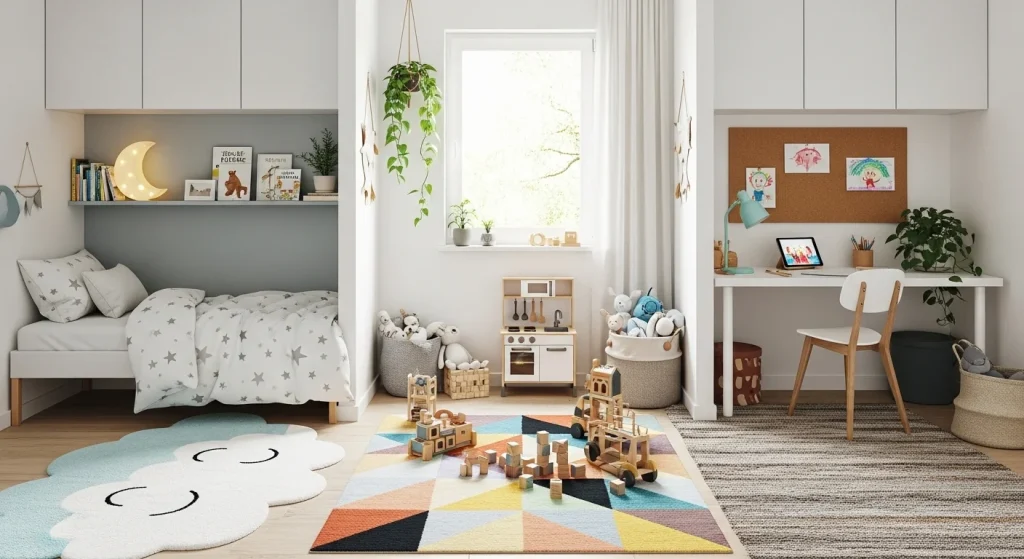
14. The Raised Platform Sleep Zone
A slightly raised platform for the bed creates a clear sleep zone. It visually separates rest from play and study. The layout feels structured and modern. Storage can be added underneath. The room looks organized. A stylish zoning solution.
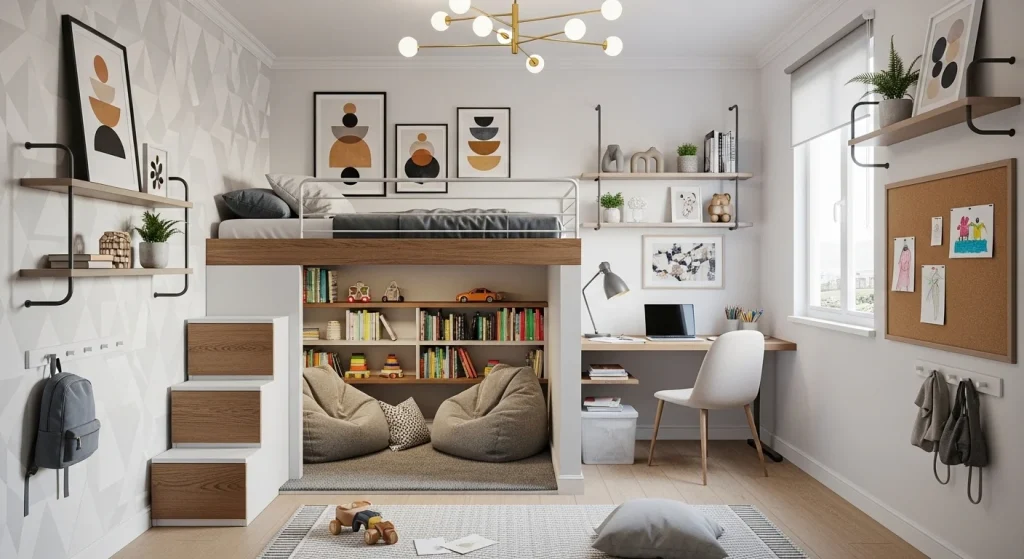
15. The Corner Study + Play Combo Zone
Combining study and play in one corner maximizes space efficiently. It keeps activities grouped together. The layout feels practical and organized. The rest of the room stays open. The setup supports creativity. A smart compact idea.
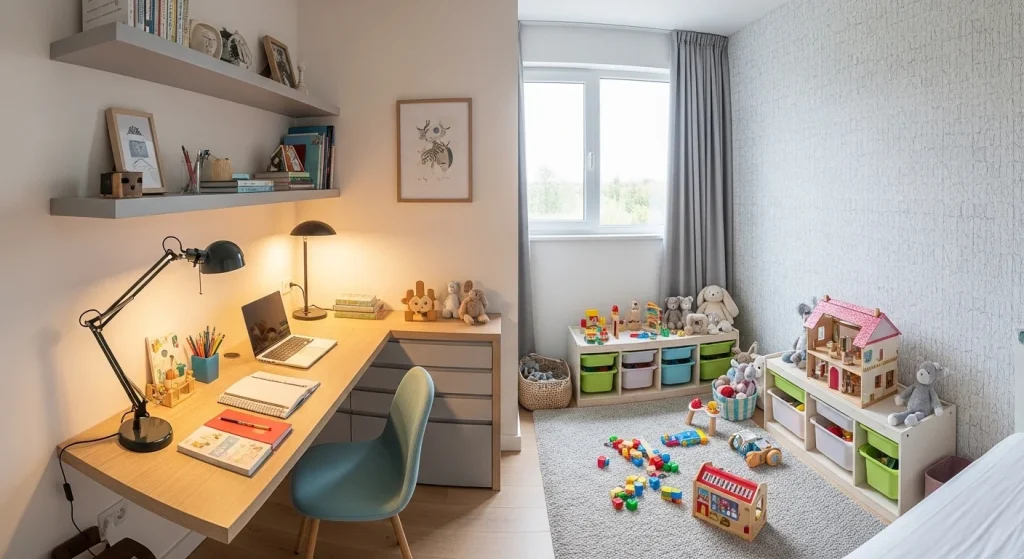
16. The Minimal Sleep + Activity Split Layout
Separating the room into two main zones simplifies the design. One side for sleep, the other for play and study. The layout feels clean and uncluttered. It improves functionality. The room looks balanced. A minimal approach.
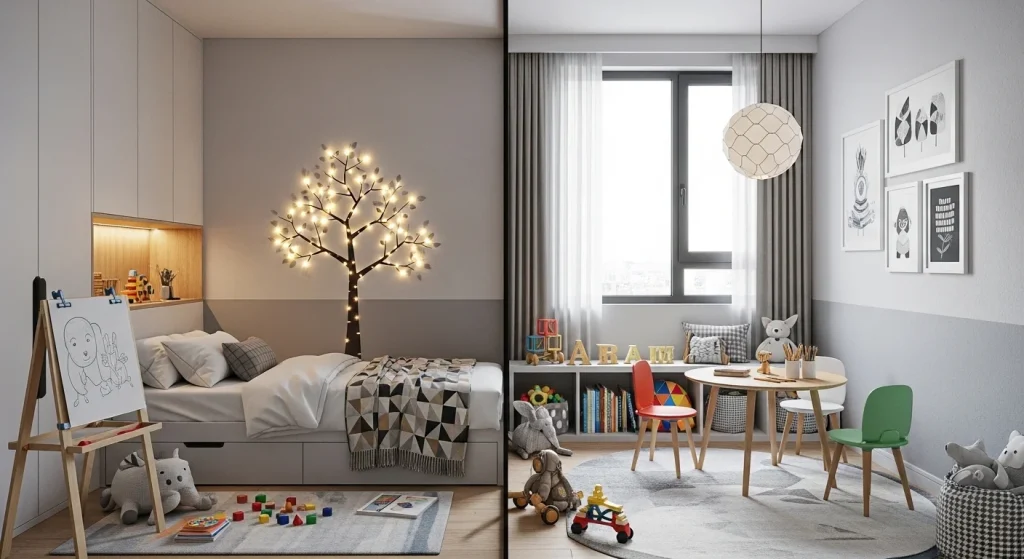
17. The Sliding Partition Flexible Layout
A sliding partition allows zones to open or close as needed. It creates flexibility in small spaces. The room adapts easily to different activities. The layout feels modern and dynamic. It enhances functionality. A versatile design idea.
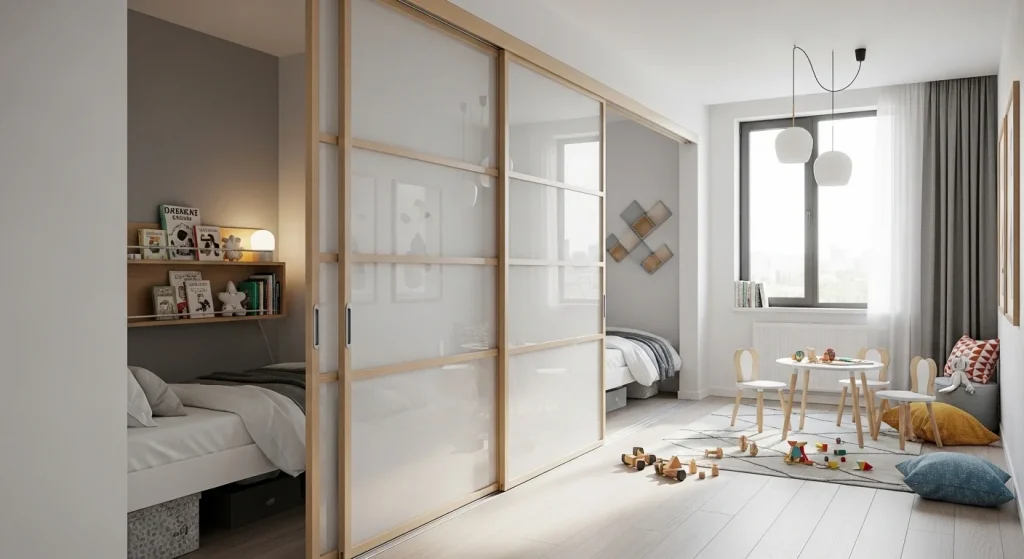
18. The Built-In Wall Study Zone
A built-in study area keeps everything compact and organized. It frees up floor space for play. The layout feels efficient and clean. The room looks structured. It supports focused learning. A smart built-in solution.
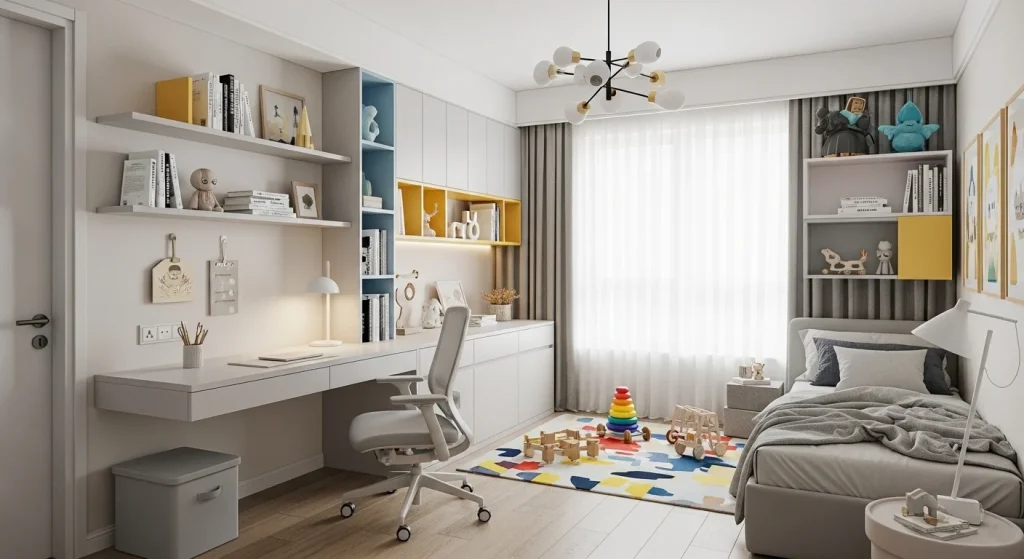
19. The Floating Furniture Open Layout
Using floating furniture creates more visible floor space. It makes the room feel larger and lighter. Zones remain defined without heaviness. The layout feels modern. It improves movement. A clean and airy design.
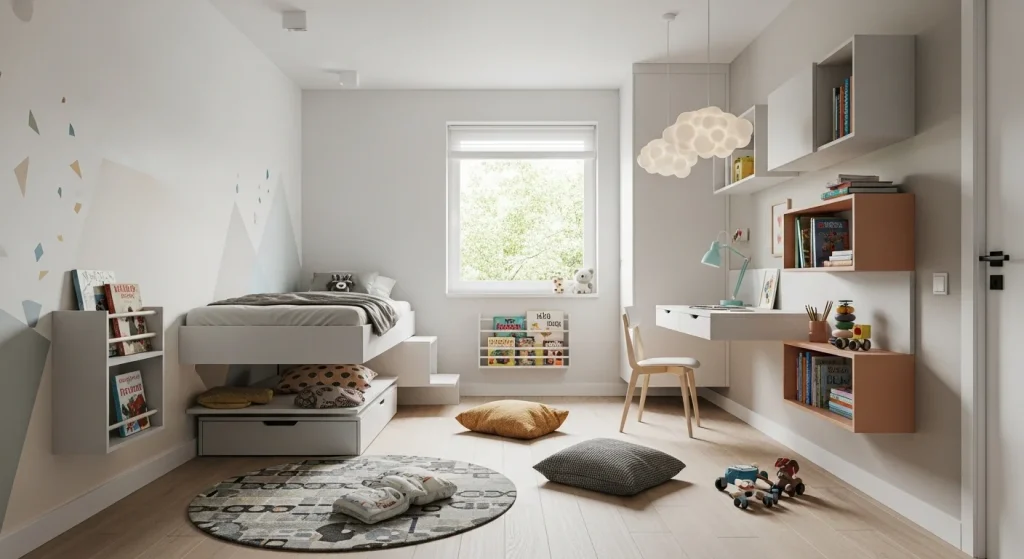
20. The Under-Loft Play Zone Design
Placing a play area under a loft bed maximizes vertical space. It keeps play separate from sleep. The layout feels organized and fun. The room looks more spacious. It enhances functionality. A creative use of height.
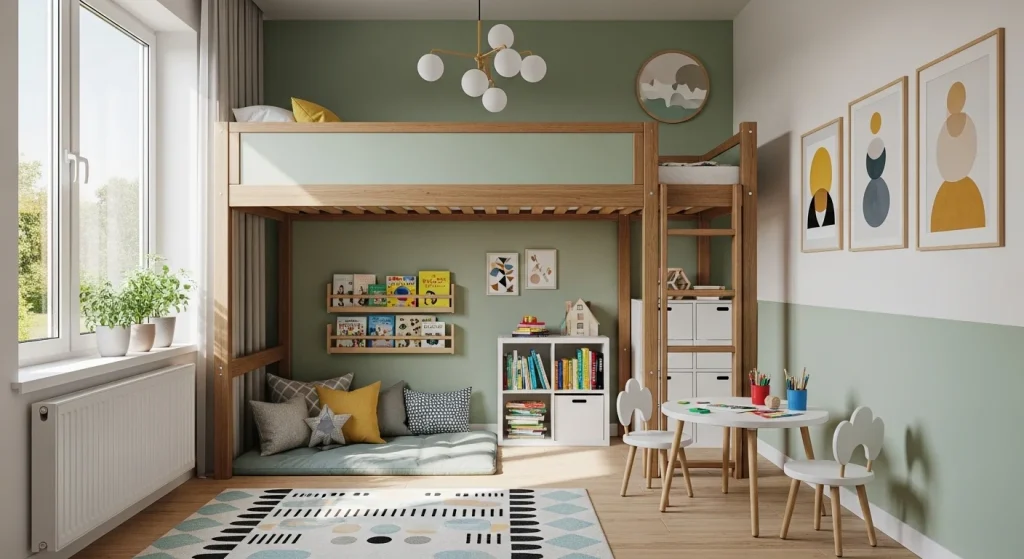
21. The Dual Desk Shared Study Layout
Adding a dual desk setup creates a shared study zone. It works well for siblings or multi-use needs. The layout feels structured and efficient. It saves space compared to separate desks. The room stays organized. A practical solution.
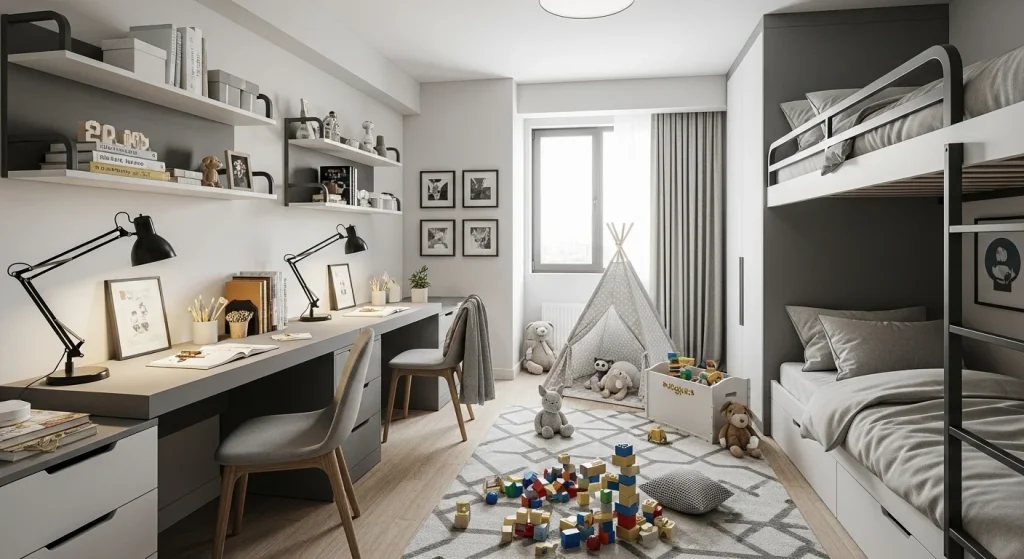
22. The Compact Bed + Storage Wall
Combining the bed with a storage wall keeps everything in one zone. It frees up space for play and study. The layout feels clean and efficient. The room looks organized. It maximizes functionality. A space-saving design.
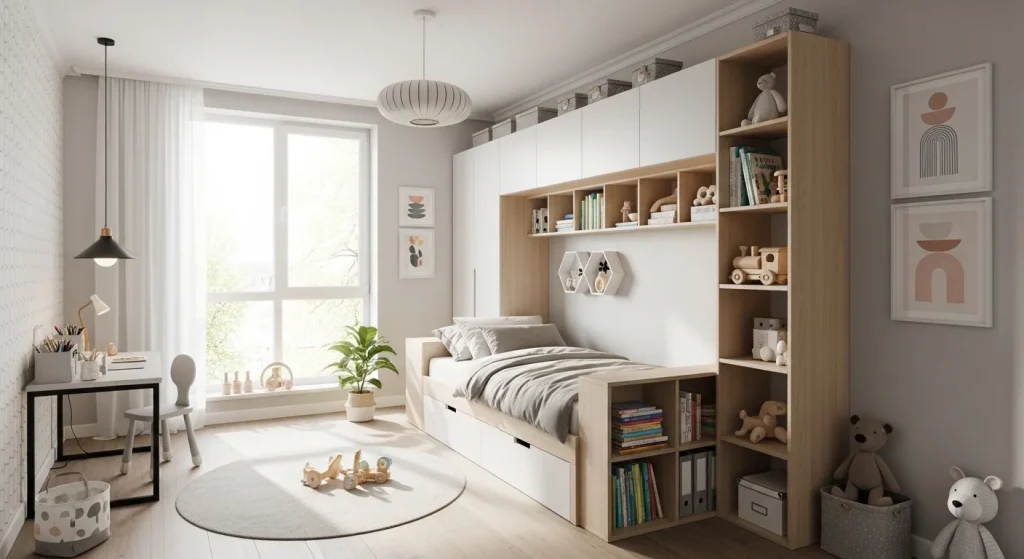
23. The Defined Activity Mat Play Zone
Using a dedicated activity mat defines the play area clearly. It keeps toys contained. The layout feels organized and child-friendly. The room stays tidy. It enhances comfort. A simple zoning trick.
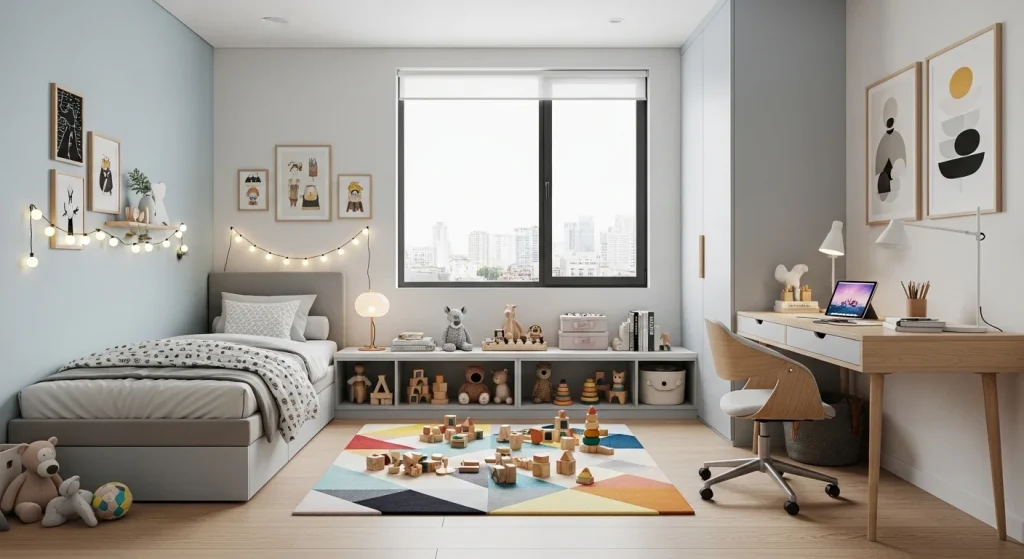
24. The Bed Alcove Cozy Zone
Creating a small alcove for the bed adds a cozy sleep area. It separates rest from active zones. The layout feels calm and structured. The room looks more organized. It enhances comfort. A cozy design idea.
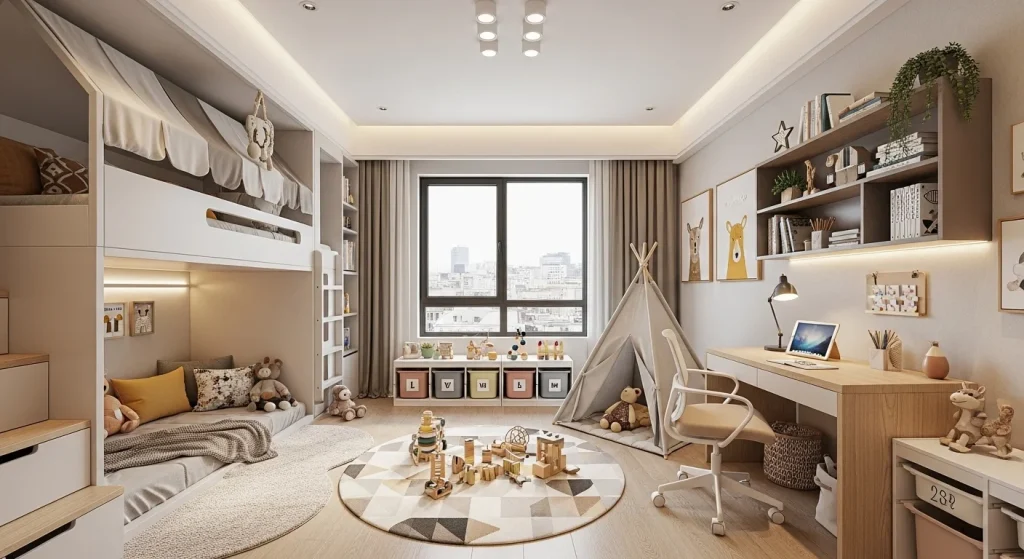
25. The Open Flow Multi-Zone Layout
Keeping zones lightly defined without strict boundaries creates an open flow. The room feels larger and more flexible. Each area blends naturally. The layout remains functional. It enhances movement. A modern open concept design.
FAQs
1. How do you divide a small kids room into zones?
Use rugs, furniture placement, or soft dividers to create clear zones without closing off the space.
2. What is the best layout for a small kids room?
A layout that keeps sleep, play, and study areas defined while maintaining open floor space works best.
3. How can I combine study and play areas?
Use multi-functional furniture or a shared activity zone to support both functions efficiently.
4. How do I make a kids room feel less crowded?
Keep furniture minimal, use vertical storage, and maintain open areas for movement and play.