

Narrow hallways in small apartments are often overlooked, especially when it comes to corner spaces. These tight areas can easily feel cramped, dark, or unused if not styled thoughtfully.
Using the right small apartment narrow hallway corner ideas that look stylish, you can turn even the smallest corner into a functional and visually appealing feature. The key is to work with the layout, not against it.
In this guide, you’ll find smart and modern ways to style hallway corners while keeping the entire space open, balanced, and beautifully connected.
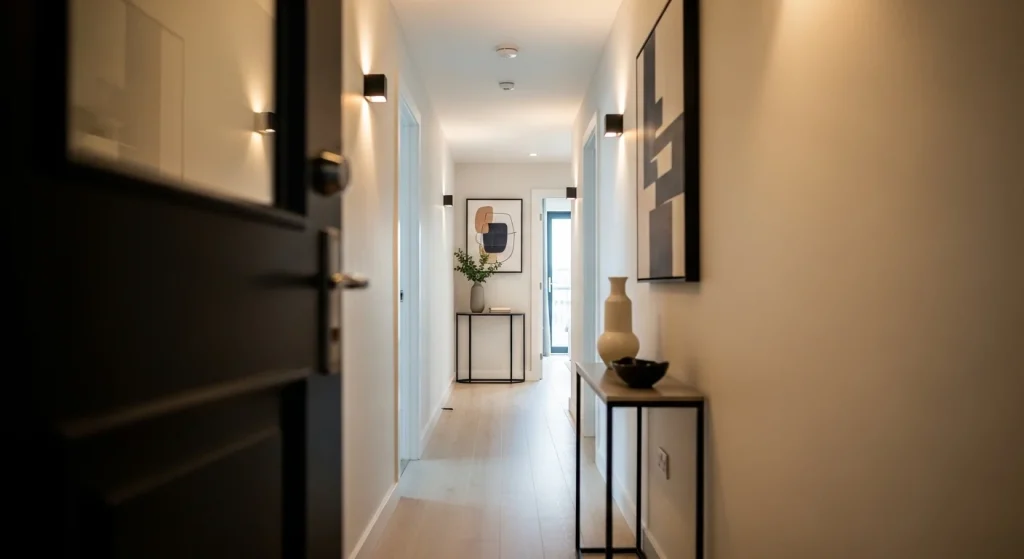
1. The Slim Console Corner at Hallway End
This idea focuses on placing a very slim console at the end corner of a narrow hallway to create a visual stop point. It helps define the space without blocking movement. Keeping decor minimal on top ensures the hallway remains open and uncluttered. The console acts as both function and style. It also adds structure to an otherwise empty area. This makes the hallway feel complete and intentional.
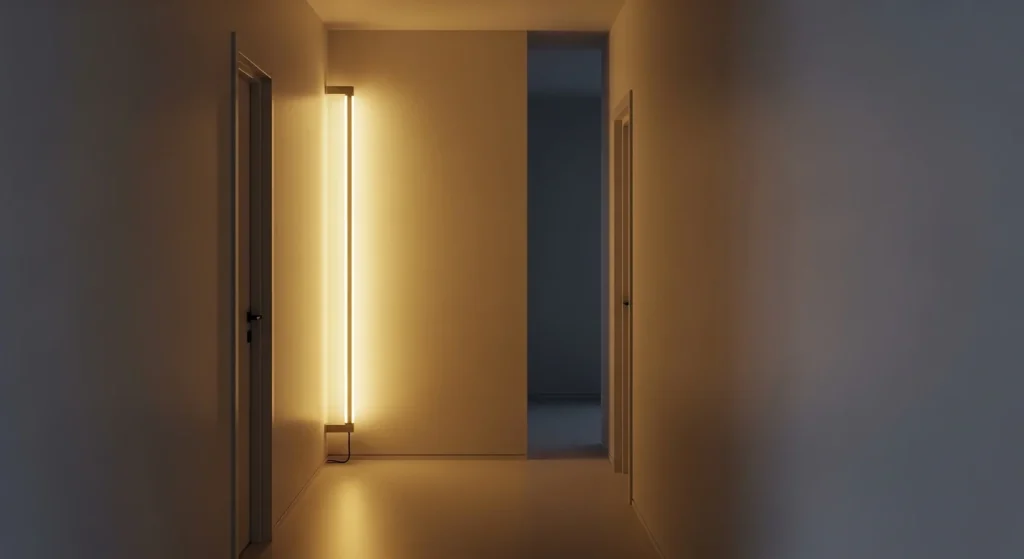
2. The Vertical Light Accent Corner
Adding vertical lighting in a hallway corner creates height and depth in a narrow space. The light draws the eye upward, making the hallway feel taller. Keeping the rest of the space minimal enhances the effect. This approach avoids adding bulky decor. It also improves brightness in tight areas. The result is both stylish and functional.
3. The Corner Mirror Expansion Look
A mirror placed strategically in a hallway corner reflects light and creates the illusion of more space. This is especially effective in narrow layouts. Keeping the frame minimal ensures a modern look. The mirror enhances brightness naturally. It also adds a subtle decorative element. This idea visually expands the hallway.

4. The Elevated Corner Shelf Detail
A small elevated shelf in a hallway corner adds function without taking floor space. It allows you to place minimal decor or essentials neatly. Keeping the styling simple avoids clutter. The vertical placement works well in narrow spaces. It also adds a design layer to plain walls. This keeps the hallway visually interesting.

5. The Soft Glow Corner Ambience
Creating a soft glow in a hallway corner adds warmth without using large decor pieces. Subtle lighting enhances the mood of the entire hallway. It also highlights the corner as a feature. Keeping the rest of the hallway clean ensures balance. This idea focuses on atmosphere rather than objects. It’s simple yet impactful.
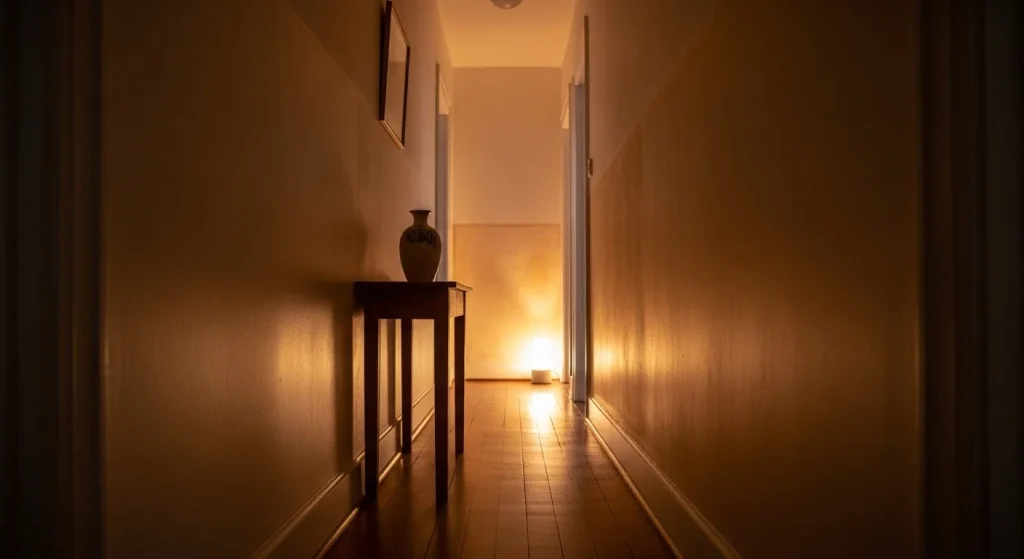
6. The Clean Minimal Corner Pause
Leaving a corner intentionally minimal can create a visual pause in a narrow hallway. This prevents the space from feeling overcrowded. It also enhances the openness of the corridor. Clean walls and subtle lighting make the space feel calm. This approach focuses on simplicity. Sometimes less creates more impact.
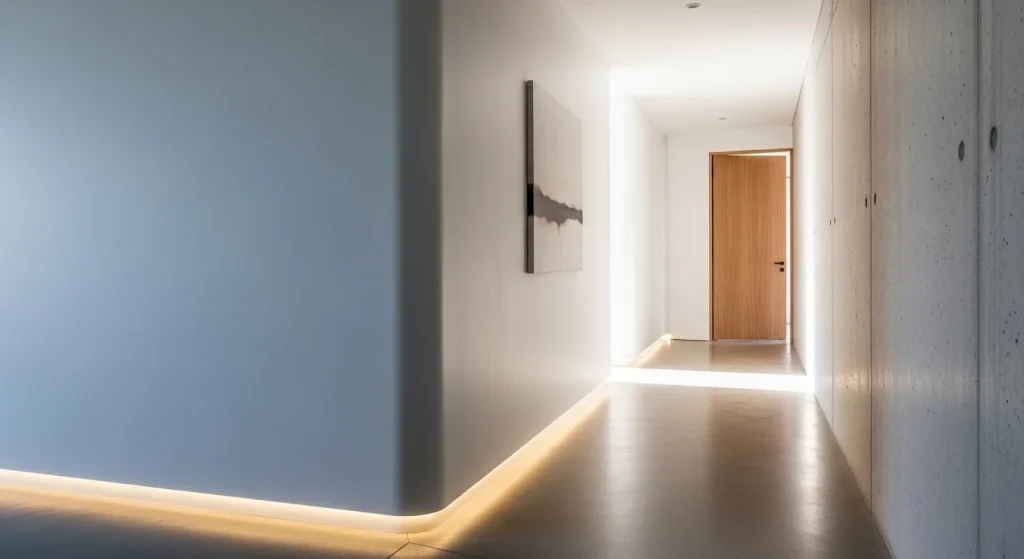
7. The Functional Drop Spot Corner
A small corner can be used as a quick drop spot for essentials like keys or small items. Keeping it compact ensures it doesn’t interrupt movement. Using minimal organizers keeps it tidy. This adds practicality to the hallway. It also keeps clutter controlled. Function meets simplicity here.

8. The Subtle Texture Corner Detail
Adding a slight texture element to a hallway corner creates depth without adding bulk. This could be through wall finish or subtle material variation. It enhances the design quietly. Keeping the rest of the hallway simple maintains balance. This idea focuses on visual interest through texture. It’s refined and modern.

9. The Corner Bench Transition Spot
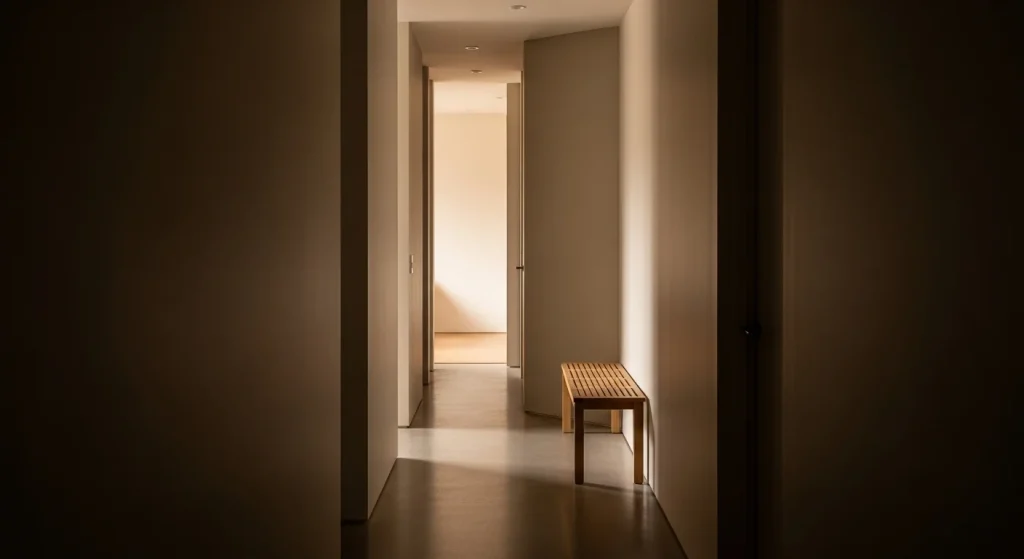
This idea introduces a slim bench placed along a hallway corner to create a subtle transition zone. It gives the space a functional pause without blocking movement. Keeping the bench narrow ensures the hallway still feels open. A simple cushion can add comfort without visual heaviness. This setup works well near entry points or room transitions. It adds both usability and structure to the corridor.
10. The Vertical Panel Accent Corner
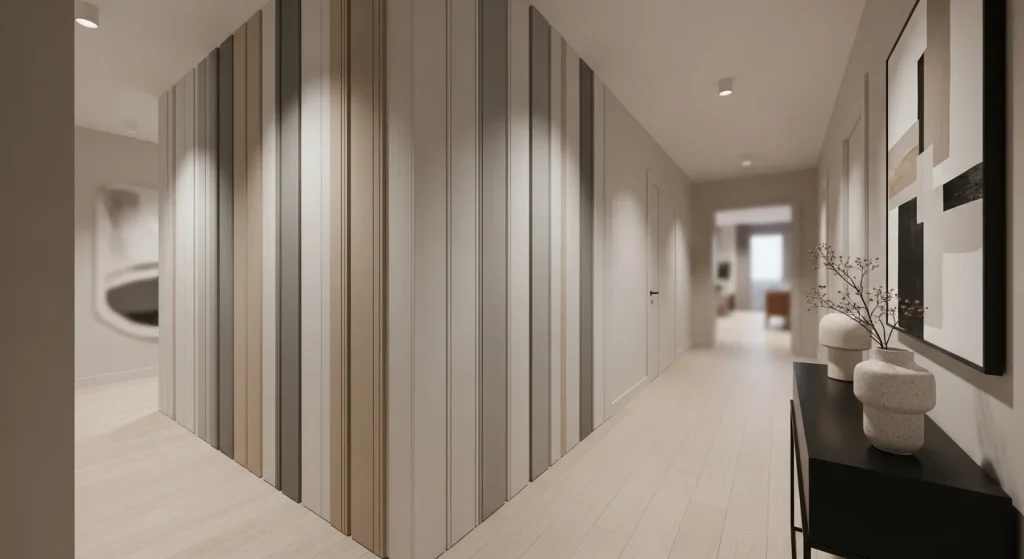
Adding vertical panels to a hallway corner creates a sense of height and structure. This design element draws the eye upward, making the space feel less confined. Keeping the panel color subtle maintains a modern look. It enhances the wall without adding physical clutter. This approach works especially well in long narrow hallways. It creates a refined visual feature.
11. The Corner Art Focus End Point
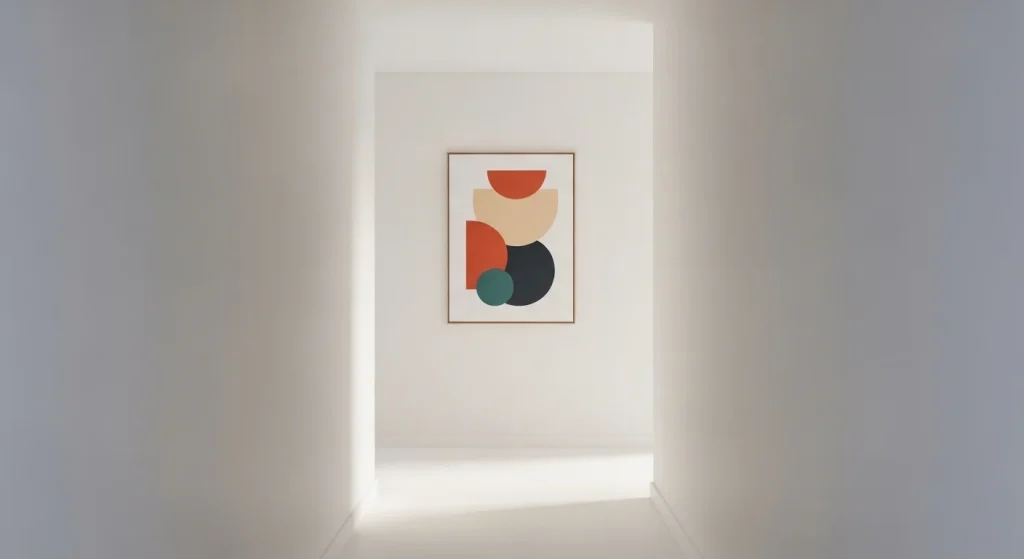
Using a single art piece at the hallway corner creates a focal endpoint. This draws attention naturally as you walk through the space. Keeping it minimal avoids overwhelming the narrow layout. The art becomes a subtle design statement. It also adds personality to the hallway. This idea works well in long corridors.
12. The Soft Rug Extension Corner
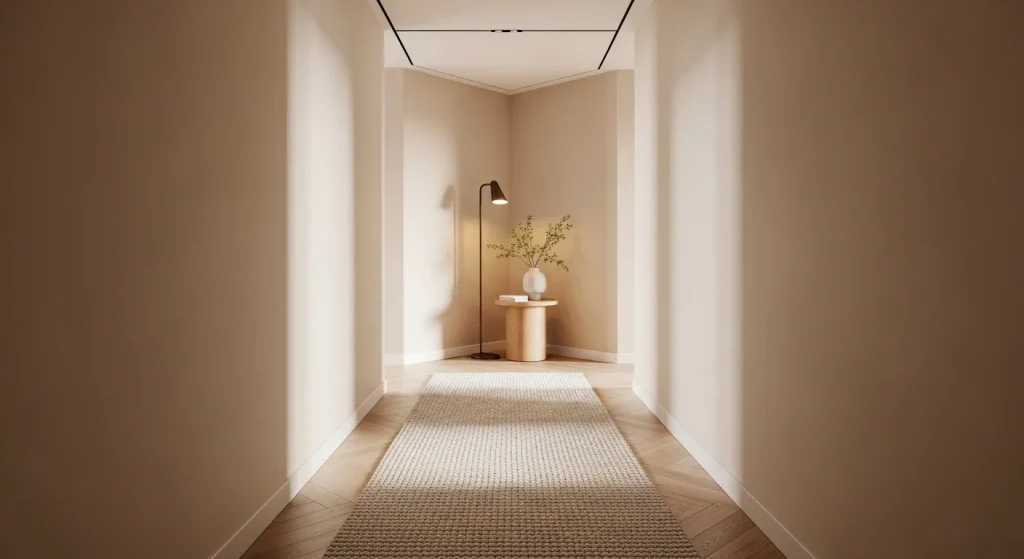
Extending a narrow rug into a corner area helps visually guide movement through the hallway. It creates a continuous flow that makes the space feel longer. The texture also adds warmth underfoot. Keeping the pattern subtle ensures it doesn’t feel busy. This enhances both comfort and style. It’s a simple yet effective design move.
13. The Corner Wall Curve Illusion
Using soft curved design elements in a corner can visually soften sharp hallway edges. This creates a smoother flow within the narrow space. It reduces the boxed-in feeling of tight corridors. The curve adds subtle elegance without clutter. Keeping everything minimal enhances the effect. It’s a modern and unique approach.
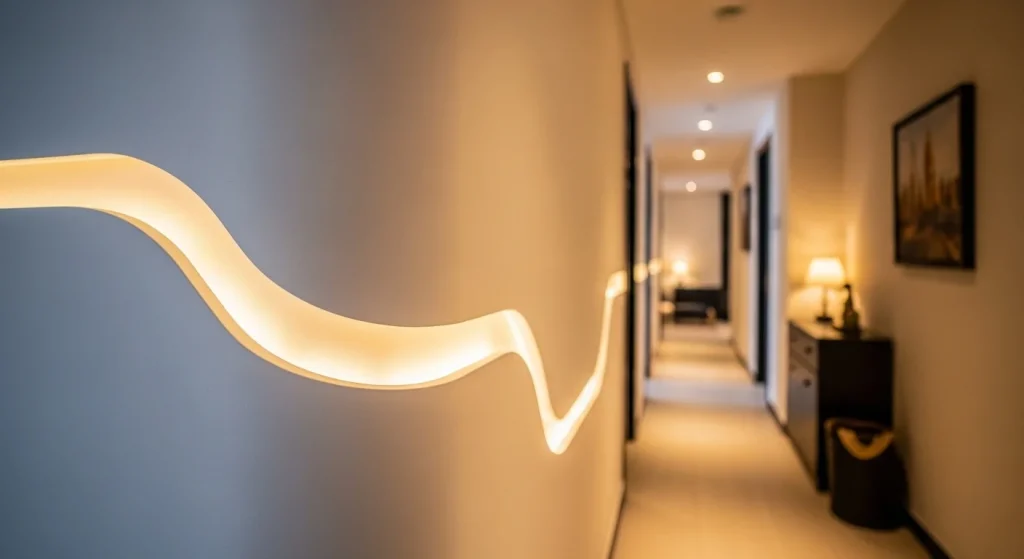
14. The Hidden Niche Corner Detail
A small recessed niche in a hallway corner adds depth without taking space. It can hold minimal decor or remain simple for a clean look. Lighting inside the niche enhances its presence. This creates a custom-built feel. It adds architectural interest to the hallway. It’s subtle yet impactful.
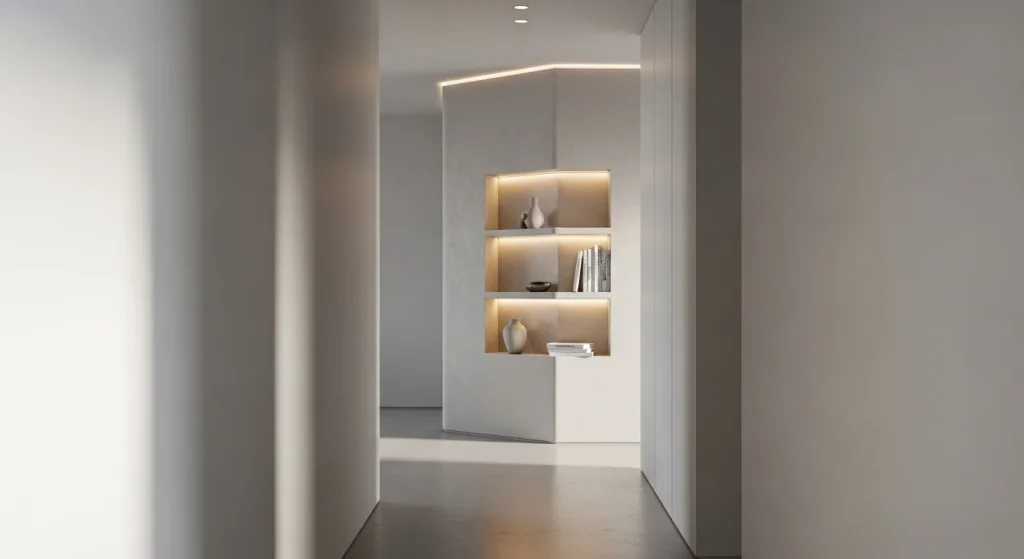
15. The Corner Ceiling Light Drop
Introducing a ceiling light that drops slightly into a corner adds vertical interest. It draws attention upward and balances the narrow layout. Keeping the fixture minimal avoids heaviness. The light also improves brightness in darker hallways. This creates both function and design. It’s a clean modern feature.

16. The Clean Transition Exit Corner
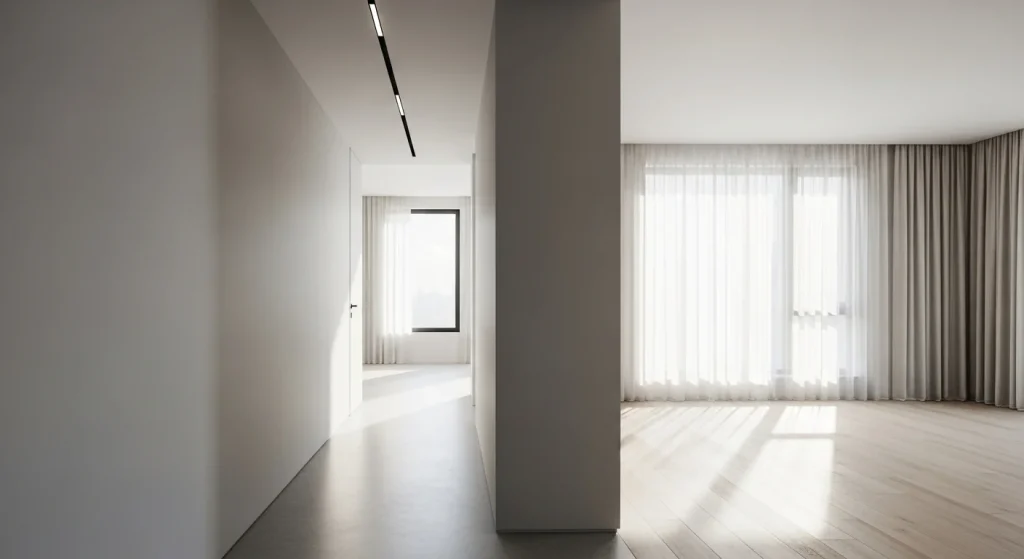
The final hallway corner leading into another room should feel open and inviting. Keeping this space clear ensures a smooth visual transition. Light from the next room enhances the openness. Avoiding heavy decor here keeps the flow natural. This corner acts as a visual bridge. It completes the hallway design.
FAQs
1. How do I decorate a narrow hallway corner without making it cramped?
Use slim furniture, vertical elements, or lighting instead of bulky decor to keep the space open.
2. What makes a hallway look wider?
Light colors, mirrors, and open layouts help create the illusion of more space in narrow hallways.
3. Can I add furniture to a narrow hallway corner?
Yes, but it should be slim and minimal so it doesn’t block movement or make the space feel tight.
4. What is the best lighting for narrow hallways?
Soft ambient lighting or vertical lights work best to brighten the space without making it harsh.